
Size
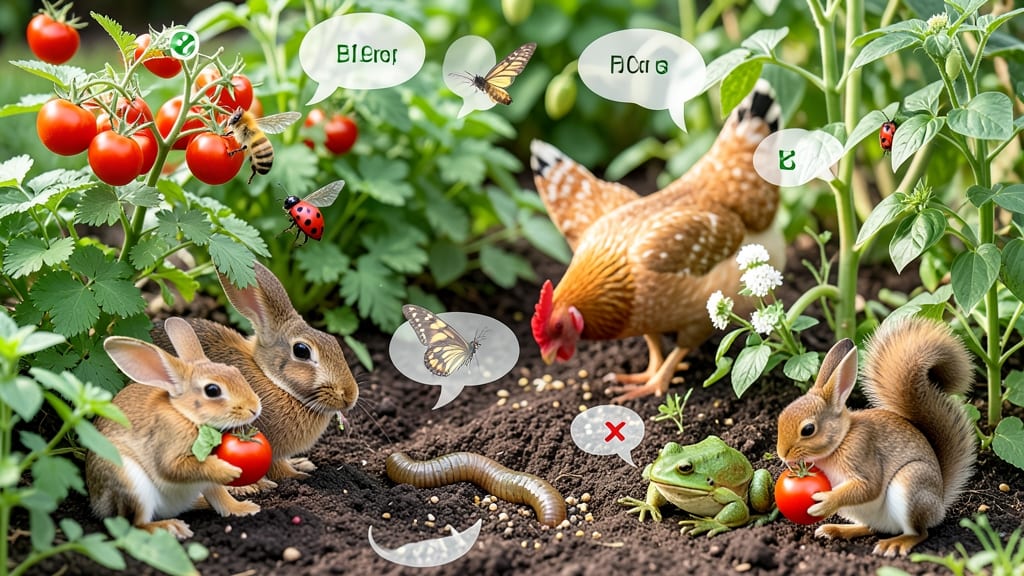
In Grow a Garden, each animal serves a unique purpose: bees carry pollen between flowers, ladybugs devour garden pests, earthworms enrich soil by tunneling and breaking down organic matter, and birds spread seeds far and wide, creating a self-sustaining ecosystem where every creature contributes to plant vitality.
Every creature in your garden ecosystem plays a specialized part that directly impacts plant health. 🌱 Bees, for instance, aren't just pollinators—they're the garden's matchmakers, transferring pollen that enables fruit and seed production in over 80% of flowering plants.
Meanwhile, ladybugs act as tiny pest control units, consuming aphids and other harmful insects that would otherwise weaken your plants. The often-overlooked earthworms perform double duty by aerating compacted soil and converting organic waste into nutrient-rich castings, while birds serve as nature's seed dispersers, planting new life across your landscape.
Together, these animals create a balanced environment where plants can flourish without synthetic interventions.
What makes this ecosystem particularly fascinating is how each animal's role builds upon the others. The bees' pollination creates flowers that attract birds, whose droppings fertilize the soil where worms thrive, which in turn creates ideal conditions for ladybugs to reproduce and control pests.
It's a perfectly synchronized cycle that demonstrates why biodiversity isn't just beneficial—it's essential for a thriving garden.
💡 In This Article
- How Animals Contribute to Plant Growth Mechanisms
- Encouraging Beneficial Animals in Your Garden
How animals contribute to plant growth mechanisms
Bees are the garden's pollination powerhouses, using their specialized body structures to transfer pollen between flowers.
Each bee's fuzzy body collects pollen grains while feeding on nectar, then carries them to the next flower—this process fertilizes plants and enables fruit and seed development. 🐝 A single bee can visit up to 5,000 flowers in one day, creating a network that supports plant reproduction across entire ecosystems.
Without bees, many flowering plants would struggle to reproduce, leading to reduced yields in fruits, vegetables, and seeds.
Ladybugs serve as natural pest control agents, with their larvae consuming up to 5,000 aphids in their lifetime.
These beneficial insects target soft-bodied pests like aphids, mites, and mealybugs, which would otherwise sap plant sap and spread diseases. 🌿 The ladybug's diet is so effective that just 25 adults can protect an entire garden season.
Their presence reduces the need for chemical pesticides, creating a healthier environment for both plants and pollinators. The key to their effectiveness lies in their rapid reproduction—each female can lay up to 400 eggs during her lifetime.
Earthworms act as soil engineers, creating tunnels that improve drainage and aeration while breaking down organic matter into nutrient-rich castings.
These castings contain essential minerals like nitrogen, phosphorus, and potassium that plants need to grow. 🐛 A single worm can process up to its own body weight in soil daily, creating a porous structure that helps roots penetrate deeper.
Their tunneling also prevents soil compaction, allowing water and air to reach plant roots more efficiently—a process that mimics natural forest ecosystems where fallen leaves are recycled into fertile soil.
Birds play a crucial role in seed dispersal, often consuming fruits and then spreading their seeds through droppings in different locations. This natural process helps plants colonize new areas and maintain genetic diversity within species. 🐦 Some birds, like robins, specifically target fallen fruit, while others feed on seeds directly.
Their movements can carry seeds up to several miles away, creating new planting opportunities. This dispersal mechanism is particularly important for plants that rely on animal vectors to spread rather than wind or water.
The most fascinating aspect of these animal roles is how they create a feedback loop that benefits the entire ecosystem. For example, bees pollinate flowers that attract birds, whose droppings fertilize the soil where worms thrive.
This interconnected system demonstrates why biodiversity isn't just beneficial—it's essential for creating resilient, self-sustaining gardens that require minimal human intervention.