
Plants
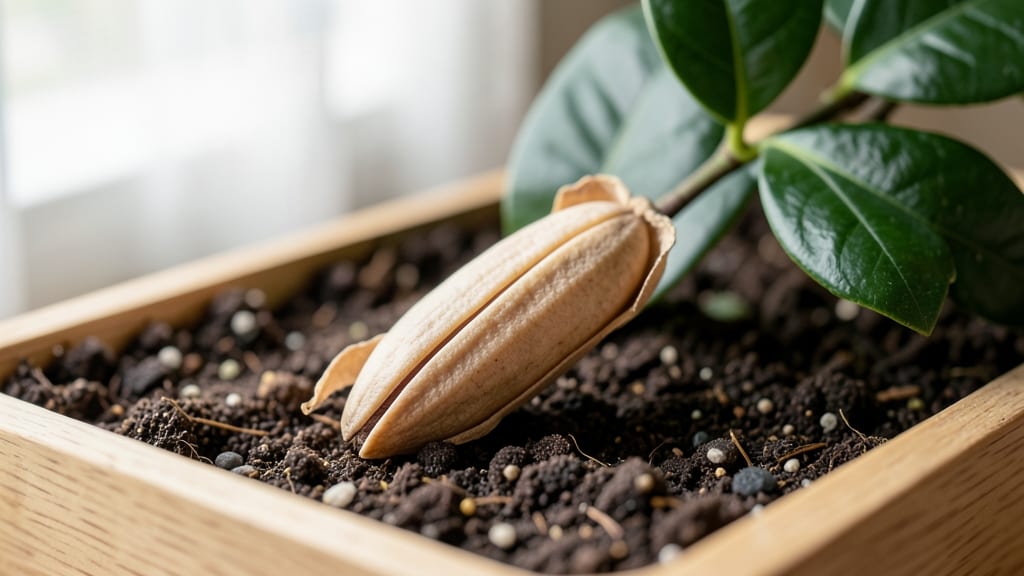
Gardenia seeds look like tiny, elongated brown pods shaped like miniature beans, encased in a tough, woody shell that cracks open when fully mature to reveal flat, dark brown seeds inside.
These seed pods start green and firm but gradually turn brown and harden as they mature, a process that typically takes 4-6 weeks after flowering. 🌱 The shell's tough exterior protects the seeds during dormancy, while their bean-like shape helps them disperse naturally when the pod finally splits.
If you're trying to identify them, look for pods that feel dry to the touch and have visible seams where the shell will open.
Once mature, the pods release seeds that are about 1/4-inch long and 1/8-inch wide, resembling tiny, flattened beans with a glossy finish. These seeds are lightweight but durable, designed to survive brief exposure to moisture while waiting for ideal germination conditions.
💡 In This Article
- Identifying Mature Gardenia Seed Pods and Shells
- How to Extract and Store Gardenia Seeds for Germination
Identifying mature gardenia seed pods and shells
Gardenia seed pods begin their life as small, green, and leathery capsules attached to the plant's flowers. As they mature over 4-6 weeks, they transform dramatically—turning from vibrant green to a rich, deep brown while developing a noticeably harder, almost woody texture.
The pods grow to about 0.5-1 inch in length, maintaining their elongated, bean-like shape throughout this process. This hardening is a natural protective mechanism, as the shell's increased rigidity shields the developing seeds from physical damage and environmental stressors.
The shell's surface develops visible seams or sutures that run lengthwise, marking where the pod will eventually split open when fully mature.
These seams are subtle at first but become more pronounced as the pod dries out completely. 🌿 Inside, the seeds remain encased in a protective layer until the pod naturally cracks along these seams, releasing the seeds.
This splitting process is triggered by a combination of internal pressure from seed growth and external factors like temperature fluctuations or physical agitation from wind or animals.
Immature pods feel soft and slightly spongy to the touch, while mature pods have a dry, almost papery quality that makes them feel lightweight despite their hardened exterior. The color shift from green to brown is a key indicator of maturity, signaling that the seeds inside are ready for dispersal.
This transformation is driven by the plant's natural drying process, which reduces moisture content in the pod walls and increases their brittleness—making them more likely to crack open when conditions are right.
When you examine a mature pod closely, you'll notice the shell's texture resembles that of a small, dried bean pod, with a slightly rough surface that provides grip for seed dispersal.
The seeds inside are flat and dark brown, typically about 1/4-inch long and 1/8-inch wide, with a glossy sheen that helps them reflect light and attract potential dispersers.
This glossy finish also serves a functional purpose, as it makes the seeds slightly water-resistant during their brief exposure to the elements before finding suitable soil for germination.
The hardening process of the pod shell is a fascinating example of plant adaptation. As the pod dries, lignin—a complex polymer—accumulates in the cell walls, providing structural support and making the shell more resistant to decay and predators.
This lignin buildup is what gives mature gardenia pods their characteristic hard, woody feel. The seeds themselves remain dormant until exposed to ideal conditions, which often includes a period of cold stratification or consistent moisture to break their dormancy and trigger germination.
Understanding these botanical details helps gardeners distinguish between viable seed pods and those that haven't reached maturity. For example, pods that remain green or feel soft are not yet ready for seed collection, while those that are brown, dry, and have visible seams are prime candidates for harvesting.
This knowledge is crucial for anyone looking to propagate gardenias from seed, as collecting immature pods can lead to poor germination rates or seed damage.