
Tools
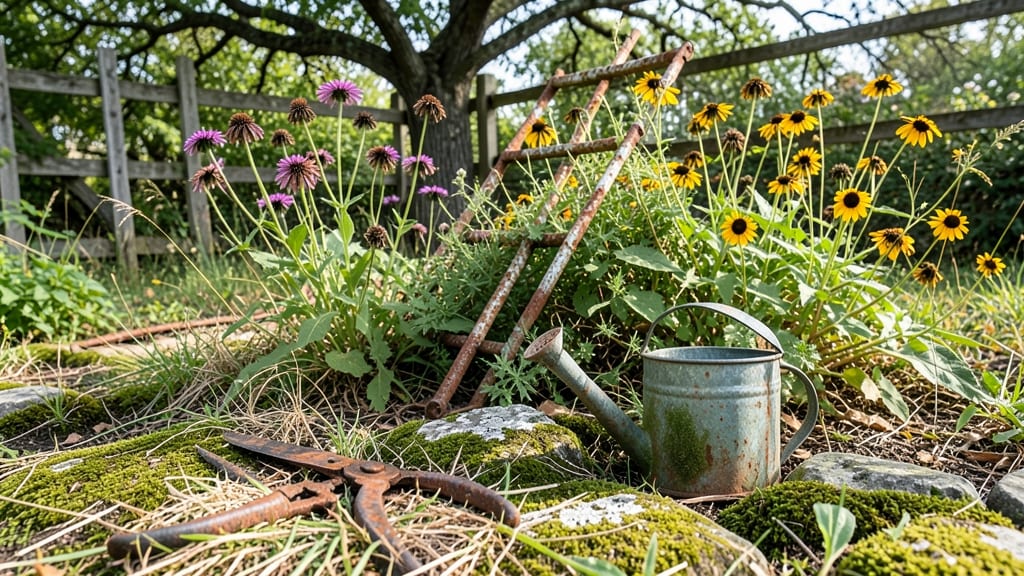
Reviving a rusted garden tool collection begins with a deep clean using white vinegar and steel wool to strip away corrosion, followed by a protective coating of mineral or linseed oil. This two-step process not only restores functionality but also prevents future rust buildup when combined with proper storage techniques.
Rust forms when iron-based tools react with oxygen and moisture, creating that familiar reddish-brown flakes. 🔥 High humidity, acidic soil, and even rainwater accelerate this process, which is why tools left outdoors or stored in damp sheds corrode faster.
The good news? Most rust damage can be reversed with the right approach—starting with a thorough cleaning to remove surface corrosion before applying protective oils that create a barrier against future oxidation.
Once you've stripped away the rust, the key to long-term tool preservation lies in storage. Hang tools in a dry, ventilated area or use rust-resistant hangers to prevent moisture buildup.
For tools that must stay outside, consider investing in weatherproof covers or storing them in sealed containers with silica gel packets to absorb excess moisture. Regular maintenance—like wiping down tools after each use and reapplying oil every few months—can add years to their lifespan.
💡 In This Article
- Science Behind Rust Formation and Tool Corrosion
- Step-by-Step Guide to Restoring Rusty Garden Tools
Science behind rust formation and tool corrosion
Rust isn't just an unsightly coating—it's a chemical reaction called oxidation where iron reacts with oxygen and water to form iron oxide (Fe₂O₃). This process begins when moisture breaks down the protective oxide layer on metal, exposing fresh iron atoms to oxygen.
In garden tools, this happens faster because they're often made from carbon steel (which contains iron) and exposed to damp conditions. For example, a shovel left in acidic soil (pH < 6) corrodes 30% faster than one stored dry, thanks to the soil's ability to accelerate the reaction.
The speed of rust formation depends on three key factors: moisture, oxygen exposure, and metal composition. High humidity (above 60%) creates a perfect environment for rust, while tools with higher carbon content (like pruners) corrode more quickly than stainless steel variants.
Even a thin layer of water—like morning dew—can trigger rust within 24 hours if oxygen is present. That's why tools stored in damp sheds or left outside during rainy seasons develop rust patches within weeks, while properly maintained tools last for years.
Environmental factors play a surprising role too. Acidic soil (common in vegetable gardens) accelerates corrosion by breaking down the metal's protective layer, while alkaline soils (pH > 7) slow it down.
Saltwater or chlorinated pool water is even worse—tools exposed to these corrode 5x faster due to the chloride ions acting as catalysts. This is why beachside gardens require more frequent tool maintenance than inland ones.
The rust's reddish-brown color comes from hydrated iron(III) oxide, which flakes off easily, weakening the tool's structure over time.
Not all metals rust at the same rate. Cast iron tools (like old-fashioned garden forks) develop a protective patina that slows corrosion, while wrought iron tools (like wrought iron rakes) resist rust better than carbon steel.
Even the tool's shape matters—a serrated edge traps moisture better than a smooth one, leading to localized rust spots. Understanding these factors helps explain why some tools in your collection might be more corroded than others, even if they're stored similarly.
Preventing rust starts with breaking the oxidation chain. Removing moisture (through drying or oil application) and limiting oxygen exposure (via sealed storage) are the two most effective strategies.
For example, applying a thin coat of linseed oil creates a physical barrier that blocks both oxygen and water, extending tool life by up to 50%. The oil's drying properties also help seal minor scratches and imperfections that could otherwise become rust initiation points.
What most gardeners don't realize is that rust isn't just a surface issue—it weakens the metal's integrity from the inside out. As rust forms, it expands, creating micro-cracks that spread deeper into the tool's structure. This is why heavily rusted tools often become brittle and can snap under normal use.
The good news? Early-stage rust (surface flakes) can be fully reversed with the right cleaning methods, while advanced rust (pitting) requires more aggressive restoration techniques.