
Tools
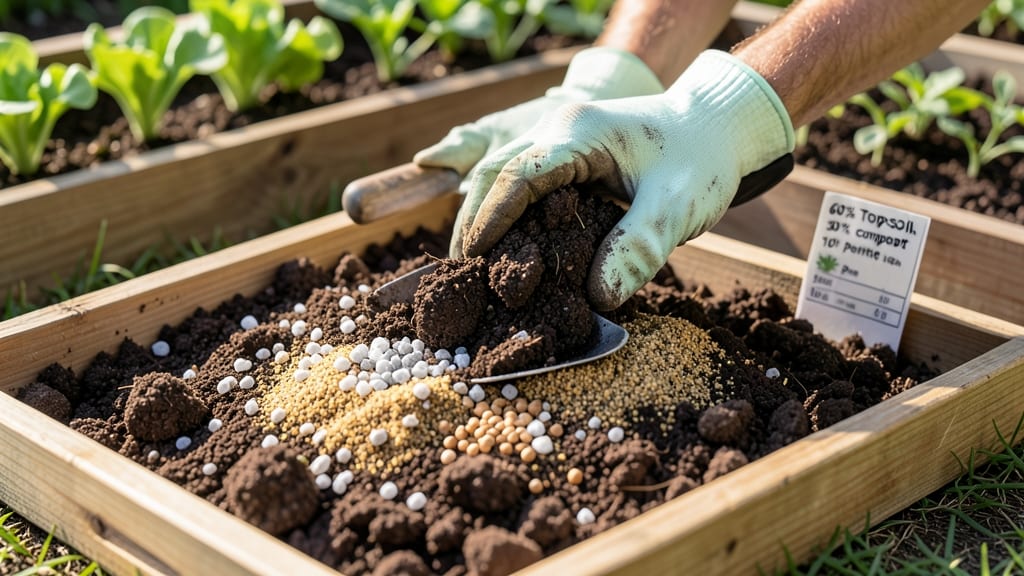
A soil mixture for vegetable gardens should combine topsoil, compost, and coarse sand or perlite in a 60-30-10 ratio for optimal root growth, drainage, and nutrient retention. Adjust proportions based on clay-heavy or sandy native soil conditions.
A balanced vegetable garden soil blend works like a living ecosystem—topsoil provides the structural foundation, while compost feeds beneficial microbes and retains moisture.
The 60-30-10 ratio isn't set in stone; sandy soils may need more perlite for aeration, while clay soils benefit from extra compost to loosen compaction. 🌱 I've found that adding worm castings to the compost layer boosts nutrient availability without overwhelming plants, especially for heavy feeders like tomatoes or peppers.
Testing your native soil's pH before mixing helps determine if you need lime (for acidic soils) or sulfur (for alkaline soils) to create the ideal growing environment.
For root crops like carrots or potatoes, focus on breaking up clay with coarse sand, while leafy greens thrive in finer textures that hold moisture. The key is creating pockets of air and water movement—this prevents root rot while ensuring nutrients reach plant roots efficiently.
Many gardeners swear by a "lasagna method," layering cardboard, straw, and compost to build fertility over time, though this takes longer than a pre-mixed blend.
💡 In This Article
- How to Build a 3-Layer Vegetable Garden Soil Blend
- Best Organic Amendments for Vegetable Garden Soil
How to build a 3-Layer vegetable garden soil blend
The foundation of any thriving vegetable garden starts with understanding how each layer in your soil blend interacts. The bottom layer should be topsoil—this provides the structural framework for roots to anchor while containing essential minerals like calcium and magnesium.
I recommend using a high-quality garden topsoil with a 5-10% organic matter content, which you can test using a simple soil sieve: if it holds its shape when moistened but crumbles easily when dry, it's ready for mixing. 🌿
Above the topsoil, add a compost layer that acts like a sponge—retaining moisture while feeding beneficial microbes. For best results, use well-aged compost (dark brown, crumbly, and earthy-smelling) with a 1:1 carbon-to-nitrogen ratio.
This middle layer should make up 30% of your blend, as it introduces beneficial bacteria and fungi that break down organic matter into plant-available nutrients. Think of it as the "digestive system" of your soil, converting complex materials into what plants can absorb.
The top layer—10% coarse sand or perlite—creates critical air pockets that prevent compaction. Sand particles (like builder's sand with 0.5mm grains) improve drainage, while perlite adds lightweight aeration.
I've found that mixing these with the topsoil creates tiny channels for oxygen to reach roots, which is especially important for shallow-rooted plants like lettuce. This layer also helps prevent the "bathtub effect" where water pools at the surface after rain. 💧
Before combining, test your native soil's pH using a digital pH meter (aim for 6.0-7.0 for most vegetables). If your soil is too acidic (below 6.0), add pelletized lime to the topsoil layer; for alkaline soils (above 7.5), incorporate elemental sulfur.
The compost layer naturally buffers pH fluctuations, but extreme conditions require correction before planting. For example, blueberries need pH 4.5-5.5, so you'd adjust the lime/sulfur ratios accordingly.
Layering matters because each component has a specific role: topsoil provides structure, compost feeds life, and sand/perlite ensures oxygen flow. When mixed properly, this creates a loamy texture—similar to what you'd find in a well-tended forest floor—where roots can spread easily while retaining nutrients.
The 60-30-10 ratio works as a baseline, but I've adjusted it to 50-40-10 for clay soils and 70-25-5 for sandy soils to maintain balance. 🌱
Pro tip: Add a handful of mycorrhizal fungi to the compost layer to boost root symbiosis—these microscopic partners help plants absorb phosphorus and water more efficiently. For container gardens, use the same ratio but reduce the topsoil to 40% and increase perlite to 20% to prevent waterlogging.
The key is observing how your plants respond: if leaves yellow, you may need more nitrogen (add compost); if they wilt quickly, increase the sand/perlite ratio for better drainage.