
Watering
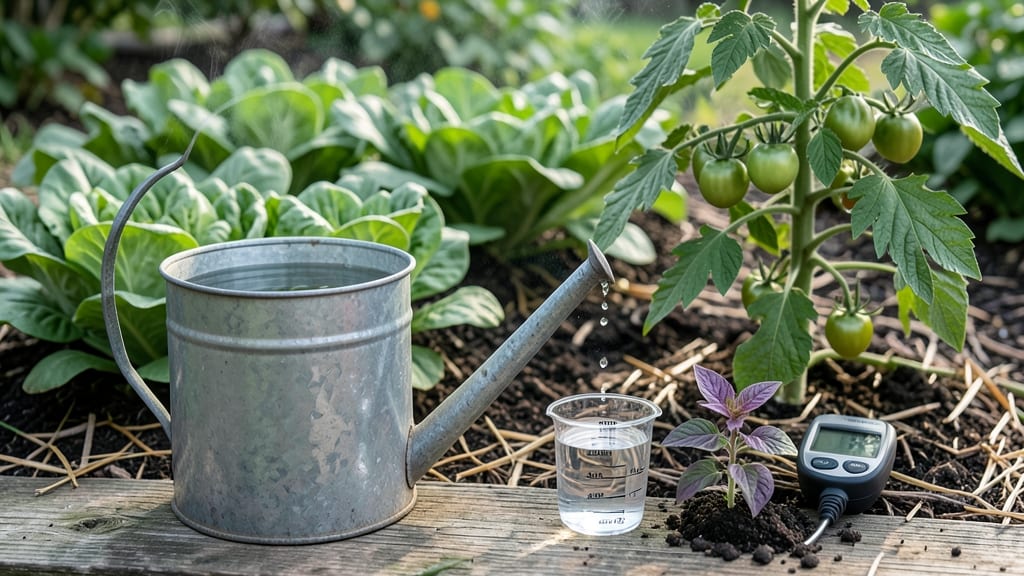
A garden needs how much water does a garden need per day to thrive—but guessing won’t cut it. Too much or too little can ruin months of hard work.
Picture this: your 🌱 General Garden wilts under a scorching sun, or your soil turns to mud after a downpour. Most gardeners overwater by 30% because they don’t account for soil type, plant type, or even the time of day.
The truth? Water needs aren’t one-size-fits-all, and a few simple adjustments can save hundreds of gallons—and your plants.
In this guide, I’ll break down the science behind watering: how much your vegetables, flowers, and herbs truly need, how to read your soil (yes, really), and when to cut back in summer heat or winter chill. No more wasted water, no more stressed plants—just the perfect amount, every time.
You’ll learn how to calculate your garden’s exact needs, spot the signs of over- or under-watering, and pick the best methods (drip irrigation vs. soaker hoses) for your space. Let’s make your watering routine as efficient as it is effective.


Daily water requirements by plant type: science-backed guidelines
Watering your garden isn’t a one-size-fits-all task—what works for tomatoes will drown lavender, and guessing can mean wasted water or dead plants. The USDA and horticultural studies reveal that leaf surface area, root depth, and transpiration rates determine how much water plants truly need daily.
For example, a broccoli plant with broad leaves may need 1.5 inches of water per week, while a rosemary bush thrives on just 0.5 inches—despite both being perennials.
Most gardeners overestimate water needs by 30-50%, assuming more is always better. But overwatering causes root rot, while underwatering stresses plants into early dormancy. The key? Understanding your garden’s microclimate—shady spots retain moisture longer, while full-sun areas dry out faster.
Even soil type plays a role: clay soil holds water for days, while sandy soil drains within hours, requiring daily checks.
Below, I’ve broken down the science-backed daily water needs for common garden categories, including vegetables, flowers, herbs, and shrubs. Use this as your watering blueprint, adjusting for your local climate and season.
Vegetables like tomatoes and peppers are thirsty because their large leaves and deep roots (12–18 inches) demand consistent
How to calculate your garden’s exact water needs (step-by-step)
Determining your garden’s exact water needs isn’t guesswork—it’s science. By accounting for soil type, sun exposure, and plant maturity, you can tailor watering to avoid waste and stress.
Start by measuring your garden’s square footage and identifying the dominant soil type (sandy, loamy, or clay). These factors directly impact how often and how deeply you should water.
For example, sandy soil drains quickly, requiring frequent light watering, while clay soil holds moisture longer, needing deep but infrequent watering. Pair this with your local climate data—check your USDA hardiness zone and average rainfall—to adjust for seasonal variations.
This method ensures your garden gets precise hydration without drowning roots or leaving plants thirsty.
Your Garden Water Calculator
- 📏 Measure your garden’s area in square feet (L x W). Example: A 10’x10’ bed = 100 sq ft.
- 🌱 Identify your plants’ water needs (see Plant Type Guide). Assign a water category: Low (💧), Medium (💧💧), or High (💧💧💧).
- 🏜️ Adjust for soil type:
- Sandy: Multiply water by 1.5x
- Loamy: Use base calculation
- Clay: Divide water by 1.5x
- ☀️ Factor in sun exposure:
- Full sun (6+ hrs): +20% water
- Partial shade (3-6 hrs): Base amount
- Full shade (<3 hrs): -20% water
- 🌧️ Subtract recent rainfall. Measure rainfall (e.g., 0.5 inches) and deduct from daily needs.
- 📝 Record and refine. Track plant health and adjust weekly. Example: 100 sq ft of tomatoes in loamy soil with full sun needs ~3 gallons/day in summer.
Let’s break down the base calculation for a 100 sq ft garden with medium-need plants (like basil or zucchini). Start with 1 inch of water per week, which equals 6.25 gallons per 100 sq ft.
Divide by 7 days = ~0.9 gallons/day. Now, apply your adjustments: Add 20% for full sun (0.9 x 1.2 = 1.08 gallons/day) and subtract 0.5 inches of rain (0.31 gallons), landing at 0.77 gallons/day.
Seasonal shifts demand flexibility. In summer, increase water by 30-50% due to evaporation, while winter needs drop by 50-70%. Windy conditions? Add 10-15% to compensate for lost moisture.
Always water early morning to minimize evaporation and fungal risks. A soaker hose or drip irrigation delivers water directly to roots, reducing waste by up to 30%.
Monitor your garden’s soil moisture with a moisture meter or the finger test: Insert your finger 1-2 inches deep. If dry, water; if damp, wait. Wilting leaves or yellowing foliage signal thirst, while mushy stems or fungus mean overwatering.
Fine-tune your system monthly to match your garden’s evolving needs—because a thriving garden is one that’s neither parched nor soggy.
By mastering this step-by-step method, you’ll transform watering from a daily chore into a precision science. Your plants will reward you with vibrant growth, and your water bill will thank you too. Start today—your garden’s future depends on it!