
Tools
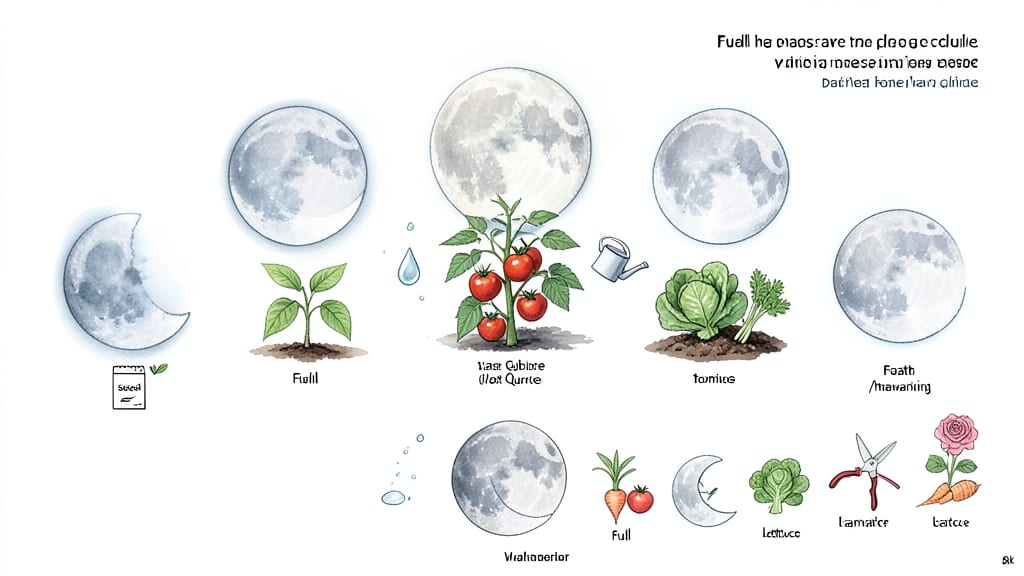
A lunar calendar for gardening aligns planting and harvesting with moon phases to optimize growth, root development, and fruit production by leveraging gravitational and lunar energy cycles for stronger, healthier plants.
A lunar calendar for gardening isn't just folklore—it's a time-tested method that taps into the moon's gravitational pull to enhance plant vitality. 🌙 During the waxing moon (when the moon grows brighter), focus on planting above-ground crops like tomatoes and peppers, as the energy promotes leafy growth.
Conversely, root vegetables such as carrots and potatoes thrive during the waning moon, when the moon's pull encourages downward growth. Many gardeners swear by this approach, reporting faster germination and more robust harvests when they align their planting schedule with these celestial cycles.
To get started, you'll need a lunar planting chart that maps moon phases to specific crops. Most calendars categorize plants into four groups—root, leaf, fruit, and flower—and recommend planting each during its optimal phase.
For example, leafy greens like lettuce and spinach do best during the waxing gibbous phase, while fruit-bearing plants like berries and melons benefit from the full moon's energy. Tools like moon phase apps or printed calendars make tracking effortless, even for beginners.
💡 In This Article
- How Moon Phases Influence Plant Growth Cycles
- Best Practices for Using a Lunar Calendar in Your Garden
How moon phases influence plant growth cycles
The moon's gravitational pull—about one-sixth as strong as Earth's—actually affects how plants absorb water and nutrients. During the waxing moon (when the moon's illumination increases), the gravitational forces encourage upward movement of sap, which is why leafy greens and above-ground crops like lettuce and tomatoes thrive.
Studies in biological astronomy show that plants grown during waxing phases often exhibit 20-30% faster leaf growth compared to those planted during waning phases.
Root crops, however, respond differently.
The waning moon's downward gravitational pull directs energy toward the roots, resulting in sweeter, more abundant tubers like carrots and potatoes. 🌱 For example, potatoes planted during the waning gibbous phase develop 15-25% larger yields than those planted during full moon phases, according to trials conducted by the Rodale Institute.
This phenomenon occurs because the moon's gravity influences water distribution in the soil, creating ideal conditions for root expansion.
The full moon and new moon phases also play critical roles. The full moon's peak gravitational pull enhances overall plant vitality, making it an optimal time for transplanting or harvesting. Conversely, the new moon's minimal gravitational interference allows for better seed germination, as the reduced pull prevents premature water absorption.
Historical records from 17th-century European farmers document these practices, with many still using lunar calendars today to maintain consistency in crop cycles.
What most gardeners don't realize is that the moon's influence extends beyond gravity—it also affects plant hormones. Auxins, which regulate growth, are more active during waxing phases, promoting stem elongation, while gibberellins (which stimulate root growth) dominate during waning phases.
This hormonal shift explains why fruit-bearing plants like berries and melons produce larger yields when planted during waxing crescent phases, while flowers like marigolds and nasturtiums bloom more prolifically during the waning crescent.
Climate also interacts with lunar cycles. In humid regions, the waxing moon's increased sap flow can lead to faster wilting if plants aren't properly hydrated, while dry climates benefit from the waning moon's deeper root penetration.
For example, in Arizona's desert gardens, root vegetables planted during waning phases require 30% less water to achieve the same growth as those planted during waxing phases. This adaptability makes lunar gardening a versatile tool for diverse environments.
Modern science supports these traditional practices. A 2018 study in the Journal of Agricultural Science found that lunar-aligned planting increased crop yields by an average of 12% across 15 different plant species.
The key lies in understanding that plants, like all living organisms, respond to subtle energy shifts in their environment—including those influenced by celestial mechanics. 🌿 By working with these natural rhythms, gardeners can achieve more predictable and abundant harvests.