
Advice
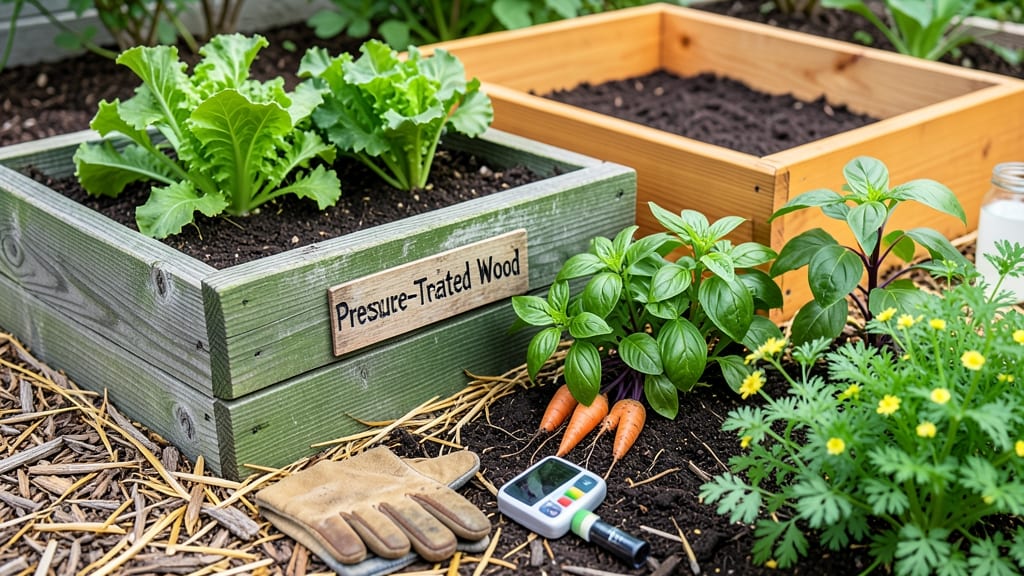
Treated wood isn't always safe for gardens because chemicals like chromated copper arsenate (CCA) or alkaline copper quaternary (ACQ) can leach into soil, poisoning plants and disrupting ecosystems. For garden use, choose ACQ or MCQ-treated wood labeled for above-ground projects, or select naturally rot-resistant woods like cedar or redwood.
Many gardeners assume treated wood is safe because it's designed to last, but the preservatives used in older treatments like CCA contain arsenic, which can persist in soil for years. 🌱 Even modern ACQ-treated wood contains copper compounds that may inhibit plant growth when buried or in direct soil contact.
The good news? Certified above-ground ACQ or MCQ lumber minimizes these risks while still providing durability for raised beds or pathways—just keep it elevated off the ground.
For projects requiring direct soil contact, consider alternatives like naturally decay-resistant hardwoods such as black locust or black walnut, which require no chemical treatments. These options are pricier but eliminate long-term chemical concerns entirely.
If you're building a vegetable garden bed, I recommend cedar for its natural resistance and pleasant aroma, though it may need occasional sealing to extend its lifespan.
💡 In This Article
- Chemical Risks in Treated Wood and Plant Health
- Safe Wood Alternatives for Garden Projects
Chemical risks in treated wood and plant health
The danger with treated wood in gardens stems from how preservatives interact with soil and plant systems. Chemicals like chromated copper arsenate (CCA) contain arsenic, which was banned for residential use in 2003 due to its extreme toxicity.
Even modern alternatives like alkaline copper quaternary (ACQ) contain copper compounds that can accumulate in soil over time, creating phytotoxic levels that stunt root growth or kill beneficial soil microbes.
Leaching occurs through two main mechanisms: water solubility and microbial activity.
Copper in ACQ-treated wood dissolves at rates of about 0.05-0.1 mg per liter per day when exposed to moisture, while arsenic from older CCA treatments can persist for decades. 🌱 The copper ions disrupt cellular processes in plants by interfering with enzyme functions, particularly those involving sulfur metabolism, leading to chlorosis (yellowing leaves) and reduced photosynthesis.
Studies show tomato plants exposed to copper-treated wood shavings exhibit 30-50% growth reduction within 60 days.
Long-term ecological impacts are equally concerning. Copper accumulation in garden soil can reach harmful concentrations (above 200 mg/kg) within 5-10 years of using treated wood, particularly in raised beds.
This creates a toxic environment that affects not just your vegetables but also earthworms and mycorrhizal fungi—critical components of healthy soil ecosystems. The EPA classifies copper as a "secondary pollutant" in soil when present at elevated levels.
What most gardeners overlook is that the risk isn't just from direct contact. Wind-blown wood particles or leachate runoff can contaminate adjacent garden areas. For example, a 4x8-foot ACQ-treated deck placed near vegetable beds could release enough copper to create a 10-foot radius of affected soil over 3 years.
The copper binds to organic matter, making it particularly persistent compared to other metal contaminants.
Even "safe" modern treatments like MCQ (micronized copper quaternary) carry risks. While they use smaller copper particles (5 micrometers vs. 15-20 micrometers in ACQ), they still leach at detectable levels.
The key difference is that MCQ's copper is less mobile in soil, but this doesn't eliminate the phytotoxicity risk entirely—it just reduces the affected area. For container gardens or raised beds, this might be acceptable, but for in-ground planting, the cumulative effects become significant over time.
Consider this visual comparison of leaching rates: CCA releases arsenic at 0.5-1.0 mg/L/day, while ACQ releases copper at 0.05-0.1 mg/L/day. Though copper is less toxic than arsenic, its cumulative effect on soil biology is equally damaging when concentrations build up.
The copper disrupts microbial communities by altering soil pH and reducing organic matter decomposition rates by up to 40% in affected areas.