
Advice
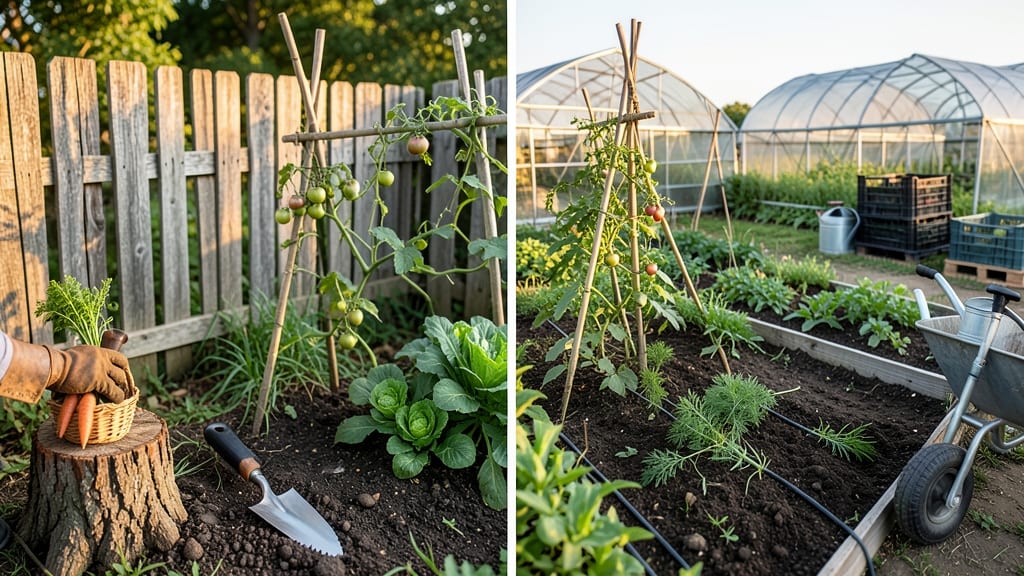
Market gardening is typically commercial in nature, producing high-value crops for direct sale to restaurants, farmers' markets, or grocery stores, though small-scale operations may blur the line with subsistence farming by supplying household needs alongside income. Scale, intent, and market focus define the distinction.
Market gardening's commercial focus comes from its emphasis on growing profitable, high-demand crops like leafy greens, herbs, and specialty vegetables. 🌱 Unlike subsistence farming—which prioritizes feeding families—market gardening thrives on quick turnover, seasonal variety, and direct-to-consumer sales.
Many small-scale growers start with household needs but expand as they identify lucrative market opportunities, often using techniques like drip irrigation and crop rotation to maximize yields.
What sets it apart is the business mindset: market gardeners track sales trends, adjust planting schedules based on restaurant orders, and invest in tools like cold storage to extend product shelf life.
While subsistence farms rely on staple crops like corn or beans, market gardens often specialize in niche products—think microgreens or heirloom tomatoes—that command premium prices at farmers' markets or through CSA programs.
💡 In This Article
- Market Gardening Scale and Profit Motives
- How to Transition from Subsistence to Market Gardening
Market gardening scale and profit motives
Market gardening's commercial nature stems from its focus on growing high-value crops that generate quick returns.
Unlike subsistence farming—which prioritizes staple foods like corn or rice—market gardens specialize in leafy greens, herbs, and specialty vegetables that sell for $5-$20 per pound at farmers' markets. 🌱 For example, a single 10x20-foot bed of microgreens can yield 50 pounds in just 2-3 weeks, earning $500-$1,000 depending on variety.
This rapid turnover is the backbone of commercial viability.
The profit-driven approach requires precise planning: market gardeners use data on demand cycles to plant crops like strawberries in early spring or kale in late summer when prices peak.
Techniques like drip irrigation (using 0.5 gallons per hour per plant) and crop rotation (switching families every 3-4 years) maximize yields while minimizing labor costs.
Unlike subsistence farms that rely on manual labor for family consumption, commercial gardens often employ seasonal workers to handle 10+ acres of intensive planting.
Year-round production is another key differentiator. Market gardeners invest in greenhouses or low tunnels to extend growing seasons, often adding $10,000-$50,000 in startup costs. These structures allow them to sell tomatoes in December or bok choy in January—products that fetch 2-3x the price of off-season grocery store options.
The business model hinges on consistency, with some growers pre-selling 50% of their harvest to restaurants before planting begins.
Pest control also reflects commercial priorities. While subsistence farmers might tolerate some crop loss, market gardeners use integrated pest management (IPM)—combining beneficial insects, neem oil sprays, and row covers—to maintain 95%+ yield rates.
A single aphid infestation could cost a $20,000 crop if left unchecked, making proactive measures essential. This level of investment contrasts sharply with subsistence farming, where losses are absorbed by the household rather than calculated as profit margins.
Consider the case of a 2-acre market garden in Oregon: it might grow 50 varieties of vegetables, with 80% sold directly to consumers at a $150,000/year farmers' market.
Meanwhile, a subsistence farm of similar size would prioritize 3-4 staple crops for family consumption, with any surplus sold locally at lower prices. The commercial focus isn't just about scale—it's about strategic specialization that turns gardening into a business.