
Picking
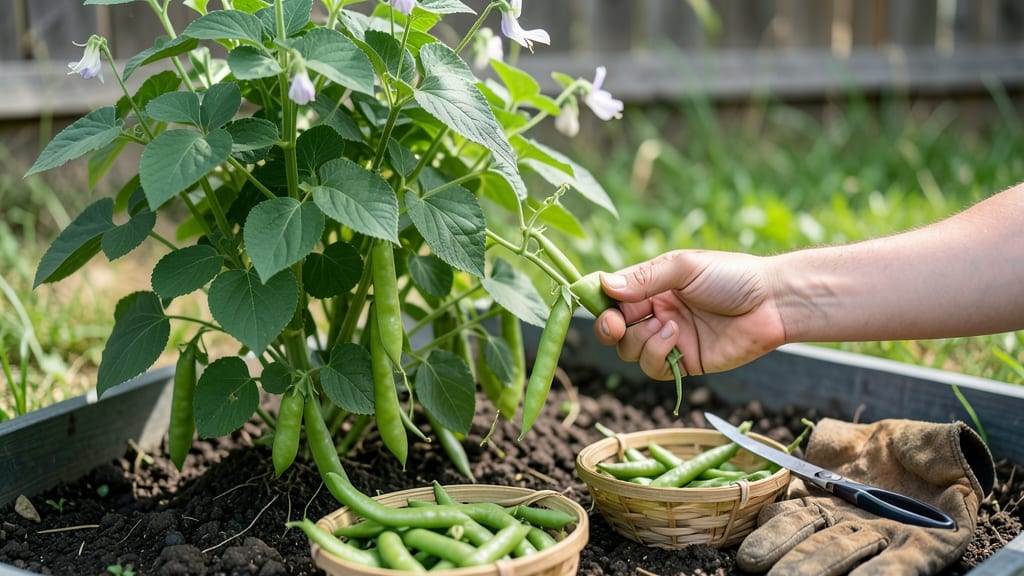
To pick green beans from your garden at their peak flavor and texture, aim for 4-6 inches in length with a crisp snap when bent — timing makes all the difference between a tender bite and a tough mouthful.
Picture this: you’ve been eagerly watching your 🌱 green beans climb, and now they’re finally ready. But wait too long, and those crisp pods turn stringy and bitter — a common mistake that turns a bountiful harvest into a disappointing one.
Harvesting at the right stage isn’t just about size; it’s also about firmness, color, and even the weather. Overcast days or extreme heat can trick your timing, so knowing the subtle cues keeps your beans at their best.
In this guide, I’ll walk you through the snap test, ideal size ranges, and how to spot when your plants are begging for a pick — so you can enjoy that fresh, garden-fresh taste all season long.


How to use the snap test & size guide to harvest green beans at peak ripeness
Green beans are at their peak flavor when harvested at the right moment—too early, and they're underdeveloped; too late, and they become tough and stringy. The key is mastering the snap test and recognizing ideal pod size (typically 4-6 inches for most varieties).
This simple method ensures your harvest stays crisp, tender, and full of flavor all season long.
I’ve learned the hard way that waiting even a day or two past the perfect window can turn your homegrown beans into something closer to a chewy, flavorless snack than the fresh, vibrant pods you crave.
The good news? With a few visual cues and a quick physical test, you can harvest green beans like a pro every time. Let’s break it down into easy steps.
Here’s how to use the snap test and size guide to harvest green beans at their best:
- 1 Check pod length: Measure your green bean pods. The ideal harvest size is 4-6 inches for most varieties. If they’re shorter than 3 inches, they’re not ready yet.
- 2 Perform the snap test: Gently bend a pod near the stem. If it snaps cleanly with a slight resistance, it’s ready to pick. If it bends without snapping or feels mushy, wait a day or two.
- 3 Inspect seed visibility: Look inside the pod. If the seeds are visible but still flat against the sides (not bulging), it’s time to harvest. Overly developed seeds mean the bean is past its prime.
- 4 Assess pod color: Most green beans should be a vibrant green color. If they start turning yellow or developing brown spots, harvest them immediately—they’re overripe and will lose quality fast.
- 5 Harvest frequently: Pick beans every 2-3 days to encourage continuous production. This prevents the plant from redirecting energy to seed development, which reduces yield and quality.
- 6 Use clean tools: Always use sharp pruners or scissors to avoid damaging the plant. Cut pods just above the leaf node to promote faster regrowth.
For bush beans, which grow in compact shrubs, you’ll focus on the lower pods first since they mature earliest. Pole beans, on the other hand, climb trellises or stakes, so check the pods at the bottom of the vine first, working your way up as they mature.
This method ensures you’re always harvesting at the right stage, no matter the variety.
One of my biggest harvesting mistakes was ignoring the snap test and picking beans solely by size. Some pods looked ready but were still soft and tasteless inside. The snap test is your secret weapon—it’s faster than measuring every pod and far more reliable than guessing by color alone.
Trust your fingers; they’ll tell you when a bean is perfect.
Timing your harvests also depends on the time of day. Early morning is ideal because the pods are cool and crisp after the night’s dew. Avoid picking in the midday heat, as beans can wilt quickly and lose their snap.
If you must harvest later in the day, store them in the fridge until you’re ready to use them.
Pro tip: Keep a small harvesting basket or bucket nearby while you work. This makes it easy to collect beans as you go and prevents you from missing spots. I like to use a shallow container so I can see what’s left to pick—no more forgotten pods hiding behind leaves!
Regular harvesting not only improves flavor but also extends your green bean season by encouraging the plant to produce more pods.
If you’re growing heirloom or specialty varieties, always check the seed packet for specific harvest guidelines.
Some, like Runner beans, can be harvested slightly younger (around 3-4 inches) for a more tender texture, while others, like Kentucky Wonder, thrive when left a bit longer (up to 7 inches). Pay attention to these details to get the most out of your garden.
Finally, don’t let the fear of missing the perfect moment hold you back. Even if you pick a bean that’s a day or two past its prime, it’s still better than leaving it on the vine to turn into a tough, woody mess.
With practice, you’ll develop an eye for the ideal harvest window, and your green beans will thank you with crisp, sweet, and flavorful pods all season long. Happy harvesting! 🌱
Common mistakes that ruin your green bean harvest (and how to avoid them)
Even experienced gardeners sometimes make critical errors when harvesting green beans that turn crisp, flavorful pods into tough, stringy disappointments. The most common mistake? Waiting too long to pick—once pods stretch beyond 6 inches, they start converting sugars into starches, making them mealy and unappetizing.
I’ve learned the hard way that delayed harvesting also stresses the plant, reducing future yields.
Another frequent oversight is harvesting during the hottest part of the day. When temperatures exceed 90°F (32°C), beans wilt faster and lose their snap. I now schedule my picking for early morning when pods are firm and hydrated.
Ignoring these timing cues can mean the difference between a restaurant-quality harvest and a sad, limp pile of overgrown pods.
🌱
⚠️ Critical Harvest Timing Warning
Never wait until pods reach 6+ inches—this is the maximum size for most varieties before quality plummets. Pole beans should be picked when 4-5 inches, while bush beans hit peak flavor at 3-4 inches. Check for visible but flat seeds—if seeds bulge against the pod, you’ve missed the window!
Yellowing pods are another red flag many gardeners ignore. When leaves turn yellow or pods develop brown streaks, it’s often a sign of over-maturity or disease. I once lost an entire row of Kentucky Wonder beans because I assumed the yellowing was normal aging.
In reality, it was bacterial blight spreading from neglected pods. Always remove and discard diseased pods immediately to protect your harvest.
Harvesting too infrequently forces plants to divert energy away from producing new pods. I now make it a rule to check my green bean plants every 2-3 days—this encourages continuous flowering and pod development.
Skipping harvests also leads to shriveled beans inside overgrown pods, which are unfit for fresh eating. For pole beans, I use a small basket to collect beans as I walk down the row, preventing missed pods.
One final mistake is harvesting with dull or dirty tools. A rusty pruner can crush pods and spread disease. I keep a pair of sharp scissors dedicated solely to green bean harvesting, sterilized with rubbing alcohol between uses.
This simple habit has kept my plants healthier and my harvests cleaner. Remember, even the best-timed harvest can be ruined by poor technique.
By avoiding these common pitfalls—proper timing, regular checking, and clean tools—you’ll transform your green bean harvest from frustrating to fantastic. The key is consistency: check daily, pick early, and never let pods overgrow. Your taste buds (and plants) will thank you!