
How To
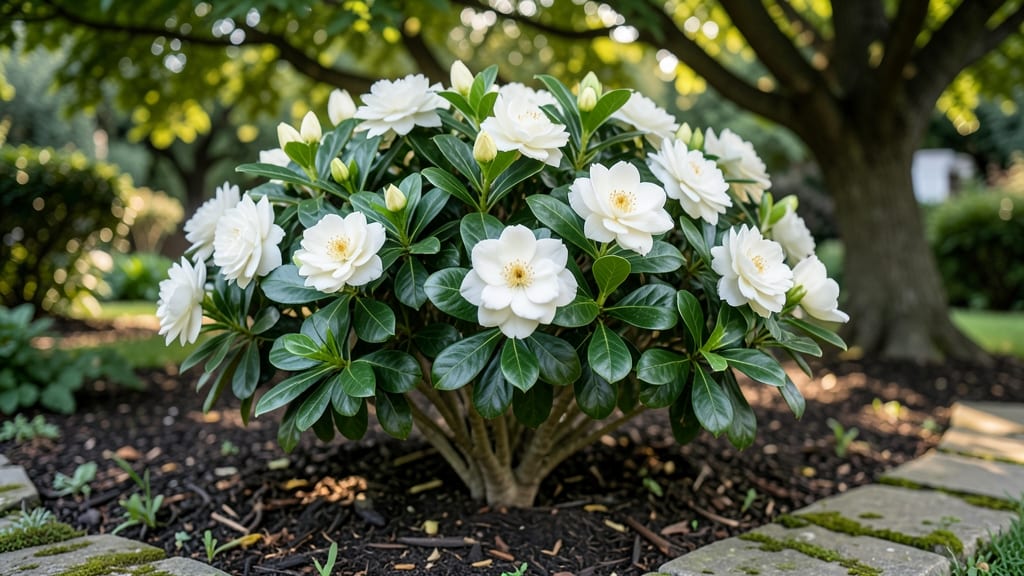
How tall does a gardenia tree grow? At maturity, it typically reaches heights between 6 and 15 feet, depending on the variety and growing conditions — so your yard layout depends on which type you choose.
If you’re dreaming of fragrant gardenias in your yard, knowing their mature height is key to planning your garden layout — some varieties stay compact while others tower like small trees.
The Gardenia jasminoides, for example, typically reaches 6 to 10 feet, while Gardenia augusta can stretch up to 15 feet.
Pruning plays a big role in controlling height, but even with regular trimming, some varieties will naturally grow taller. For smaller spaces, dwarf varieties like ‘Kleim’s Hardy’ max out at just 3 to 5 feet, making them perfect for containers or tight garden beds.
In this guide, you’ll learn how to match your garden’s space to the right variety, when and how to prune for size control, and which conditions help gardenias reach their full potential without becoming unruly.


Gardenia tree height by variety: small to large mature sizes
Choosing a gardenia isn’t just about their intoxicating fragrance—it’s also about their mature height. Some varieties stay small enough for containers, while others grow into small trees that need space.
The most common species, Gardenia jasminoides, typically reaches 6–15 feet at maturity, but dwarf varieties can stay as short as 3–4 feet. Understanding these differences helps you pick the perfect plant for your yard or patio.
Height varies dramatically between species and cultivars. For example, Gardenia augusta (also called Cape Jasmine) often grows taller, reaching 10–20 feet in tropical climates, while ‘Kleim’s Hardy’ gardenia is bred to stay compact at just 3–5 feet.
Even within the same species, pruning habits can shrink or stretch a plant’s final size by 30–50%. Let’s break down the key varieties and what to expect from each.
🌿 Key Takeaway: Always check a variety’s mature height range before planting—some gardenias double in size every few years!
| Variety | Mature Height (ft) | Growth Rate (per year) | Best For | Pruning Needs |
|---|---|---|---|---|
| Gardenia jasminoides (Standard) | 6–15 ft | 1–3 ft | Large gardens, privacy screens | Moderate (shape annually) |
| ‘Kleim’s Hardy’ | 3–5 ft | 6–12 in | Containers, small yards | Light (trim leggy stems) |
| ‘Radicans’ | 10–15 ft | 2–4 ft | Tropical landscapes, hedges | Heavy (train as tree or shrub) |
| Gardenia augusta | 10–20 ft | 3–5 ft | Warm climates, large estates | Minimal (fast-growing) |
| ‘Veitchii’ | 4–6 ft | 1–2 ft | Borders, foundation plantings | Light (prune after blooming) |
If you’re working with limited space, ‘Kleim’s Hardy’ or ‘Veitchii’ are excellent choices, staying under 6 feet even without heavy pruning. These varieties grow at a slower pace (6–12 inches per year), making them ideal for container gardening or small patios.
Just ensure they get partial shade to prevent leaf scorch, which can stunt growth.
For larger landscapes, ‘Radicans’ or Gardenia augusta can create stunning focal points. These varieties grow aggressively—up to 5 feet per year in ideal conditions—and benefit from structured pruning to control their spread. Without pruning, they can easily outgrow their intended space, so plan accordingly if you choose these taller types.
Pruning isn’t just for size control—it also encourages bushier growth and more flowers. The best time to prune is right after blooming, typically in late spring or early summer. Avoid heavy pruning in fall or winter, as this can reduce next year’s flower production.
Use sterilized shears to cut back 1/3 of the plant’s height if needed, focusing on removing dead or crossing branches first.
Another factor affecting height is your climate zone. Gardenias thrive in USDA Zones 7–11, but colder climates may stunt their growth. In Zone 6 or below, opt for ‘Kleim’s Hardy’, which tolerates brief frosts and stays compact.
For warmer zones, taller varieties like ‘Radicans’ can reach their full potential with minimal winter protection.
💡 Pro Tip: If you’re growing a gardenia in a container, choose a dwarf variety and prune regularly to keep it under 4 feet. Containers limit root growth, so fertilize monthly during the growing season to compensate for the restricted space.
Finally, remember that gardenias are slow growers compared to many shrubs. It can take 3–5 years for a newly planted gardenia to reach half its mature height. Patience pays off—once established, they reward you with years of fragrant blooms and lush foliage.
Plan your garden layout with these height ranges in mind, and you’ll create a space that’s both beautiful and functional!
How to control gardenia tree height: pruning and care tips
Pruning your gardenia tree isn’t just about keeping it tidy—it’s the secret to controlling its height and shape while encouraging lush blooms. Without proper pruning, even dwarf varieties can outgrow their space, while standard types may become leggy and sparse.
The key is timing, technique, and understanding how gardenias respond to cuts. Let’s break down my proven method for maintaining your gardenia at your desired height, whether that’s a 3-foot bush or a 10-foot specimen.
First, know that gardenias grow best with light pruning—they’re sensitive to aggressive cuts, which can stress the plant and reduce flowering. I always recommend waiting until after the spring blooming season (late May to June) to prune, as this gives the plant time to recover before winter.
For dramatic height control, you’ll need to combine pruning with proper fertilization and sunlight exposure, which I’ll cover in detail below.
🌱 Did You Know?
A mature gardenia tree can grow 6 to 15 feet tall depending on the variety, but with regular pruning, you can keep it 30-50% shorter without harming its health. The key is to never remove more than one-third of the plant’s foliage in a single pruning session to avoid shock.
To control height, focus on selective pruning of the longest branches. Start by removing any dead, diseased, or crossing branches first—these compete with healthy growth for nutrients. Then, cut back the tallest stems by about one-third to encourage bushier growth.
Always use clean, sharp pruners and make cuts just above a leaf node or lateral bud to promote new growth in the right direction.
For a bushier shape, I recommend a technique called "heading back," where you trim the tips of branches just above a set of leaves. This stimulates the plant to grow more side shoots, creating a fuller, more compact form.
Repeat this process every 2-3 years to maintain your desired height. For example, if you want a 4-foot gardenia, prune back any stems that exceed this height by 50% during the dormant season.
Timing is everything when it comes to pruning gardenias. Avoid cutting in late summer or fall, as new growth won’t have time to harden off before winter. Instead, plan your pruning for early spring (March) or late spring (June), right after the main blooming period.
This gives your gardenia time to recover and produce new blooms for the next season. Pair your pruning with a balanced fertilizer (like 10-10-10) to support vigorous regrowth.
Don’t forget that light exposure plays a huge role in height control. Gardenias grown in partial shade tend to grow more slowly and stay compact, while those in full sun may stretch taller.
If your gardenia is growing too fast, consider moving it to a shadier spot or providing afternoon shade with a sheer curtain or lattice. Mulching around the base with organic matter (like pine bark) also helps regulate soil temperature and moisture, which can slow down rapid growth.
With these tips, you’ll have a gardenia that stays at your ideal height while still producing abundant, fragrant blooms. Remember, patience is key—gardenias respond best to gradual changes, so avoid drastic pruning.
Over time, you’ll develop a rhythm that keeps your gardenia thriving and perfectly sized for your space. Happy pruning! ✂️🌿