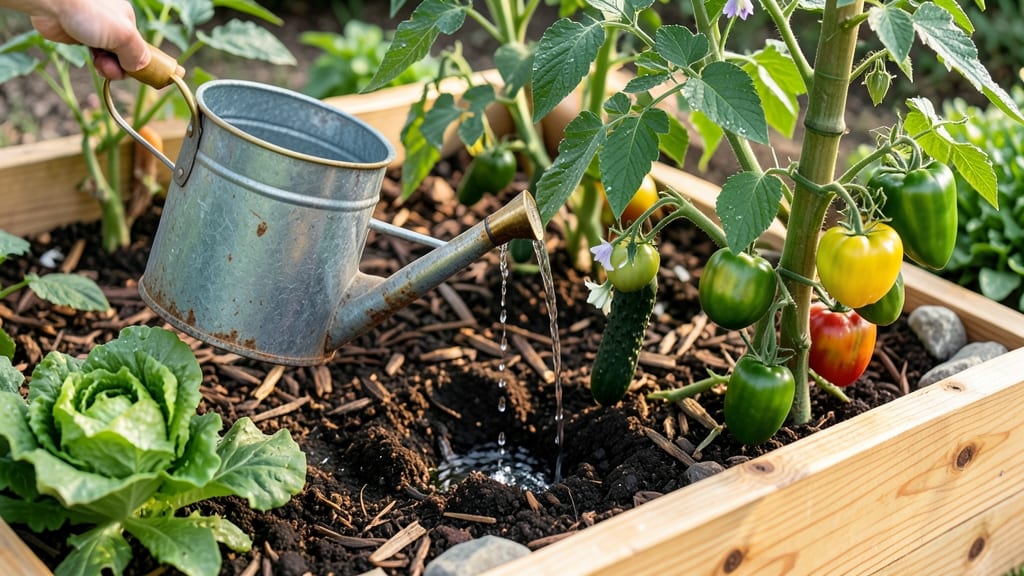
How to adjust watering frequency based on soil, weather, and plant signals
Your vegetable garden’s watering schedule isn’t one-size-fits-all—it’s a dynamic puzzle influenced by soil type, weather patterns, and even your plants’ daily moods. For example, sandy soil drains water like a sieve, while clay soil holds moisture like a sponge.
Meanwhile, a sudden heatwave can dry out roots in half the usual time. Ignoring these factors often leads to wilting leaves or root rot, both of which sabotage your harvest.
Instead of sticking to a rigid schedule, learn to read your garden’s visual cues and adjust on the fly. Start by testing your soil’s moisture level with your finger—if the top 1-2 inches feel dry, it’s time to water.
Pair this with a quick check of your plants: crispy leaf edges signal thirst, while yellowing leaves might mean overwatering. Even the time of day matters—watering in the morning gives roots a full day to absorb moisture before evening evaporation.
⚠️ callout-warning
Warning: Overwatering is the #1 killer of veggie gardens!
Too much water drowns roots, suffocates soil microbes, and invites fungal diseases like powdery mildew. Clay soil holds excess moisture for days—test it by squeezing a handful: if it forms a hard clump, cut back on watering. Sandy soil drains too fast, so water deeply 2-3 times per week instead of light daily doses. Always water at the base of plants, not the leaves, to prevent fungal spores from spreading.
💧 Pro Tip: Use a moisture meter or the "screwdriver test"—if it slides in easily, your soil’s too dry.
Let’s break down how to tweak your schedule for sandy vs. clay soil. In sandy soil, water penetrates quickly, so you’ll need to water more frequently but less deeply. Aim for 30-60 minutes per session, 2-3 times a week, focusing on the root zone.
For clay soil, water less often but more deeply—think 1-2 inches per week, split into 2 waterings. Use a soaker hose or drip irrigation to avoid runoff, which wastes water and erodes soil.
Weather shifts demand quick adjustments too. During heatwaves (above 90°F), increase watering by 30-50% and water early in the morning to reduce evaporation. If rain is forecasted, skip watering 24-48 hours beforehand to avoid waterlogging.
After a storm, check for puddles or soggy soil—if present, hold off until the ground dries out. Humid climates (like the Southeast U.S.) need less frequent watering because moisture lingers in the air, while arid regions (like the Southwest) may require daily watering during peak summer.
Pay attention to plant-specific signals that reveal their true needs. Leafy greens like lettuce and spinach wilt quickly when thirsty but recover fast after watering. Root crops like carrots and beets, however, prefer consistent moisture—let the soil dry slightly between waterings to prevent splitting. Tomatoes and peppers droop in heat but perk up within hours if watered deeply.
If you notice blossom end rot (black spots on tomatoes), it’s often a sign of inconsistent calcium uptake due to uneven watering—mulch heavily and water uniformly to fix it.
To streamline adjustments, keep a watering journal for 2 weeks. Note the date, time, duration, soil type, and weather conditions each time you water. Track which plants thrive or struggle—this data will help you create a customized schedule tailored to your garden’s unique conditions.
For example, you might discover that your zucchini needs water every other day in July but only twice a week in June. Over time, you’ll master the art of precision watering, saving water and boosting yields.
Remember, the goal isn’t perfection—it’s responsiveness. Your garden’s needs change daily, so stay flexible. By combining soil tests, weather awareness, and plant observations, you’ll water like a pro and enjoy a bountiful, stress-free harvest. 🌱