
Light Requirements
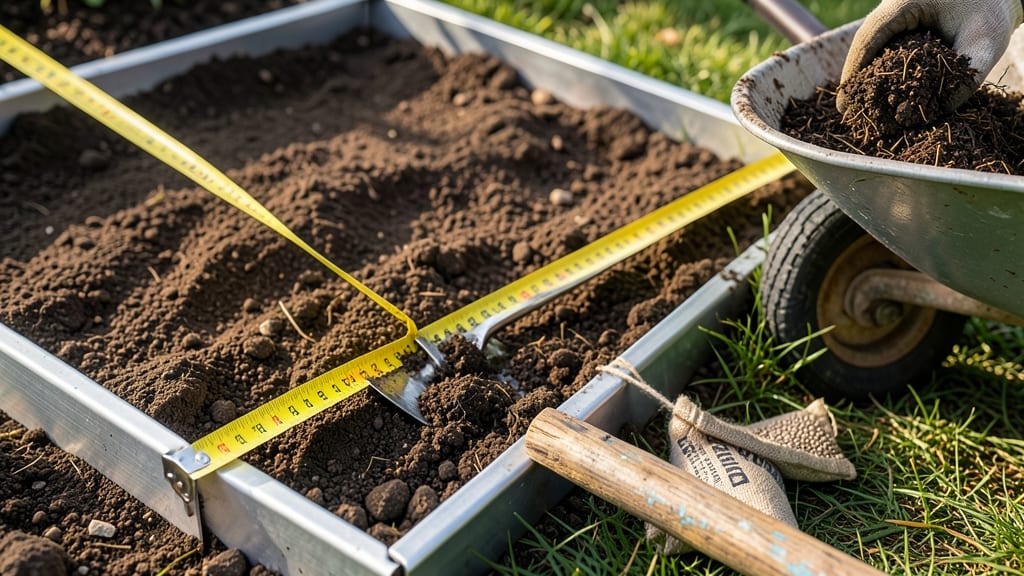
Calculating how much soil for a garden bed requires multiplying length by width by depth (in inches) to find cubic feet, then converting to cubic yards or bags. For example, a 4-inch-deep 4x8-foot bed needs about 1.3 cubic feet per square foot, totaling roughly 16 cubic feet.
Figuring out soil volume isn't just about guessing—it's about giving your plants the perfect foundation. Depth matters most: most vegetables need at least 6 inches of loose soil for strong root growth, while deeper-rooted plants like tomatoes require 12+ inches. Soil type also shifts the math: sandy soil compacts less than clay, so you might need 10-15% more volume to maintain the same depth. 🌱 For a 4x8-foot bed with 6-inch depth, you'd need about 24 cubic feet—double the shallow example!
Pro tip: Use a soil calculator or this simple formula: (length × width × depth ÷ 12) = cubic feet.
Need to convert to bags? Most 40-pound bags cover about 0.75 cubic feet, so you'd need 32 bags for that 24-cubic-foot bed. Raised beds often need more soil because they're deeper, while in-ground beds might require less if your existing soil is decent.
Always account for settling: fresh soil compresses over time, so buy 5-10% extra to avoid running short mid-project.
💡 In This Article
- Calculating Soil Volume for Garden Beds by Depth
- Choosing the Right Soil Type and Quantity for Your Garden
Calculating soil volume for garden beds by depth
The key to accurate soil volume calculations lies in understanding three-dimensional space. Unlike flat measurements (like square footage), soil volume requires depth—because plants need room to grow roots downward.
For example, a 4x8-foot bed with just 4 inches of soil contains 16 cubic feet, but doubling that depth to 8 inches (a common recommendation for vegetables) instantly doubles your soil needs to 32 cubic feet.
This is because volume calculations multiply length × width × depth (in feet), creating a cubic measurement.
Soil depth directly impacts plant health. Shallow-rooted plants like lettuce thrive in 6 inches of loose soil, while deep-rooted crops like tomatoes need 12+ inches to access nutrients and water. The science here involves root zone aeration: compacted soil restricts oxygen flow, stunting growth.
Loose, well-amended soil allows roots to expand freely. 🌱 For instance, a 4x4-foot bed with 6 inches of soil requires 8 cubic feet, but the same bed with 12 inches needs 16 cubic feet—that's the difference between struggling herbs and thriving tomatoes!
Soil type affects volume too. Sandy soil compacts less than clay, so you might need 10-15% more volume to maintain the same depth after settling. For example, a clay-heavy bed might start at 6 inches but settle to 5 inches, requiring extra soil upfront.
Pro tip: Always account for 5-10% settling—fresh soil compresses over time, especially in raised beds where weight compresses the fill.
Here's how to visualize it: Imagine a swimming pool. The deeper it is, the more water (or soil) it holds. A 4x8-foot bed at 6 inches deep holds 16 cubic feet, while a 3x6-foot bed at 12 inches deep also holds 16 cubic feet.
Same volume, different dimensions! This is why raised beds often need more soil—they're deeper, not wider.
For precise calculations, use this formula: (length × width × depth) ÷ 12 = cubic feet. For depth in inches, divide by 12 to convert to feet. For example, a 5x10-foot bed at 10 inches deep needs (5 × 10 × 10) ÷ 12 = 41.67 cubic feet.
Round up to 42 cubic feet to account for settling and uneven edges.
Most gardeners convert cubic feet to bags or cubic yards next. A 40-pound bag typically covers about 0.75 cubic feet, so you'd need 56 bags for that 42-cubic-foot bed.
Bulk soil is cheaper per cubic yard (27 cubic feet), but delivery fees may offset savings for small projects. Always measure twice—your plants' roots will thank you! ✨