
Light Requirements
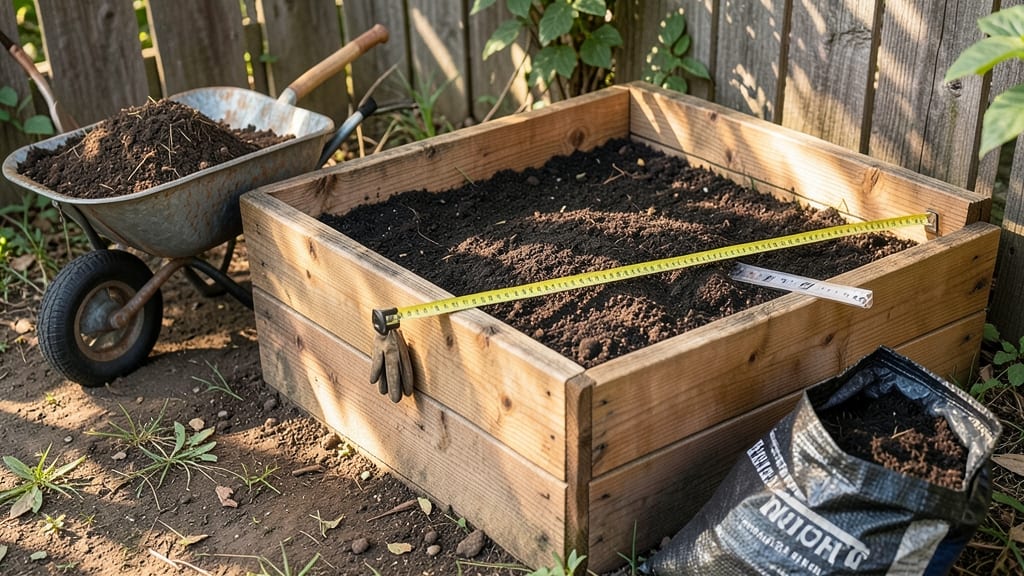
To determine how much dirt you need for your raised garden, multiply its length by width by depth (in feet), then add 10% extra for settling. For example, a 4x8x1-foot bed requires 32 cubic feet plus 3.2 cubic feet extra, totaling 35.2 cubic feet of soil.
Calculating the right amount of soil for your raised bed starts with simple math, but the details matter. 🌱 Most gardeners forget to account for soil settling—adding that extra 10% ensures your plants have enough room to grow without exposing roots.
For deeper beds (12+ inches), you'll need more soil to support root systems and improve drainage, which is especially important for vegetables like tomatoes or peppers that need extra depth.
I always recommend measuring twice and ordering a little extra—it's better to have a few bags left over than to run short mid-project.
Beyond just volume, the type of soil you choose affects how much you'll need. A mix of topsoil, compost, and perlite (in a 60:30:10 ratio) settles differently than straight topsoil alone. The compost adds nutrients but also increases bulk, so you might need slightly less total volume.
For a 4x8-foot bed, this means you could save about 5 cubic feet compared to using only topsoil. Always check the bag sizes at your local garden center—they typically sell soil in 40- or 60-pound bags, which translates to roughly 0.75 to 1 cubic foot per bag.
💡 In This Article
- Calculating Raised Garden Soil Volume Step-by-Step
- Best Soil Mix for Raised Garden Beds
Calculating raised garden soil volume step-by-step
The formula for calculating soil volume—length × width × depth—works because it measures the space your garden occupies in three dimensions. Imagine your raised bed as a rectangular box: the volume inside determines how much soil fits.
For example, a 4-foot-long by 3-foot-wide bed with 1-foot depth requires 12 cubic feet of soil (4 × 3 × 1). This math ensures you buy just enough to fill the space without overpaying for extra bags.
Depth matters more than you might think. Most vegetables need at least 12 inches of soil for strong root systems, but deeper beds (18+ inches) improve drainage and reduce competition from weeds. A deeper bed might require 50% more soil than a shallow one.
For instance, a 4x8-foot bed at 18 inches deep needs 57.6 cubic feet—nearly double the 32 cubic feet needed for a 1-foot depth. Always measure depth from the bottom of the bed to the top edge, not just the soil surface.
Soil settling is the sneaky factor that trips up beginners. Organic materials like compost compress over time, reducing volume by 10-20%. To avoid running short, add that 10% buffer to your calculations. For a 4x8x1-foot bed, this means ordering 35.2 cubic feet instead of 32.
Pro tip: Use a measuring tape to check the settled depth after filling—if it’s less than expected, add more soil before planting.
Real-world adjustments come into play too. If your bed has sloped sides (common with cedar planks), the actual volume increases slightly. For a 4x8-foot bed with 6-inch-high sides, the volume might be closer to 36 cubic feet.
Always round up to the nearest whole number when ordering soil—it’s easier to return unused bags than to scramble for more mid-project. 🌱
Consider the soil type you’re using. Topsoil alone settles more than a mix with compost or perlite. A 60:30:10 blend of topsoil, compost, and perlite might require 5-10% less total volume because the compost adds bulk and the perlite prevents compaction.
For a 4x8-foot bed, this could save you 2-4 cubic feet of material.
Finally, account for mulch or amendments. If you plan to add a 2-inch layer of mulch on top, subtract that volume from your soil calculation. For example, a 4x8-foot bed with 2 inches of mulch loses about 5.3 cubic feet of soil space.
Always factor in these extras to avoid surprises during setup.