
Light Requirements
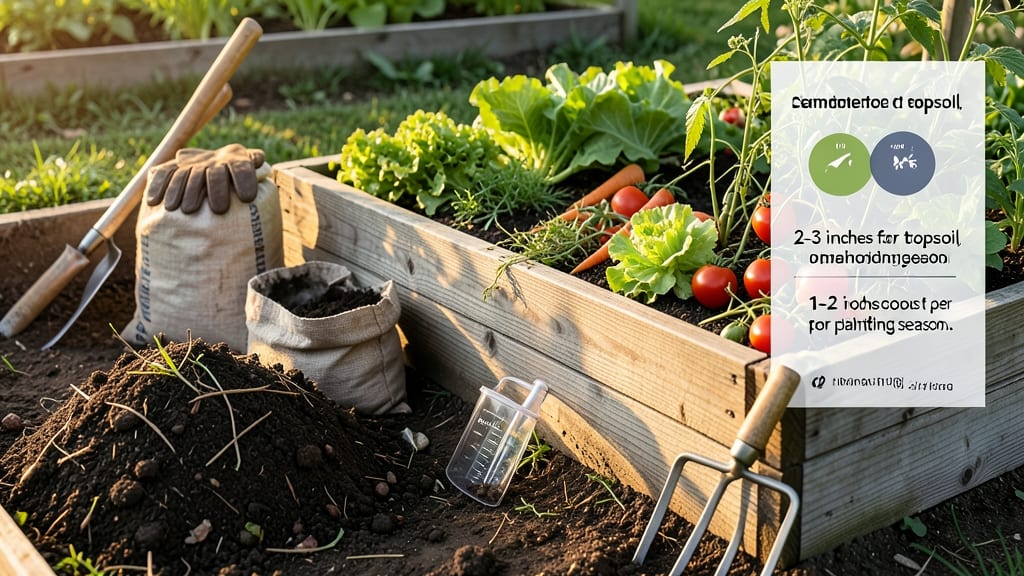
To determine how much compost you need for your garden, calculate 1–3 inches of compost for topsoil amendment (about 2–3 cubic feet per 100 sq ft) or 10–20% by volume when mixing into beds. Always test your soil's organic matter first to fine-tune the amount.
Your garden's needs depend on more than just square footage—soil type plays a huge role.
Sandy soil drains quickly and needs 2–3 inches of compost to retain moisture, while clay soil benefits from 1–2 inches to improve aeration. 🌱 For heavy feeders like tomatoes or peppers, I recommend mixing in 20% compost by volume, but lighter plants like herbs only need 10%.
A simple soil test kit reveals how much organic matter your dirt already holds, helping you avoid overdoing it.
For raised beds, aim for 1–2 inches of compost spread evenly before planting, while container gardens thrive with a 50/50 mix of compost and potting soil. The key is balance—too much compost can create a soggy mess, while too little won't provide enough nutrients.
I always spread a thin layer first, then adjust based on how my plants respond after a few weeks.
💡 In This Article
- Calculating Compost Needs by Garden Type and Soil Conditions
- Compost Mixing Ratios for Different Plant Types and Soil Amendments
Calculating compost needs by garden type and soil conditions
Soil composition dramatically alters how much compost your garden needs. Sandy soils, with their large particles and poor water retention, benefit most from 2-3 inches of compost spread over the surface. This creates a sponge-like layer that holds moisture near plant roots while preventing compaction.
Clay soils, dense and slow-draining, only need 1-2 inches—too much compost can actually worsen drainage issues by creating anaerobic pockets where roots suffocate. 🌱
The difference comes down to soil structure: sand has 0.05-2mm particles with 45% pore space, while clay has 0.002mm particles with just 30% pore space. Compost's fibrous structure fills those gaps differently in each case.
For example, a 100 sq ft sandy bed might need 2.5 cubic feet of compost (about 30 pounds), while the same area with clay soil only requires 1.5 cubic feet (18 pounds).
Plant type also shifts the calculation. Heavy feeders like tomatoes or peppers require 20% compost by volume when mixed into soil, while perennials or ornamental grasses thrive with just 10%.
This is because vegetables deplete nutrients rapidly—studies show tomato plants can remove 120 pounds of nitrogen per acre during a growing season. The solution? For vegetable beds, I recommend a 50/50 mix of existing soil and compost in the top 6 inches of planting depth.
Top-dressing (applying compost on the surface) works best for established plants like fruit trees or shrubs. A 1-inch layer spread around the drip line provides enough nutrients without disrupting roots.
The key mechanism here is microbial activity: surface compost feeds soil organisms that then cycle nutrients down to the root zone. For new plantings, however, mixing compost directly into the soil creates an immediate nutrient reservoir that supports root establishment.
Don't overlook the moisture factor—compost holds 3-4 times its weight in water. In dry climates, this means your 2-inch layer could retain 2 gallons of water per square foot. That's why I always recommend applying compost after a light rain or before irrigation begins.
The right timing lets the compost absorb moisture before it dries out, maximizing its water-holding capacity for your plants.
For precision, grab a handful of your soil and squeeze it. If it crumbles easily (sandy) or forms a tight ball that doesn't break (clay), you've identified your starting point.
The ideal soil feels like a damp sponge—this "squeeze test" helps adjust your compost application before you even begin measuring. 💧