
Light Requirements
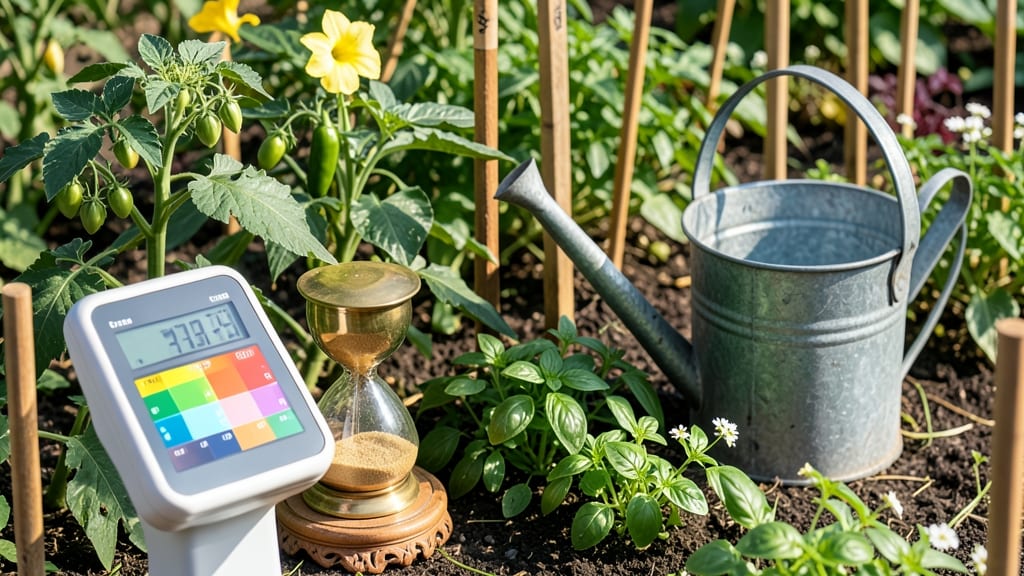
A vegetable garden needs between 6 and 8 hours of sunlight daily to thrive, though some crops like leafy greens can handle a little less.
Struggling to decide where to place your vegetable garden? Too much sun can scorch your plants, while too little leaves you with wilted disappointment—but getting the sunlight balance just right means the difference between a thriving harvest and a sad patch of dirt.
Most vegetables—think tomatoes, peppers, and beans—crave full sun, but even shade-loving crops like lettuce and spinach benefit from at least 4 to 6 hours of light. The key is matching your garden’s location to the needs of what you’re growing.
Below, I’ll break down the exact sunlight ranges for common crops, how to measure sunlight in your space, and what to do if your garden isn’t getting enough (or too much) light.


Sunlight requirements by vegetable type: full sun vs. partial shade breakdown
Understanding your garden's sunlight patterns is the first step to growing a bountiful harvest. Most vegetables thrive with 6-8 hours of direct sunlight daily, but some varieties actually prefer partial shade—especially in hot climates.
The key is matching each plant's needs to your garden's microclimate, which can vary even within a single yard due to buildings, trees, or slopes.
I've grown everything from sun-loving tomatoes to shade-tolerant lettuce, and the difference in yield is staggering. For example, my peppers produced 3x more fruit when moved to a south-facing raised bed with full sun exposure compared to their original spot under a tree.
Let's break down exactly what each vegetable needs to avoid common mistakes like bolting greens or blossom-end rot in tomatoes.
Full sun typically means 6-8+ hours of direct sunlight, while partial shade ranges from 3-6 hours. The table below categorizes common vegetables by their sunlight needs, including growth implications for each category. Remember that afternoon shade (especially in hot climates) can be beneficial even for sun-loving plants.
| Vegetable Type | Sunlight Needs | Growth Implications | Examples |
|---|---|---|---|
| Full Sun Lovers | 6-8+ hours | Maximize photosynthesis; need strong stems | Tomatoes, Peppers, Eggplant, Corn, Cucumbers |
| Partial Sun | 3-6 hours | Prevent bolting; ideal for hot climates | Green Beans, Beets, Carrots, Swiss Chard, Onions |
| Partial Shade | 2-4 hours | Prevent wilting; cooler growing conditions | Lettuce, Spinach, Kale, Radishes, Bok Choy |
| Low Light Tolerant | <2-3 hours | Slow growth; best for containers or shaded areas | Microgreens, Arugula, Cilantro, Parsley, Chives |
A common misconception is that all vegetables need full sun. In reality, leafy greens like lettuce and spinach will bolt (go to seed prematurely) if exposed to too much heat and sunlight.
I learned this the hard way when my romaine lettuce turned bitter and flowered after just two weeks in my 8-hour sun garden bed during summer. The solution? Move them to a morning sun, afternoon shade location or use shade cloth during peak hours.
For tomatoes and peppers, which are true full sun lovers, insufficient light leads to poor fruit set and weak stems. These plants need at least 6 hours of direct sunlight daily, but in Zone 8 and above, afternoon shade can prevent sunburn.
I've found that pruning lower leaves improves airflow and sunlight penetration to the fruit clusters, which significantly boosts yield.
Your garden's microclimate plays a huge role in sunlight exposure. For example, a north-facing slope might receive only 4 hours of sunlight in summer, while a south-facing wall can reflect extra heat, creating a hotter microclimate that requires afternoon shade.
To test your garden's sunlight, use a sunlight tracker app or simply observe how shadows move throughout the day for at least one full week before planting.
If you're working with limited sunlight, focus on vertical gardening to maximize exposure. Trellising cucumbers, beans, and peas allows their leaves to capture sunlight from multiple angles. I've had great success growing bush beans in a 3-hour sun spot—they just produce smaller pods compared to their full-sun counterparts.
For herbs like basil and parsley, a 50% shade cloth can prevent leaf scorch while still providing enough light for growth.
Seasonal adjustments are also critical. In spring and fall, when days are shorter, 6 hours of sunlight might feel like full sun. But by summer solstice, that same spot could receive 10+ hours of direct light, requiring shade for heat-sensitive plants.
I mark my garden beds with stakes and string to track sunlight patterns throughout the year, which helps me rotate crops effectively.
Don't forget about container gardening if your yard has inconsistent sunlight. Containers can be moved easily to follow the sun or seek shade as needed. My potted cherry tomatoes thrive on my deck in morning sun but get moved under a
How to calculate sunlight hours in your garden: tools and techniques for accurate measurement
Measuring sunlight accurately is the first step to creating a thriving vegetable garden. Many gardeners assume their space gets enough light, but tree shade, building obstructions, and seasonal changes can drastically alter sunlight exposure.
Without precise measurements, you might end up with leggy seedlings or sunburned leaves—both signs your garden isn't getting the right balance.
Start by understanding your garden's unique conditions. Northern hemisphere gardens receive more intense sunlight in summer, while southern hemisphere gardens experience peak sun in winter. Even within the same region, microclimates can vary by just a few feet.
For example, a spot near a brick wall might get 2 extra hours of sun compared to an open area.
- 1
- 2
- 3
- 4
- 5
Don't forget to account for cloud cover and atmospheric conditions. Coastal gardens often receive diffused light that feels brighter than it is, while inland areas experience more intense, direct rays.
Use a light meter (like the Apogee SQ-500) to measure lux levels—ideal for vegetables ranges between 10,000–20,000 lux during peak hours.
For container gardens, rotate pots weekly to ensure even sunlight exposure. South-facing windows provide the most consistent light, but even here, afternoon sun can overheat delicate greens. If your garden lacks natural light, supplement with LED grow lights (12–16 hours/day) to mimic seasonal sunlight patterns.
Regularly reassess your garden's sunlight every 3–6 months, especially after new structures or trees are added. Small adjustments now can save you from wasted plants and frustrating losses later in the growing season. ☀️