
Planting
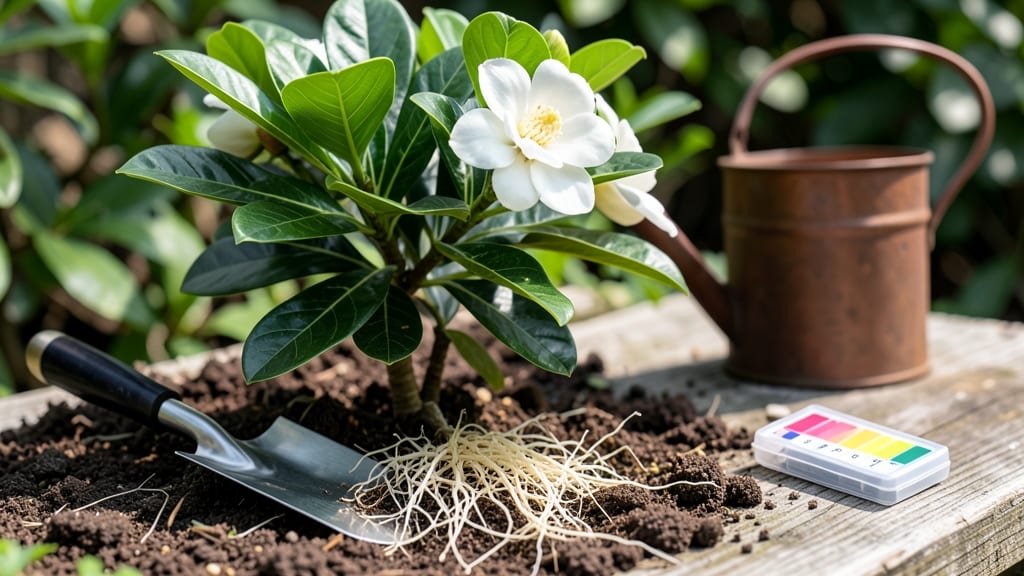
Understanding a gardenia root system reveals its shallow yet expansive nature—roots typically grow just 6–12 inches deep but spread 2–3 feet outward for stability. Planting too deep suffocates them, while shallow placement risks exposure, so aim for barely below soil surface with well-draining, acidic soil to promote healthy growth.
A gardenia root system thrives near the surface because its roots need oxygen and warmth to develop properly. 🌱 Unlike deep-rooted plants, gardenias prioritize horizontal spread to anchor themselves securely. This adaptation explains why they perform best in well-aerated, slightly acidic soils (pH 5.0–6.5) that mimic their native tropical environments.
In regions with USDA zones 8–11, where gardenias flourish, proper soil preparation—adding organic matter like compost—creates the ideal foundation for these sensitive roots.
When planting, focus on creating a loose, airy bed rather than digging deep holes. A 1–2 inch layer of mulch (like pine bark) helps maintain moisture while protecting roots from temperature extremes.
This approach prevents both suffocation from compacted soil and dehydration from exposure, ensuring your gardenia establishes strong, healthy roots that support abundant blooms.
💡 In This Article
- How Gardenia Roots Adapt to Soil and Climate
- Optimal Planting and Mulching for Gardenia Root Health
How gardenia roots adapt to soil and climate
Gardenia roots stay shallow because they thrive in aerated, oxygen-rich soil—their fibrous structure resembles a dense mat just below the surface rather than deep taproots. This adaptation comes from their tropical origins, where roots need quick access to moisture and nutrients without competing with deeper-rooted plants.
The roots also contain lenticels (porous tissues) that allow gas exchange, making them highly sensitive to waterlogged conditions where oxygen is scarce.
Their horizontal spread—often 2–3 feet outward—helps anchor the plant while maximizing surface area for nutrient absorption.
In USDA zones 8–11, where gardenias excel, warm temperatures (ideal range: 70–85°F) accelerate root growth, while cooler climates force roots to grow more slowly. 🌿 This is why gardenias struggle in colder regions: their shallow roots freeze easily, and they lack the deep reserves to recover from winter stress.
Moisture management is critical—gardenia roots rot quickly in soggy soil but also dry out fast in sandy conditions. The ideal soil mix combines 50% native soil, 30% peat moss or pine bark, and 20% perlite to balance drainage and moisture retention.
This ratio prevents both suffocation and dehydration, which are the two biggest threats to root health.
Climate also dictates root behavior: in humid zones (like Florida), roots grow more aggressively but require frequent watering to prevent drying. In drier climates (like Southern California), roots develop thicker, more drought-resistant fibers.
The key is replicating their native well-draining, acidic (pH 5.0–6.5) environment—any deviation stresses the roots and reduces flowering.
One fascinating detail is how gardenia roots secrete organic acids to break down organic matter, creating a nutrient-rich zone around them. This process explains why gardenias often thrive in mulched beds—the decomposing mulch feeds their shallow roots directly, mimicking their natural forest-floor habitat.
If you notice yellowing leaves or stunted growth, it’s often a sign of root stress—either from poor drainage or compacted soil. Loosening the top 6 inches of soil annually helps roots breathe, while avoiding heavy foot traffic prevents soil compaction that suffocates them.