
Planting
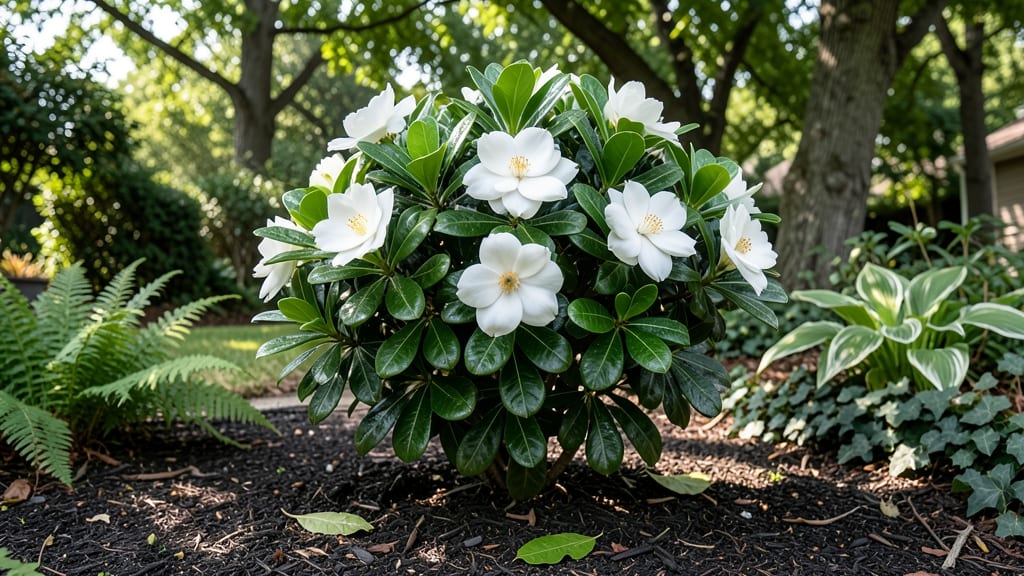
Gardenia plant size varies widely, with mature shrubs ranging from 1 to 6 feet in height, depending on the variety and growing conditions, making them a versatile choice for gardens or containers.
If you’ve ever hesitated to plant one because of size concerns, you’re not alone—these fragrant 🌸 beauties can adapt to everything from small patios to large landscapes, as long as you know how to guide their growth.
Understanding how fast they grow, how tall they’ll get, and how to prune them for your space is the key to keeping them in check without sacrificing those iconic white blooms.
In this guide, I’ll break down the height ranges by variety, share pruning tips to control their spread, and help you decide whether a dwarf gardenia or a standard shrub fits your garden design best.
Gardenia plant size by variety: mature height and spread guide
Choosing the right gardenia variety is key to fitting these fragrant shrubs into your garden design. Gardenia jasminoides, the most common type, typically matures between 3–6 feet tall with a 3–5 foot spread, making it ideal for hedges or focal points.
But don’t let size limit your options—dwarf varieties like 'Kleim's Hardy' stay under 2 feet, perfect for containers or small spaces.
The Gardenia augusta, also called Cape Jasmine, grows even larger—reaching 6–10 feet tall in warm climates. Its sprawling habit makes it better suited for tropical landscapes or large garden beds.
Meanwhile, 'Radicans' varieties climb like vines, spreading 10+ feet if left unpruned, but can be trained to stay compact with regular trimming.
Your climate plays a huge role in final size. In USDA Zones 8–11, gardenias grow faster and larger, while in cooler Zone 7, they may stay smaller unless winter-protected. Pruning style also impacts height—shearing encourages bushiness, while selective pruning promotes vertical growth for taller specimens.
🌿
| Variety | Common Name | Mature Height | Mature Spread | Best For |
|---|---|---|---|---|
| Gardenia jasminoides | Common Gardenia | 3–6 ft | 3–5 ft | Hedges, borders, containers |
| 'Kleim's Hardy' | Dwarf Gardenia | 1–2 ft | 2–3 ft | Pots, window boxes, small gardens |
| Gardenia augusta | Cape Jasmine | 6–10 ft | 6–12 ft | Large gardens, tropical landscapes |
| Gardenia radicans | Cape Jasmine Vine | 10+ ft (climbing) | 10+ ft (sprawling) | Trellises, fences, arbors |
| 'Veitchii' | Large-Flowered Gardenia | 4–6 ft | 4–5 ft | Cut flowers, specimen plants |
For container gardening, prioritize dwarf varieties like 'Kleim's Hardy' or 'Prosperity', which thrive in 15–20 gallon pots. These stay under 2 feet tall but still produce 3–4 inch blooms. Larger varieties need at least 25 gallons to prevent root-bound stress, which stunts growth and reduces flowering.
If you’re planting near a patio or walkway, aim for 3–4 foot tall varieties like 'Mystery' or 'Fortuniana'. Their compact spread keeps them from overwhelming small spaces while still providing year-round fragrance in warm climates.
In cooler regions, these may need winter mulch to protect roots and encourage fuller growth the following spring.
Pruning in late winter or early spring shapes gardenias while they’re still dormant. Cut back overgrown branches by 1/3 to encourage bushier growth, and remove dead or crossing branches to improve airflow. Avoid heavy pruning after June 1st, as new growth won’t harden off before winter in cooler zones.
🪴
Pro tip: Mulch heavily around gardenias to retain moisture and cool roots, especially in Zone 7 or cooler. A 3-inch layer of pine bark mulch keeps soil acidic
How to control gardenia size: pruning and training tips for compact growth
If your gardenia is reaching for the sky faster than you’d like, don’t worry—you’re not powerless. With the right pruning techniques and training methods, you can guide even sprawling varieties like Gardenia radicans (Cape Jasmine) into a more manageable shape.
The key lies in understanding when to prune and how to support new growth without stunting your plant’s natural beauty.
Pruning at the right time can transform a leggy gardenia into a lush, bushy shrub. The best time to prune is right after flowering, typically in late spring or early summer.
This timing encourages new growth while preserving the plant’s energy for blooming next season. Avoid heavy pruning in fall or winter, as gardenias need their foliage to protect tender growth from cold.
Step-by-Step Pruning & Training Guide
- Step 1: Assess the Plant
Examine your gardenia for dead or diseased branches. Use clean, sharp pruners to remove these first—they’ll only drain energy from your plant.
- Step 2: Shape the Canopy
Trim back overly long branches by about 1/3 of their length. Focus on branches growing inward or crossing others to improve airflow and sunlight penetration.
- Step 3: Encourage Bushiness
Cut just above a leaf node or bud to promote new growth. Avoid leaving stubs, as they can invite disease. For a fuller look, prune the outermost growth to redirect energy inward.
- Step 4: Support Tall Growth
If your gardenia is top-heavy or leggy, install bamboo stakes or a small trellis and gently tie branches to guide growth. This prevents flopping and strengthens stems.
- Step 5: Container Training
For potted gardenias, prune roots every 2 years by trimming 1/3 of the root ball during repotting. This keeps growth compact and prevents root-bound stress.
- Step 6: Post-Pruning Care
Apply a balanced fertilizer (like 10-10-10) after pruning to support new growth. Water deeply to help the plant recover, and avoid fertilizing again until new shoots appear.
For container gardeners, size control is even easier with the right pot size and pruning schedule. Choose a container that’s only 2-3 inches larger than the root ball to limit sprawl.
Dwarf varieties like Gardenia jasminoides ‘Kleim’s Hardiness’ thrive in 15-gallon pots and can be pruned every 2 weeks during the growing season to maintain a 2-3 ft height.
Remember, gardenias respond well to gentle, regular pruning rather than drastic cuts. Over-pruning can stress the plant and reduce flowering. If you’re aiming for a hedge-like appearance, prune lightly every 4-6 weeks throughout the growing season.
For a single-stem specimen, focus on removing lower branches to create a tree-like form.
With patience and consistency, your gardenia will reward you with controlled growth, abundant blooms, and a shape that fits your garden vision—whether that’s a compact bush by the patio or a trained climber on a trellis. 🌿✂️🌸