
Light Requirements
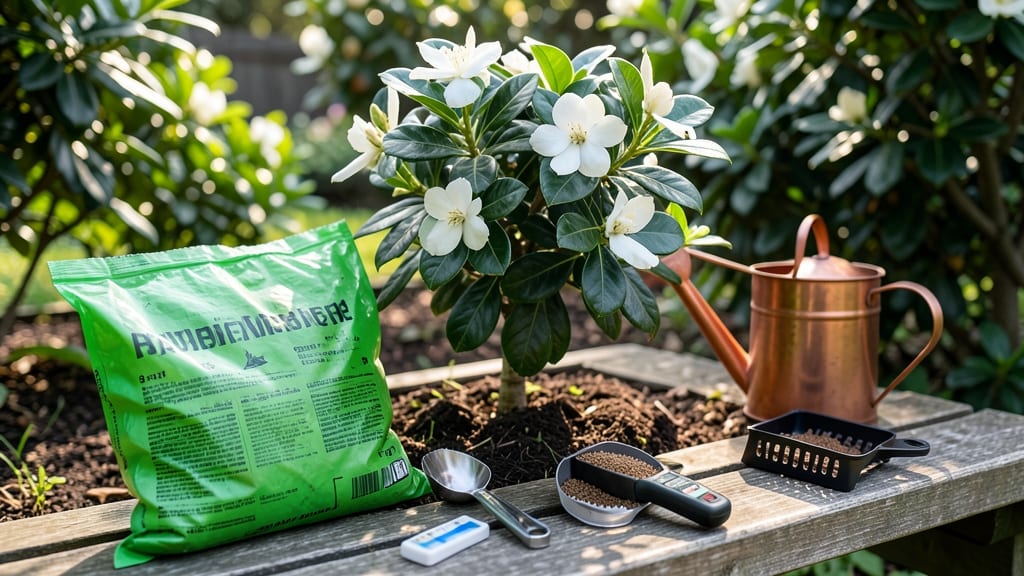
Your gardenia’s bold blooms and intoxicating fragrance depend on precise fertilizer requirements—and getting it wrong can leave you with yellowing leaves or no flowers at all.
Picture this: You’ve pruned, watered, and even pruned again, but your 🌸 gardenia still refuses to burst into color. The issue might not be your green thumb—it’s likely the soil pH or the type of fertilizer you’re using.
Gardenias are acid-loving divas, demanding a specific balance of nutrients to thrive in USDA Zone 6a and beyond.
In this guide, I’ll break down the exact NPK ratios and organic/synthetic fertilizers that keep gardenias happy, when to feed them (and when to skip it), and how to spot over- or under-fertilization before it’s too late.
By the end, you’ll know not just what to feed your gardenia, but when and how much—so you can finally enjoy those dreamy, fragrant blooms year after year.
Optimal soil pH and macronutrient requirements for gardenia fertilization
Gardenia plants are famously finicky about their growing conditions, and their soil pH is the foundation for everything else. These acid-loving shrubs thrive when their soil sits between pH 5.0 and 6.5—any higher, and they'll struggle to absorb essential nutrients, leading to yellowing leaves and sparse blooms.
I've learned the hard way that even a slightly alkaline soil can stunt growth, so testing your soil's pH before planting is non-negotiable.
Beyond pH, gardenias demand a balanced macronutrient profile to fuel their lush foliage and abundant flowers. The ideal ratio is 5-10-10 NPK (nitrogen-phosphorus-potassium), though I adjust this slightly depending on the plant's growth stage.
Too much nitrogen in summer, for example, can lead to leafy growth at the expense of blooms—the exact opposite of what we want from these fragrant stars.
Here's a quick breakdown of what your gardenia needs to thrive, including micronutrients that often get overlooked but are crucial for vibrant health:
| Nutrient | Requirement | Seasonal Notes | Signs of Deficiency |
|---|---|---|---|
| Soil pH | 5.0–6.5 | Test annually; amend with sulfur if too high | Yellowing leaves, stunted growth |
| Nitrogen (N) | 5% | Spring only; reduces blooms if overused | Pale green leaves, slow growth |
| Phosphorus (P) | 10% | Summer focus; promotes flowering | Purple stems, few buds |
| Potassium (K) | 10% | Year-round for disease resistance | Weak stems, poor bloom quality |
| Iron (Fe) | Chelated form | Apply in spring if chlorosis appears | Yellow leaves with green veins |
| Magnesium (Mg) | Epsom salt (1 tbsp/gal) | Apply in early summer | Yellowing between veins |
Let's talk about seasonal adjustments—this is where most gardeners go wrong. In spring, I focus on nitrogen to jumpstart growth, but I keep it light to avoid leggy plants. By summer, I switch to a phosphorus-heavy feed (like a 5-15-10 formula) to encourage bud formation.
The key is to feed every 6-8 weeks during the growing season, but never after mid-August, as this can stimulate tender new growth that won't survive winter.
Micronutrients like iron and magnesium are often the missing pieces in gardenia care. I've seen gardenias with perfect pH and NPK ratios still struggling because they lacked these trace elements. For iron deficiency (the dreaded chlorosis), I use chelated iron supplements applied directly to the soil.
Magnesium deficiencies show up as yellowing between leaf veins, and a foliar spray of Epsom salt (1 tablespoon per gallon) usually turns things around in a few weeks.
One mistake I see often is over-fertilizing in fall and winter. Gardenias go semi-dormant in cooler months, and feeding during this time can lead to soft, vulnerable growth that's prone to frost damage.
I always stop fertilizing by mid-September in my zone (6a), giving my plants time to harden off naturally. This patience pays off with bigger, healthier blooms the following summer.
If your gardenia's leaves are turning yellow but the veins stay green, you're likely dealing with iron deficiency—a classic sign of high pH blocking nutrient uptake. In this case, I recommend a two-pronged approach: lower the pH with elemental sulfur and apply a chelated iron supplement.
For magnesium issues, a simple Epsom salt solution sprayed on the leaves works wonders. The goal is to keep your gardenia's soil and foliage vibrant, so don't hesitate to test and adjust as needed.
Remember, gardenias are heavy feeders but sensitive to salt buildup from fertilizers. Always water thoroughly after applying any fertilizer to leach out excess salts and prevent root burn.
I also recommend mulching with pine needles or peat moss to maintain that crucial acidic environment and retain moisture—two things gardenias absolutely love.
🌸
Best organic and synthetic fertilizers for gardenias (with application tips)
Choosing the right gardenia fertilizer can transform your plant from a struggling shrub to a blooming superstar. Gardenias thrive on acid-loving fertilizers that provide balanced NPK ratios (like 5-10-10) while maintaining soil pH between 5.0-6.5.
Organic options like fish emulsion and peat moss gently feed roots, while synthetic acid-based granules deliver quick results for heavy bloomers.
Timing matters most—feed in early spring to kickstart growth, mid-summer to support blooming, and avoid fall/winter applications. Over-fertilizing causes leaf burn, while under-fertilizing leads to sparse flowers. Let’s break down the best choices and how to apply them without harming your gardenia’s delicate system.
🌱 Organic Fertilizers for Gardenias
- Improves soil structure over time
- Releases nutrients gradually (reduces burn risk)
- Supports microorganisms in acidic soil
- Slower results (may delay blooming)
- Requires frequent reapplication (every 4-6 weeks)
- Can attract pests if overused
🧪 Synthetic Fertilizers for Gardenias
- Precise NPK control for blooms
- Fast-acting for immediate growth
- Long-lasting slow-release options available
- Risk of leaf burn if overapplied
- May raise soil pH if not acidic-formula
- Requires strict dilution for potted plants
Top Picks: Fish emulsion (organic), Miracle-Gro Azalea (synthetic), peat moss (soil amendment)
For organic options, I swear by fish emulsion diluted to 1 tbsp per gallon of water—apply every 6-8 weeks during active growth. Mix it with peat moss (work 2 inches into soil annually) to maintain acidity.
Synthetic fans often reach for acid-loving formulas like Miracle-Gro Azalea, following the label’s monthly schedule but halving the dose for potted gardenias.
Watch for yellowing leaves (under-fertilization) or brown leaf tips (over-fertilization). If you spot stunted growth, flush the soil with water to leach excess salts. In my experience, spring feeding with a balanced 5-10-10 fertilizer sets the stage for summer’s fragrant blooms, while fall applications should be skipped entirely.
Pro tip: Always water your gardenia before fertilizing to prevent root burn. For potted plants, I use a wicking system to maintain consistent moisture—critical when fertilizing. And remember, less is more with gardenias; they’d rather have fewer, stronger blooms than a bush overloaded with weak flowers.
🌸