
Planting
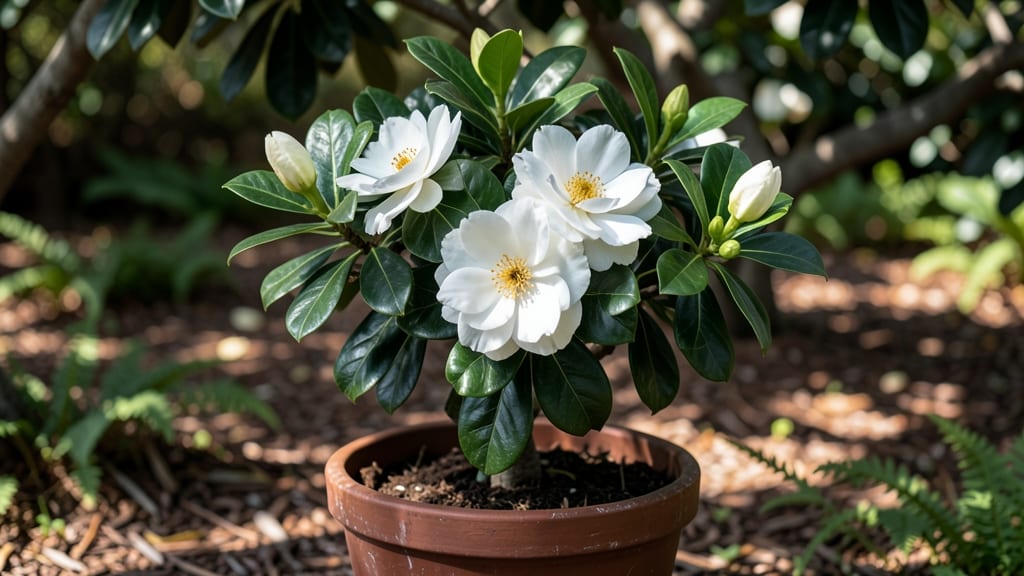
Gardenia plants thrive best in the hardy zone 7 through 11, where they can handle temperatures down to 10°F (-12°C) when fully dormant. Younger plants or those with exposed roots in zone 7 may still need extra winter protection, while microclimates with shelter and mulch can slightly extend their cold tolerance.
Understanding a gardenia's cold tolerance helps you choose the right location and care strategy.
These tropical beauties enter dormancy in winter, which is when they can survive brief cold snaps. Mature plants in zone 7 often bounce back from light freezes, but their roots—especially those in exposed soil—are vulnerable to prolonged cold.
That's why gardeners in marginal zones often use thick mulch or even temporary cold frames to protect them during winter's harshest months. The key is balancing their need for warmth with practical winter protection. 🌿
For those in zones 6 or colder, container growing with overwintering indoors becomes essential. The plant's ability to handle cold depends on how gradually it's exposed to temperature drops—sudden freezes are far more damaging than steady, slow cooling.
This is why microclimates near south-facing walls or urban heat islands can make a difference, sometimes allowing gardenias to thrive where they otherwise wouldn't. The right preparation makes all the difference between a struggling plant and one that blooms beautifully year after year.
💡 In This Article
- Gardenia Cold Tolerance Science: How Temperature Affects Growth
- Microclimate Hacks for Growing Gardenias in Zone 6 or Colder
Gardenia cold tolerance science: how temperature affects growth
Gardenia plants are tropical evergreens that rely on a specific physiological process to survive cold snaps. During dormancy, their metabolic rate slows dramatically, allowing them to tolerate temperatures as low as 10°F (-12°C)—but only when fully dormant.
The plant's roots, which are the most vulnerable part, contain specialized cells that produce antifreeze proteins similar to those found in cold-hardy citrus varieties. These proteins prevent ice crystals from forming in the cell walls, which would otherwise rupture delicate tissues.
However, this protection only activates when temperatures drop gradually over several weeks, not during sudden freezes.
The real damage occurs when temperatures fall below 28°F (-2°C) for more than a few hours. At this threshold, water inside the plant's cells begins to crystallize, causing cell walls to rupture and disrupting nutrient transport.
Leaves often show the first signs of stress—turning brown at the edges—while flower buds blacken and fail to open in spring. Mature plants have thicker bark and deeper root systems, which provide better insulation against cold than young plants with their thinner stems and shallow roots.
This is why a 5-year-old gardenia might survive a 15°F (-9°C) night in zone 7, while a 1-year-old sapling could suffer irreversible damage at 25°F (-4°C). 🌱
What makes gardenias unique is their sensitivity to frost duration rather than just temperature. A brief dip to 10°F (-12°C) might cause only superficial leaf damage, but prolonged exposure (more than 4-6 hours) can kill the plant's cambium layer—the growth tissue just beneath the bark.
This is why gardeners in zone 7 often see their plants recover from light freezes but struggle with repeated cold snaps. The plant's ability to rebound depends on how quickly it can regenerate new growth in spring, which is why early-season warmth is critical for recovery.
Another critical factor is soil temperature. Gardenias prefer soil that stays above 50°F (10°C) year-round, and cold soil accelerates root damage. When soil temperatures drop below 40°F (4°C), root respiration slows, starving the plant of essential nutrients.
This is why mulching with 4-6 inches of organic matter (like shredded bark or pine needles) is so effective—it insulates the roots and maintains a more stable temperature. In contrast, bare soil can fluctuate by 20°F (11°C) between day and night, creating stress that weakens the plant's cold tolerance. 🌡️
Seasonal timing also plays a role. Gardenias enter dormancy in late fall when daylight shortens, and they remain dormant until early spring. This natural cycle is what allows them to survive cold temperatures—when actively growing, they can't tolerate anything below 40°F (4°C) without damage.
The challenge for gardeners is mimicking this natural dormancy cycle in colder climates.
For example, in zone 6, gardeners often prune back the plant in early fall to encourage dormancy before the first frost, while in zone 8, they might need to provide afternoon shade to prevent heat stress during summer.
Understanding these physiological responses helps explain why some gardenias thrive in zone 7 while others fail. The difference often comes down to root health, plant maturity, and how well the gardener can manipulate the microclimate.
For instance, a gardenia growing against a south-facing brick wall might survive winters 5°F (3°C) colder than one planted in an open garden bed, because the wall radiates heat and reflects sunlight back onto the plant.
This microclimate effect is why gardeners in marginal zones often experiment with different planting locations to find the sweet spot for their gardenias. 🌿