
Tools
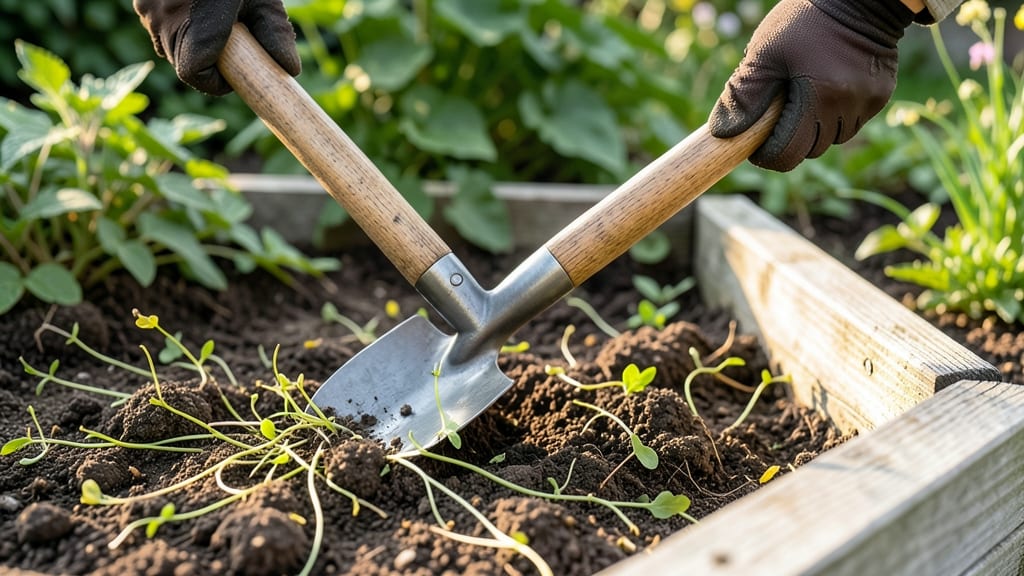
A garden hoe has countless uses beyond weeding, including soil cultivation, bed leveling, and even harvesting root vegetables. Its sharp blade and sturdy handle make it perfect for tasks like breaking up compacted earth, creating planting furrows, and maintaining garden paths.
A garden hoe isn't just for pulling weeds—its design lets it handle soil prep like a pro. 🌱 The angled blade slices through tough roots while aerating the soil, which helps water and nutrients reach plants more efficiently.
I've used mine to carve precise furrows for seed planting, create clean edges around garden beds, and even chop through stubborn sod when renovating lawn areas.
The key is choosing the right type: a draw hoe works best for weeding, while a stirrup hoe gives you more control for detailed soil work.
What really sets a garden hoe apart is its ability to tackle unexpected tasks. Need to harvest carrots or beets? A hoe makes quick work of loosening the soil around shallow roots. Struggling with thick mulch? It slices through it like butter.
Even pruning low-lying plants becomes easier with the right technique. The versatility comes from how the blade interacts with different materials—whether it's cutting through weeds, leveling soil, or clearing debris, this tool proves its worth time and again in the garden.
💡 In This Article
- How a Garden Hoe Functions for Soil and Plant Care
- 10 Unexpected Ways to Maximize Your Hoe’s Utility
How a garden hoe functions for soil and plant care
The garden hoe's effectiveness comes from its blade design, which varies between draw hoes and stirrup hoes. Draw hoes feature a flat blade that slices horizontally, perfect for cutting weeds at the soil line while leaving plant roots intact.
Stirrup hoes, with their U-shaped blade, allow you to push soil toward you while standing upright, making them ideal for detailed soil work. The blade's sharp edge creates a clean cut that severs weed roots at their base, preventing regrowth—unlike pulling, which often leaves fragments behind to sprout again.
When you work the hoe into the soil, the blade's angle creates tiny channels that improve aeration. This process breaks up compacted earth, allowing water and air to penetrate deeper. Studies show that proper aeration can increase root growth by up to 30% by reducing soil density.
The hoe's action also disrupts weed seed germination by exposing them to sunlight, which prevents them from establishing roots. Timing matters here: using a hoe when weeds are young (2-3 inches tall) makes removal effortless, while waiting until they're mature requires more force and risks disturbing nearby plants.
The hoe's versatility extends to soil preparation. Before planting, dragging the blade across the ground creates furrows for seeds or transplants, ensuring proper spacing and drainage. The blade's weight helps level uneven areas, creating a smooth surface for seeds to germinate against.
For established beds, the hoe can be used to remove thatch—a layer of dead plant material—that suffocates roots and blocks water. This technique is especially valuable in vegetable gardens where root crops like carrots need loose soil to grow straight.
One often-overlooked benefit is how the hoe interacts with plant roots. When used gently around established plants, it can loosen soil without damaging roots, a process called cultivation. This is particularly useful for shallow-rooted plants like lettuce or radishes, where compacted soil stunts growth.
The hoe's blade also makes quick work of cutting through sod when renovating lawn areas, allowing you to remove grass without heavy machinery. The key is maintaining a sharp blade—dull edges tear rather than cut, making the tool less effective and increasing your effort.
For advanced gardeners, the hoe becomes a precision tool. When harvesting root vegetables like carrots or beets, the blade can be used to loosen soil around the edges before gently lifting the vegetable. This prevents damage to the roots and makes storage easier.
The same technique works for dividing perennials—simply use the hoe to cut through roots at the desired separation point. The tool's ability to work in tight spaces makes it invaluable for container gardens or small plots where other tools can't reach.
What makes the garden hoe so adaptable is its simplicity. Unlike power tools that require fuel or electricity, a hoe runs on human strength and precision. The ergonomic handle design allows for long periods of use without fatigue, making it perfect for both small backyard gardens and large agricultural plots.
When maintained properly—with regular sharpening and storage in a dry place—the hoe can last decades, proving that sometimes the most basic tools are the most reliable in the garden.