
Tools
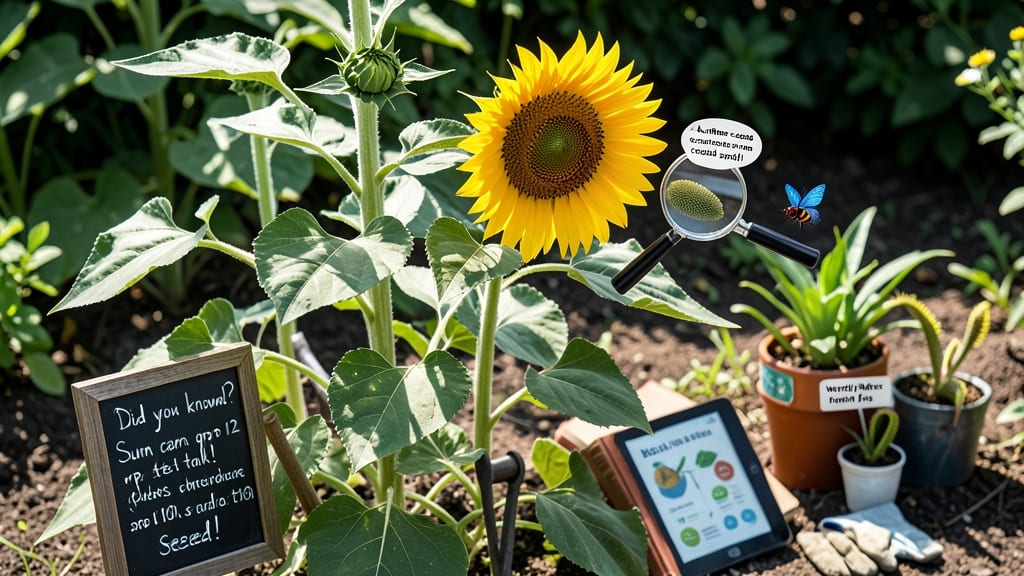
Fun facts about gardening reveal nature's hidden wonders, from plants that communicate through underground fungal networks to the 10,000-year-old aspen clone that's Earth's oldest living organism. These botanical secrets show how much we still have to learn about the plants growing right under our feet.
Did you know your garden might be a bustling social network? 🌱 Plants share nutrients through mycorrhizal fungi, creating an underground "wood wide web" that helps them survive droughts and pests. Even the Venus flytrap's lightning-fast snapping (0.1 seconds) is a marvel of plant engineering—faster than a human blink!
These fascinating behaviors prove that even the simplest garden holds complex biological dramas playing out in plain sight.
Beyond communication, plants break records too. The Pando aspen grove in Utah isn't just one tree—it's a single genetic organism that's been growing for over 80,000 years, making it the oldest living thing on Earth.
Meanwhile, the bamboo can grow up to 35 inches in a single day, while the jackfruit holds the title for the world's heaviest fruit, sometimes weighing over 80 pounds. These extremes remind us that gardens aren't just about beauty—they're living laboratories of evolutionary ingenuity.
💡 In This Article
- Hidden Plant Communication Systems in Gardens
- Unusual Plant Records and Natural Superlatives
Hidden plant communication systems in gardens
Plants have evolved sophisticated ways to "talk" to each other beyond just roots touching soil. The most famous example is the mycorrhizal network, where fungi connect plant roots into a vast underground web.
This "wood wide web" allows trees like oaks to share 30-40% of their carbon with neighboring plants during droughts, acting like a biological lifeline. 🌱 The fungi receive sugars from the plants in return, creating a mutualistic relationship that can span entire forests.
Some plants even use chemical signals to warn others about threats. When a caterpillar chews on a plant, it releases volatile organic compounds (VOCs) that neighboring plants detect through their leaves. These VOCs trigger defensive responses like producing bitter chemicals or extra tannins.
For instance, tobacco plants exposed to caterpillar-damaged air produce 20% more nicotine in their leaves within hours—a chemical deterrent that would repel most herbivores.
Ultrasonic vibrations add another layer to this hidden dialogue. Maize plants emit high-frequency sounds when attacked by caterpillars, creating what scientists call "plant screams" at 20-150 kHz. These vibrations travel through the air and soil, alerting nearby plants to prepare their defenses.
While humans can't hear these sounds, sensitive equipment reveals this remarkable communication system that operates alongside the mycorrhizal network.
Even root exudates play a role in plant conversations. Plants release complex chemical cocktails from their roots that can suppress competing plants or attract beneficial microbes. For example, alfalfa roots exude coumarin, a compound that inhibits the growth of nearby weeds while promoting the growth of nitrogen-fixing bacteria.
This chemical signaling creates a competitive advantage in crowded garden beds.
What makes these systems even more fascinating is their speed. The Venus flytrap's famous snap happens in just 0.1 seconds, triggered by tiny hairs on its leaves detecting prey.
This rapid response is powered by an electrical impulse that travels through the plant's tissue, causing specialized cells to fill with water and snap shut. 🌿 Similar electrical signaling occurs in other carnivorous plants like the pitcher plant, though their traps work more slowly.
These communication networks explain why diverse plantings often thrive better than monocultures. When you mix compatible species in your garden, you're essentially creating a miniature ecosystem where plants can share resources and warnings. This is why permaculture designs often prioritize polycultures—mimicking nature's own communication systems for healthier, more resilient gardens.