
Planting
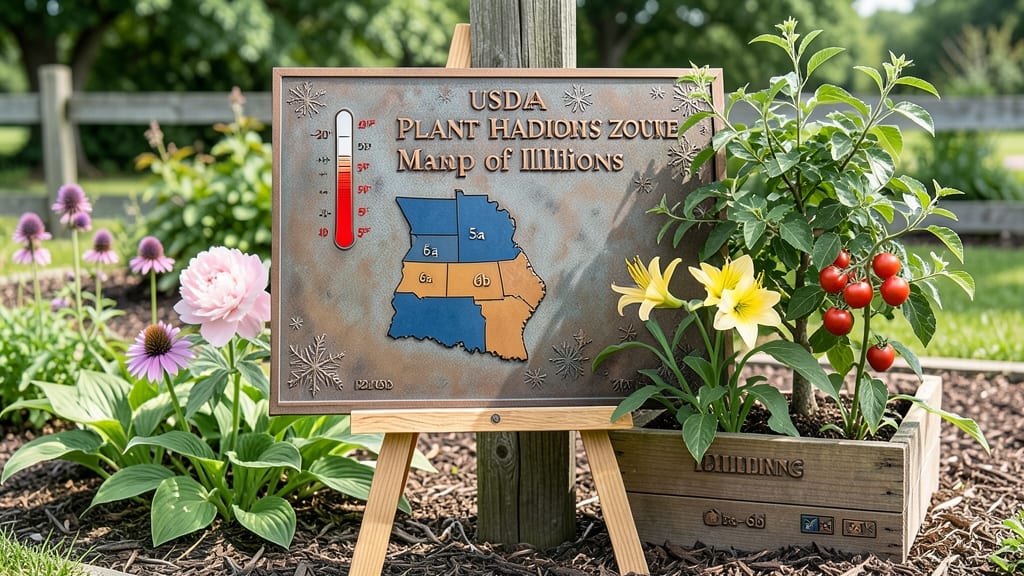
For gardening in Illinois, you'll work primarily in USDA Hardiness Zones 4 through 6, with most of the state falling between Zones 5 and 6. Microclimates like urban heat islands or river valleys can shift your zone by 1 or more, while northern areas lean toward Zone 4 and southern regions may reach Zone 7 in extreme cases.
Illinois' gardening zones follow a clear north-south pattern, with colder winters in the northern third (Zone 4) and milder winters in the southern third (Zone 6). Chicago's urban sprawl often creates pockets of Zone 5 or even 6 due to concrete heat retention, while rural areas near the Mississippi River may experience slightly warmer microclimates. Elevation changes—like the higher terrain around Southern Illinois—can also push zones up by 1 or more.
These variations mean checking your exact location on the USDA map is essential for selecting the right plants.
To account for microclimates, pay attention to your yard's specific conditions. South-facing walls or paved surfaces can create heat islands that extend growing seasons, while low-lying areas may experience frost pockets that delay spring planting. Local nurseries often carry plants suited to these nuances, so don't hesitate to ask for recommendations based on your specific zone and exposure. 🌱
💡 In This Article
- USDA Plant Hardiness Zones in Illinois: A Regional Breakdown
- Illinois Microclimates: Adjusting Plant Selection for Local Conditions
USDA plant hardiness zones in Illinois: a regional breakdown
Illinois' gardening zones follow a predictable north-south gradient shaped by latitude and elevation. The northern third of the state, including areas like Duluth and Rockford, falls into Zone 4, where average annual minimum temperatures dip to -30°F to -20°F.
This colder climate supports hardy plants like Norway spruce and winter wheat, which can survive these harsh winters. As you move southward, the climate gradually warms, with Chicago and the surrounding metro area typically landing in Zone 5, where winter lows range from -20°F to -10°F. 🌡️
The central region, encompassing cities like Peoria and Springfield, solidifies as Zone 5b to 6a, with average winter lows between -10°F and 0°F. This zone is ideal for a broader range of plants, including peach trees and roses, which thrive in these milder winters.
Southern Illinois, particularly around Carbondale and Paducah, extends into Zone 6b, where temperatures rarely drop below 0°F, allowing for year-round growth of camellias and olive trees in sheltered microclimates.
Elevation plays a subtle but critical role in these zones. The higher terrain of Southern Illinois, particularly near the Shawnee National Forest, can push zones up by 1 or more due to cooler nighttime temperatures.
For example, a garden at 1,000 feet elevation might experience conditions similar to Zone 5 even if it's geographically in Zone 6.
Conversely, urban areas like Chicago often see Zone 6 conditions due to the "urban heat island" effect, where concrete and asphalt absorb and retain heat, raising temperatures by 2-5°F compared to rural areas. 🏙️
Even nearby cities can experience zone variations. For instance, St. Louis sits in Zone 6a, while East St. Louis, just across the Mississippi River, may dip slightly into Zone 5b due to cooler river breezes.
These local differences highlight why gardeners should verify their exact zone using the USDA Plant Hardiness Zone Map or tools like the National Oceanic and Atmospheric Administration (NOAA) climate data for precise planting decisions.
Understanding these regional nuances helps explain why some plants thrive in one part of Illinois but struggle in another.
For example, blueberries, which prefer acidic soil and Zone 4-6, grow well across most of the state, while citrus trees, which need Zone 8+, are limited to greenhouses or containers in southern Illinois. The key takeaway?
Illinois' diverse zones offer both challenges and opportunities for gardeners willing to adapt their plant selections to local conditions. 🌿