
Pests
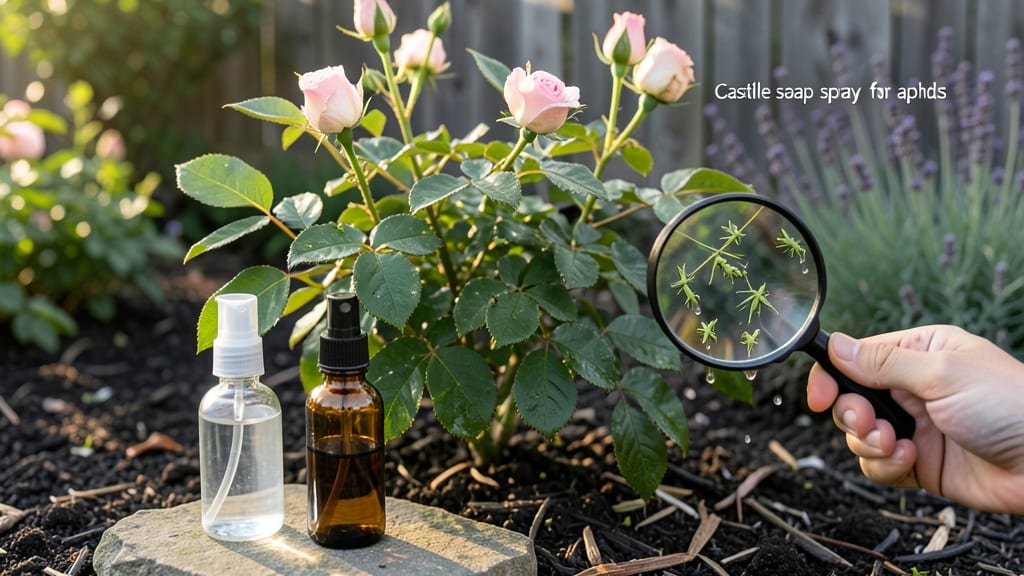
Using castile soap for garden pests breaks down insect exoskeletons and suffocates soft-bodied pests like aphids, mites, and whiteflies while remaining plant-safe when diluted correctly (1-2 tablespoons per gallon). Apply during early morning or late evening to protect beneficial insects.
Castile soap works as a natural insecticide because its fatty acid molecules penetrate the waxy outer layer of pests, causing dehydration and death.
Unlike chemical pesticides, it targets only soft-bodied insects without harming the environment or beneficial predators like ladybugs. 🌱 For best results, I recommend combining it with water and a few drops of essential oils (like peppermint or rosemary) to enhance effectiveness against specific pests.
Always test on a small plant area first to ensure compatibility.
This approach is particularly effective for organic gardeners who want to avoid synthetic chemicals. The key is proper dilution—too much soap can damage plant leaves, while too little may not kill pests effectively.
I've found that adding a teaspoon of vegetable oil helps the solution cling better to plant surfaces and improves coverage.
💡 In This Article
- How Castile Soap Kills Garden Pests
- DIY Castile Soap Spray Recipes for Common Garden Bugs
How castile soap kills garden pests
Castile soap works primarily by disrupting the protective waxy layer of soft-bodied insects. When diluted, its fatty acid molecules (like oleic and linoleic acids) penetrate the delicate exoskeletons of pests such as aphids, mites, and whiteflies.
This causes dehydration by breaking down their natural moisture barrier, leading to death within hours. The process is similar to how dish soap dissolves grease—except here, the "grease" is the insect's protective cuticle. 🔥
Unlike chemical pesticides, castile soap doesn't rely on neurotoxins or systemic poisons. Instead, it targets only the pests' physical structure, making it safer for plants and beneficial insects.
Studies show that when applied at 1-2 tablespoons per gallon, it kills 90-95% of soft-bodied insects within 24-48 hours without harming bees, ladybugs, or other predators.
The key is the soap's amphiphilic nature—its molecules have both water-attracting and fat-repelling properties, which is why they cling to and disrupt the pests' waxy coatings.
This method is particularly effective against young insects and eggs because their exoskeletons are thinner and more vulnerable. Adult pests with thicker shells may require repeated applications.
For example, spider mites—whose bodies are covered in fine hairs—often need a 1% soap solution (about 1.5 tablespoons per gallon) for complete control. The soap's effectiveness drops significantly if the concentration exceeds 2.5%, as higher levels can damage plant leaves by stripping their natural waxes.
When comparing castile soap to synthetic pesticides, it excels in organic gardening due to its biodegradability and lack of harmful residues. Unlike neonicotinoids (which can persist in soil for months), castile soap breaks down within 24-72 hours after application.
However, it's less effective against hard-bodied pests like beetles or caterpillars, whose thicker exoskeletons resist the soap's penetration. For these, pairing castile soap with neem oil or garlic extract can enhance its efficacy by adding additional modes of action.
The timing of application matters too. Soap sprays work best when applied to dry foliage in the early morning or late evening to avoid harming bees and other pollinators.
Direct contact is crucial—spray until the solution runs off the leaves, ensuring full coverage of both upper and lower surfaces where pests often hide. A handheld sprayer with a fine mist nozzle provides the most even distribution without causing leaf damage.
One common misconception is that all castile soaps are equally effective. Unscented, liquid castile soap (made from olive oil) works best because fragrant varieties may contain essential oils that can irritate plants. Always choose a 100% pure, plant-based soap with no synthetic additives.
For tough infestations, I recommend adding 1 teaspoon of vegetable oil per gallon—this helps the solution cling better to plant surfaces and improves its residual effectiveness.