
Plants
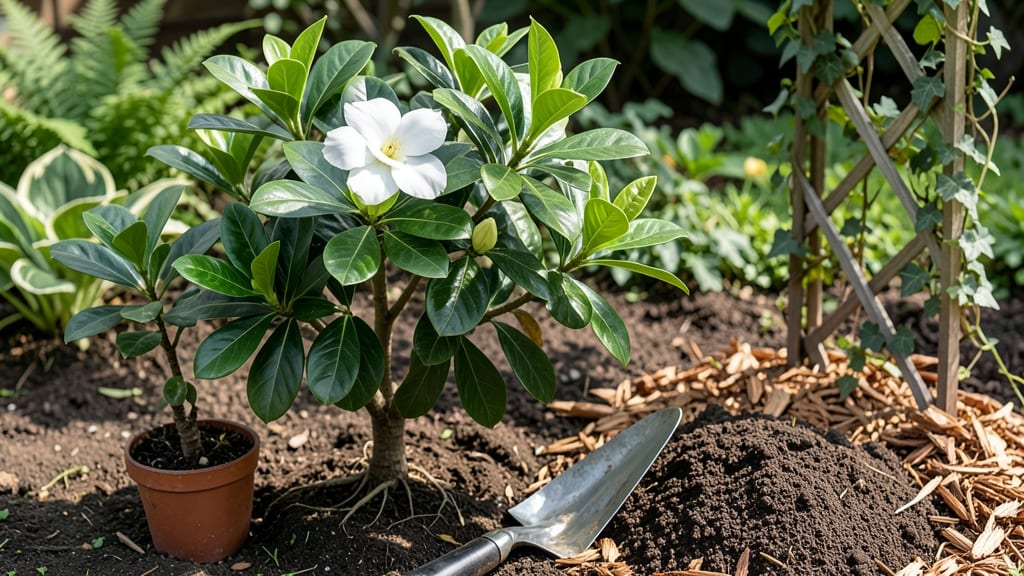
You can plant gardenia outside in USDA Zones 7-11, where frost-free winters and well-draining soil create ideal conditions for this tropical shrub to thrive with proper sunlight and moisture.
Gardenia thrives outdoors only where winter temperatures never dip below 30°F, making Zones 7-11 its perfect climate range. 🌿 The plant's glossy leaves and fragrant white blooms reward gardeners who replicate its native tropical environment—think sandy, acidic soil and morning sun with afternoon shade.
In marginal zones like 6b, you'll need winter protection like thick mulch or a frost blanket to prevent leaf burn. I've found that container gardening offers flexibility, letting you move potted gardenias indoors during cold snaps while still enjoying their beauty outdoors during warmer months.
For best results, plant in spring after the last frost date, using a mix of peat moss, perlite, and compost to mimic its natural habitat. Water deeply but allow the top inch of soil to dry between waterings—overwatering is the fastest way to kill these finicky beauties.
Prune lightly after flowering to maintain shape, and fertilize monthly during growing season with an acid-loving plant formula. The key to outdoor success lies in mimicking its tropical origins while adapting to your local climate's quirks.
💡 In This Article
- Gardenia Cold Hardiness: Understanding USDA Zones 7-11
- Outdoor Gardenia Planting Guide: Soil, Sun, and Watering Tips
Gardenia cold hardiness: understanding USDA zones 7-11
Gardenia's tropical origins explain why it only thrives outdoors in USDA Zones 7-11. These zones represent areas where winter temperatures rarely drop below 30°F, the critical threshold for gardenia survival.
When temperatures fall below this point, the plant's delicate cells begin to freeze, causing leaf burn and potentially killing the shrub.
The plant's native habitat in Southeast Asia and tropical regions means it evolved without natural cold resistance, unlike hardier plants like roses or hydrangeas that can tolerate 10°F or lower.
What makes gardenia particularly vulnerable is its evergreen nature—it maintains leaves year-round, which act as cooling surfaces during warm months but become vulnerable to frost damage. The plant's roots also struggle in cold, compacted soils, making proper soil preparation essential.
In Zone 6b (where winters dip to 0-5°F), gardenias can survive with winter protection like thick mulch (4-6 inches of pine straw or bark) or frost blankets, but growth may be stunted.
The key difference between successful outdoor planting and failure often comes down to these microclimate protections rather than just the zone designation.
Seasonal care adjustments become crucial in marginal zones. For example, in Zone 7a (0-5°F winters), gardeners often plant in large containers that can be moved indoors during cold snaps.
The plant's growth rate also slows dramatically below 50°F, which is why many gardeners in these zones choose dwarf varieties like 'Kleim's Hardy' that handle cooler temperatures slightly better.
What most people don't realize is that gardenias actually prefer warm nights—temperatures below 60°F at night can prevent flowering entirely, even in ideal daytime conditions.
Here's what's actually happening at the cellular level: Gardenias contain high levels of tannins that help protect against pests in their native environment, but these same compounds make them sensitive to temperature fluctuations.
When exposed to sudden cold snaps (below 32°F), these tannins can cause the plant's cell membranes to rupture, leading to the brown, crispy leaf edges that signal frost damage. This is why gradual acclimatization—like hardening off potted gardenias before moving them outdoors—is so important for container-grown plants.
Consider these temperature thresholds for gardenia care:
- Optimal growth: 70-85°F daytime, 60-65°F nighttime
- Flowering trigger: Consistent 75°F+ days with 12+ hours of sunlight
- Danger zone: Below 30°F (lethal), 32-40°F (leaf burn risk)
- Slow growth: Below 50°F (metabolic slowdown begins)
The science behind gardenia's cold sensitivity lies in its C3 photosynthetic pathway, which operates most efficiently in warm conditions.
Unlike C4 plants (like corn) that can photosynthesize in cooler temperatures, gardenias become stressed below 60°F, which is why you'll often see them struggling in northern Zone 7 areas unless given special care. This tropical nature is both their greatest asset (fragrant blooms) and their biggest challenge (cold sensitivity).