
Vegetables
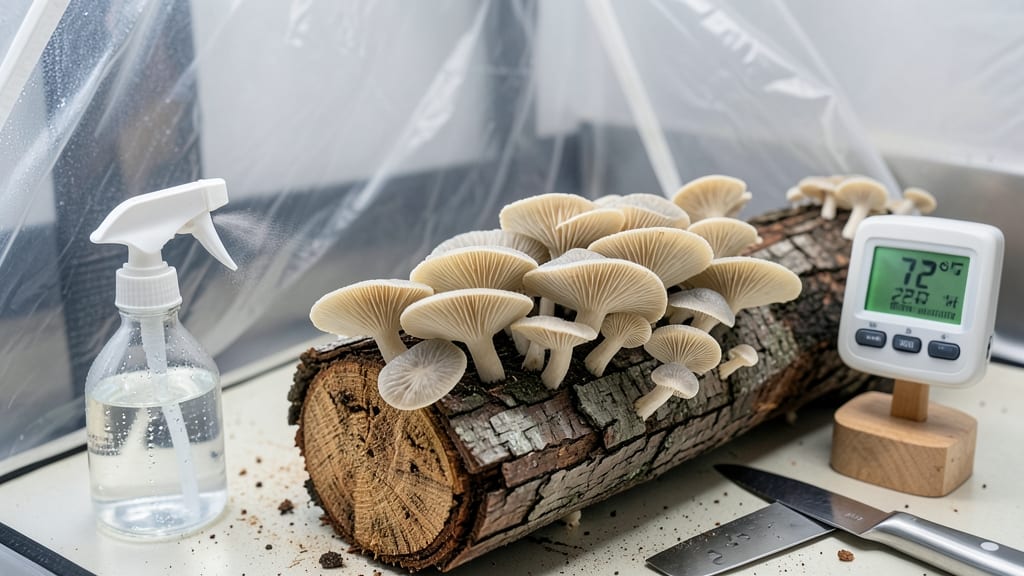
Yes, mushrooms can be shocked in grow-a-garden setups using cold therapy to stimulate fruiting, but success depends on species-specific conditions. Most oyster or shiitake mushrooms thrive with 12–24 hours at 32–40°F (0–4°C) before producing, while avoiding extreme cold or prolonged exposure that risks killing mycelium or stalling growth.
Cold therapy mimics natural seasonal changes that trigger mushrooms to fruit, essentially "waking up" dormant mycelium through controlled stress. 🌱 For example, oyster mushrooms often respond faster to shorter cold shocks (12 hours) compared to shiitake, which may need up to 24 hours at 38°F (3°C).
The key is consistency—gradual temperature shifts prevent shock damage while maximizing fruiting potential.
This technique is especially useful for indoor growers who lack seasonal temperature fluctuations. By using a refrigerator or cooling chamber, you can replicate outdoor conditions without risking contamination. Just monitor humidity (keep it at 85–95%) and avoid abrupt temperature swings, which can stress the mycelium beyond recovery.
💡 In This Article
- How Cold Shock Triggers Mushroom Fruiting Cycles
- Step-by-Step Cold Shock Techniques for Indoor Grow Gardens
How cold shock triggers mushroom fruiting cycles
Cold shock works by mimicking nature's seasonal cues that signal mushrooms to fruit. When mycelium experiences a sudden drop to 32–40°F (0–4°C), it triggers a cascade of biological responses.
The cold stress activates specific genes that produce enzymes like trehalose-6-phosphate, which helps protect cell membranes from damage while preparing the mycelium for fruiting. This process is similar to how deciduous trees sense winter's approach and begin budding in spring—except mushrooms respond within days rather than months. 🌱
The mechanism varies by species due to evolutionary adaptations. For instance, oyster mushrooms—native to temperate forests—respond quickly to short cold shocks (12 hours) because their mycelium evolved to capitalize on brief seasonal windows.
In contrast, shiitake mushrooms, which grow in cooler mountain regions, often require 24 hours at 38°F (3°C) to fully trigger fruiting. Lion’s mane, however, may need even milder cold exposure (45–50°F/7–10°C) for just 6–8 hours, as its tropical origins make it more sensitive to extreme cold.
Circadian rhythms also play a critical role. Mushrooms have internal biological clocks that synchronize with temperature fluctuations, ensuring fruiting occurs at optimal times for spore dispersal. When you shock mycelium, you’re essentially "resetting" this clock, forcing it to initiate the fruiting process even in controlled indoor environments.
This is why timing matters—subjecting mushrooms to cold at the wrong stage (like during active growth) can disrupt their natural cycles and reduce yields.
Humidity control is equally vital during cold shock. At these low temperatures, air holds less moisture, so maintaining 85–95% relative humidity prevents mycelium from drying out. A common mistake is placing trays directly in a fridge without proper ventilation, which can lead to condensation buildup and fungal rot.
Instead, use a cooling chamber with a humidifier or line the fridge with damp towels to create a stable microclimate.
What most growers overlook is the role of ethylene gas, a natural plant hormone that mushrooms produce in response to stress. Cold shock boosts ethylene levels, which further stimulates pinning (the first visible sign of fruiting).
However, too much ethylene—often from overcrowded grow spaces—can cause abnormal growth patterns. For best results, shock mushrooms in a well-ventilated cooler with fresh air exchange every 4–6 hours to balance hormone signals.
Visual cues can help you gauge success. After cold exposure, watch for tiny white pins (1–3 mm) emerging within 3–7 days. These are the first signs of fruiting bodies forming.
If pins appear unevenly or fail to grow, the shock may have been too severe or too brief. For example, oyster mushrooms shocked at 30°F (-1°C) for 24+ hours often produce stunted clusters, while the same species shocked at 38°F (3°C) for 12 hours yields dense, uniform harvests.
Pro tip: Document your cold shock experiments with a grow journal. Note the species, exact temperature, duration, and humidity levels. Over time, you’ll refine your method—perhaps discovering that your local oyster strain thrives with 16 hours at 35°F (2°C) instead of the standard 12.
This personalized approach maximizes your success rate while minimizing wasted substrate. 💫