
Light Requirements
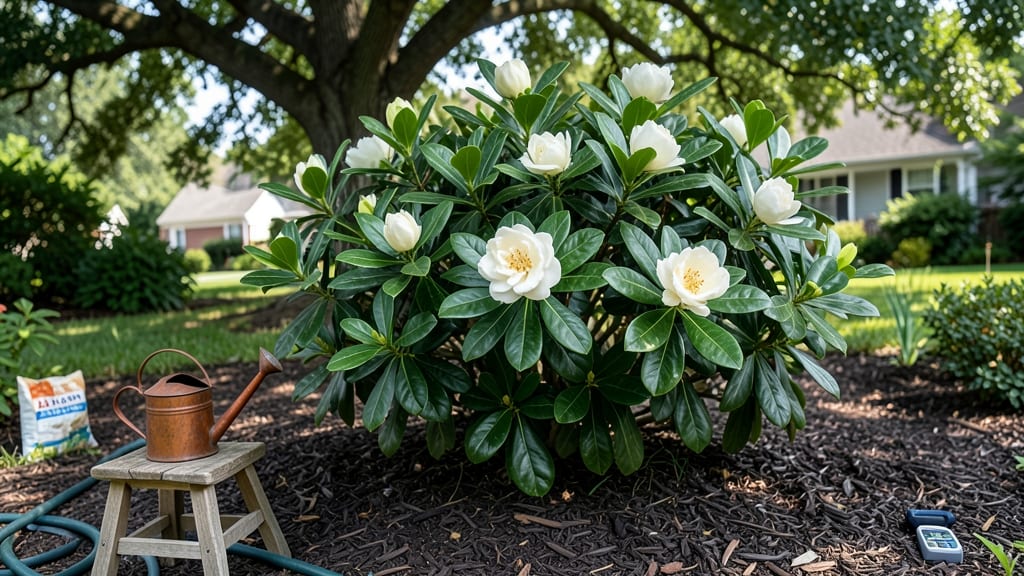
Gardenia plants can grow in shade, but their fragrant blooms and lush foliage depend on the right balance of light.
If you’ve ever admired gardenias’ intoxicating scent but assumed they needed full sun, think again—these tropical beauties adapt surprisingly well to partial shade with the right care.
The key lies in understanding how much shade they can handle without sacrificing those iconic white blooms, and how to tweak their environment for optimal growth.
Too little light leads to sparse flowers and yellowing leaves, while too much shade can stunt growth entirely.
Below, I’ll break down the ideal light conditions, how to spot signs of stress, and practical tricks—like strategic placement near east-facing windows or using filtered light—to keep your gardenias thriving in shadier spots.
Whether you’re working with a north-facing yard or a covered patio, you’ll discover how to coax fragrant blooms from gardenias without relying on full sun. Let’s turn your shaded garden into a fragrant oasis.


How much shade can gardenias tolerate without sacrificing blooms?
Gardenias thrive in partial shade, but their tolerance varies dramatically based on the type of shade and your climate. While they can survive in 30-60% shade, pushing beyond 60% shade often reduces blooms and weakens growth.
The key lies in understanding filtered light versus deep shade—both behave differently for these tropical shrubs.
In ideal conditions, gardenias need 4-6 hours of bright, indirect light daily. This mimics their native understory habitats in Southeast Asia, where they receive dappled sunlight through tree canopies.
When placed in deep shade (less than 30% light), gardenias may produce fewer blooms and develop long, leggy stems as they stretch toward any available light.
Here’s the critical threshold: Below 30% light, gardenias struggle to photosynthesize enough energy for blooming. Above 70% shade, they risk becoming etiolated—a term for weak, stretched growth with sparse foliage. The sweet spot? 40-60% shade, especially in hot climates where afternoon sun can scorch leaves.
Microclimates play a huge role in gardenia shade tolerance. For example, a gardenia near a west-facing wall in a hot climate may need more shade (60%) to prevent leaf burn, while one in a cool, humid region can handle 40% shade without issues.
Always observe your gardenia’s leaf color—dark green and glossy means it’s happy; pale or yellowing leaves signal light stress or deficiency.
Signs your gardenia isn’t getting enough light include sparse blooms, small leaves, and stems growing toward windows. If you notice these, try moving your plant to a sunnier spot or supplementing with a grow light (12-14 hours/day in winter).
For potted gardenias, rotate them quarter-turns weekly to ensure even light exposure on all sides.
In deep shade, gardenias may still grow but will prioritize leaf production over blooms. To encourage flowering, prune back overly long stems in early spring to redirect energy toward bud formation.
Use a balanced, acid-loving fertilizer (like 10-10-10) every 4-6 weeks during the growing season to support blooming, even in lower light.
Pro tip: If your gardenia is in deep shade, consider reflective surfaces like white walls or mirrors to bounce extra light onto the plant. This trick can boost light exposure by 10-20% without moving the plant.
Just avoid placing reflective surfaces directly behind the gardenia, as this can cause leaf scorch from concentrated sunlight.
For container gardenias in shade, choose light-colored pots to reflect heat and ensure drainage holes to prevent root rot. Mulch with pine bark or peat moss to maintain acidic soil pH (5.0-6.5), which is critical for iron uptake—especially important in shaded conditions where chlorosis (yellowing leaves) is more likely.
Remember: Gardenias are adaptable, but they won’t tolerate neglect. If you’re committed to growing them in shade, monitor their response closely and adjust care as needed. With the right balance of light, soil, and nutrients, you can enjoy fragrant blooms even in the shadiest corners of your garden.
Proven strategies to grow thriving gardenias in shade or partial sun
Gardenias can absolutely thrive in shade or partial sun—you just need to tweak a few key elements. Their tropical roots prefer filtered light, and with the right soil, pruning, and companions, you’ll enjoy those signature fragrant blooms even in low-light spots.
The secret lies in mimicking their natural understory habitat while optimizing for your garden’s conditions.
Start with acidic, well-draining soil enriched with organic matter like peat moss or compost. Gardenias hate soggy roots, so amend heavy clay with perlite or sand to prevent waterlogging. Pair this with seasonal pruning to encourage air circulation and light penetration—both critical for blooming in shaded areas.
- 1 Soil Prep: Mix 50% garden soil with 30% peat moss and 20% perlite to create a well-aerated, acidic blend (pH 5.0–6.5).
- 2 Prune Strategically: Trim dead or crossing branches in late winter to open the canopy for better light penetration. Avoid heavy pruning—keep the shape rounded and airy.
- 3 Companion Plants: Pair with hostas or ferns to create a natural shade microclimate. Avoid competitive roots like maples—opt for shade-tolerant perennials instead.
- 4 Seasonal Feeding: Use acidic fertilizer (10-10-10) in spring and summer, but reduce in fall. Mulch with pine needles to maintain soil acidity year-round.
- 5 Light Optimization: If blooms are sparse, move the plant to a brighter spot (e.g., east-facing window or dappled sunlight) for 4–6 hours of indirect light daily.
For container-grown gardenias, choose pots with drainage holes and use a lightweight mix of peat, perlite, and pine bark. Containers dry out faster in shade, so check soil moisture weekly—stick your finger 2 inches deep.
If the soil feels dry, water thoroughly until it drains from the bottom.
Adjust your approach seasonally: In spring, focus on fertilizing and pruning to kickstart growth. By summer, prioritize watering consistency and shade protection (e.g., lattice screens for afternoon sun). In fall, taper off fertilizers and mulch heavily to insulate roots for winter.
With these strategies, your gardenias will reward you with lush foliage and fragrant blooms—even in shaded corners. The key is balancing light, soil, and care to meet their tropical needs without full sun.
Start small, monitor their response, and adjust as needed—your gardenias will thank you with scented perfection year after year. 🌿