
Container Gardens
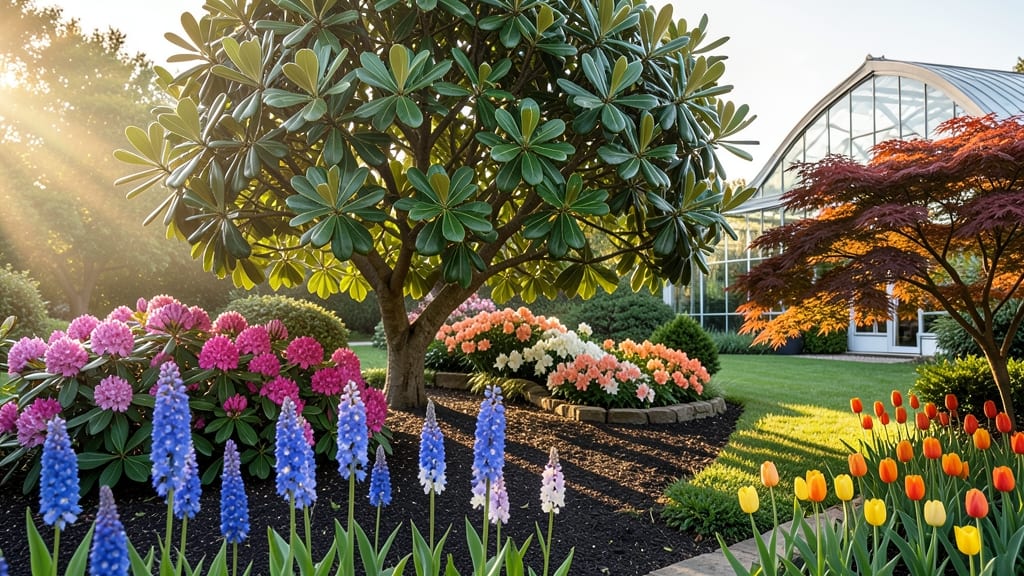
Botanical Gardens Belfast showcases over 2,000 plant species across 23 acres, featuring rare orchids, a Victorian glasshouse, and themed gardens like Japanese and Mediterranean sections. Seasonal highlights include spring bulbs, summer roses, and autumn foliage, with hidden trails like the Bog Garden and Woodland Walk providing peaceful retreats.
This 23-acre oasis in Belfast isn't just a garden—it's a living museum of biodiversity, where every season transforms the landscape. 🌿 The Victorian glasshouse, a centerpiece since 1828, shelters tropical wonders like the giant Victoria amazonica water lily, while the Japanese Garden offers serene escapes with carefully placed stones and koi ponds.
What makes it special is how these spaces evolve: spring's tulips give way to summer's roses, then the fiery hues of autumn foliage, creating a year-round tapestry of color and texture.
Beyond the main attractions, the Bog Garden and Woodland Walk reveal Belfast's native flora in their natural habitats, including rare carnivorous plants that thrive in the damp conditions. These hidden trails aren't just scenic—they're educational, offering insights into conservation efforts and the delicate balance of ecosystems.
Whether you're a plant enthusiast or just seeking a quiet spot, the gardens deliver something new with every visit.
💡 In This Article
- Exploring Belfast Botanical Gardens’ Unique Plant Collections
- Secret Trails and Seasonal Must-Sees in Belfast Botanical Gardens
Exploring Belfast botanical gardens’ unique plant collections
The Victorian glasshouse at Belfast Botanical Gardens serves as a climate-controlled sanctuary for over 1,000 tropical and subtropical plants, including the iconic Victoria amazonica water lily, whose leaves can reach 3 feet in diameter and support the weight of small children.
This 1828-built structure maintains 70-80°F year-round, creating a humid microclimate that mimics the Amazon rainforest. The glasshouse’s iron-and-glass design allows natural light to flood in while protecting delicate species from Belfast’s unpredictable weather, including frost and heavy rain.
Inside, you’ll find orchid collections numbering over 500 varieties, including the Cattleya and Phalaenopsis species, which thrive in the glasshouse’s 60-70% humidity.
These orchids aren’t just decorative—they play a critical role in pollinator conservation, attracting bees and butterflies that struggle to find native food sources in urban areas.
The glasshouse also houses carnivorous plants like the Nepenthes, which digest insects to supplement their nutrient-poor soil, a fascinating adaptation that highlights the garden’s role in biodiversity preservation.
Seasonal blooms transform the glasshouse into a dynamic ecosystem. In spring, bird-of-paradise flowers burst into vibrant orange and blue, while summer brings ginger lilies with their spicy fragrance. The autumn display features red and yellow bromeliads, and winter showcases Christmas cacti in full bloom.
Each season’s display is carefully curated to ensure continuous pollination cycles, supporting the garden’s 12-month flowering calendar.
The Japanese Garden, another standout, blends traditional Zen principles with horticultural science. Its 12-meter-long koi pond isn’t just decorative—it’s a closed-loop ecosystem that filters water naturally through aquatic plants like water lilies and iris, reducing the need for chemical treatments.
The garden’s stone lanterns are strategically placed to cast dappled shade on maple and cherry trees, creating ideal conditions for acid-loving plants like azaleas and rhododendrons, which thrive in the slightly acidic soil (pH 5.5-6.5).
What sets Belfast’s collections apart is their conservation focus. The garden partners with Kew Gardens and local universities to propagate endangered species, such as the Irish whitebeam, a native tree found in only five wild locations.
The Bog Garden, a 5,000-year-old peatland ecosystem, is a prime example—its carnivorous plants, like the Drosera (sundew), have evolved to survive in nutrient-poor soils by trapping insects. Visitors can observe these plants in action, with dew-covered leaves glistening under Belfast’s high humidity (80% in summer).
For plant lovers, the Mediterranean section offers a sensory journey with lavender hedges releasing their signature fragrance when brushed, and olive trees that have thrived for over 30 years in the garden’s well-drained soil.
The contrast between the arid-adapted Mediterranean plants and the moisture-loving tropical species in the glasshouse illustrates the garden’s role as a living laboratory for climate adaptation. 🌿