
Tools
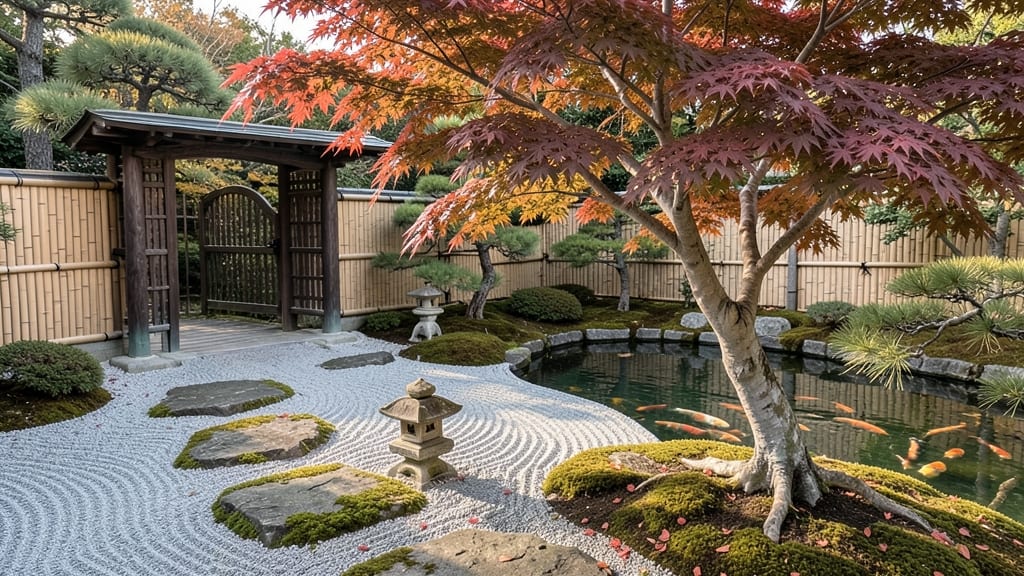
Creating a James Irvine Japanese Garden at home means blending tranquil water elements like koi ponds, carefully shaped pine trees, and meandering gravel paths with stepping stones, all framed by natural stone and verdant foliage. Anchor the design with symbolic features like a moon bridge or lanterns to capture its signature serenity.
The James Irvine Japanese Garden's magic lies in its intentionally imperfect beauty, where every element—from the winding paths to the carefully placed stones—serves a purpose in creating a meditative space. 🌿 Unlike traditional gardens, Irvine's design embraces asymmetry and seasonal transformations, ensuring your garden evolves naturally.
Start small: even a single serene water feature or a pruned bonsai tree can evoke the garden's essence, while lanterns or a stone lantern (tōrō) add cultural authenticity.
For plant selection, prioritize native species like Japanese maples or azaleas, which thrive in the garden's moist, shaded conditions.
The key is layering: tall trees provide structure, while ground covers like moss or ferns create soft transitions. 💫 Irvine’s genius was in making every element—even the gravel paths—feel deliberate yet organic, so focus on negative space (ma) to let the garden breathe.
💡 In This Article
- Key Design Principles Behind Irvine’s Japanese Garden Layout
- Step-by-Step Guide to Planting & Landscaping Like Irvine’s Garden
Key design principles behind Irvine’s Japanese garden layout
James Irvine’s garden embodies the Zen principle of wabi-sabi—finding beauty in imperfection. This philosophy is visible in the garden’s weathered stones and asymmetrical plantings, which create a sense of timelessness.
Irvine intentionally avoided rigid symmetry, instead embracing irregular shapes in both natural elements (like twisted pine branches) and man-made features (such as the winding gravel paths). The result is a space that feels organic yet meticulously crafted, where every element—even the unevenly placed rocks—has purpose. 🌿
The concept of shakkei (borrowed scenery) plays a crucial role here. Irvine designed the garden to "borrow" views from surrounding landscapes, creating depth without physical boundaries.
For example, a strategically placed stone lantern (tōrō) might frame a distant mountain or tree, while a moon bridge can reflect light across a pond to enhance the illusion of space.
This technique makes small gardens feel expansive, a trick you can replicate by positioning mirrors or glass panels to "extend" your outdoor area. The garden’s negative space (ma) further amplifies this effect, allowing the eye to rest and wander naturally.
Water features are the heart of Irvine’s design, serving both practical and symbolic purposes. The garden’s serpentine ponds and bubbling streams aren’t just decorative—they represent the flow of life and the passage of time.
Irvine used water to create soundscapes, with the gentle ripple of a koi pond masking urban noise. For home gardens, even a small recirculating fountain (measuring 3-4 feet wide) can mimic this effect.
The key is placement: position water elements where they’ll be heard from multiple vantage points, like a tea house or stone bench. 💧
Seasonal transformation is another cornerstone of Irvine’s approach. The garden’s plant palette—including Japanese maples (Acer palmatum), azaleas (Rhododendron), and bamboo (Phyllostachys)—was chosen to shift colors and textures throughout the year.
For instance, the maples’ leaves turn fiery red in autumn, while winter brings the stark beauty of pruned pine branches against snow. To replicate this, select plants with contrasting foliage (e.g., green moss next to purple-leafed shrubs) and group them in odd-numbered clusters for visual balance.
Irvine’s use of seasonal accents, like cherry blossoms in spring or golden wisteria in summer, ensures the garden feels alive year-round.
Finally, the garden’s symbolic elements—such as the stone lanterns and moon bridges—tie everything together. These features aren’t just decorative; they guide visitors through the space and mark transitions (e.g., from a garden path to a water feature).
For a home garden, start with one focal point, like a lantern near the entrance or a bridge over a small stream. The placement should encourage slow, deliberate movement, inviting contemplation.
Irvine’s genius was in making every detail—from the size of a stepping stone (typically 12-18 inches wide) to the angle of a gravel path (gradually curving)—feel intentional and harmonious. ✨