
Light Requirements
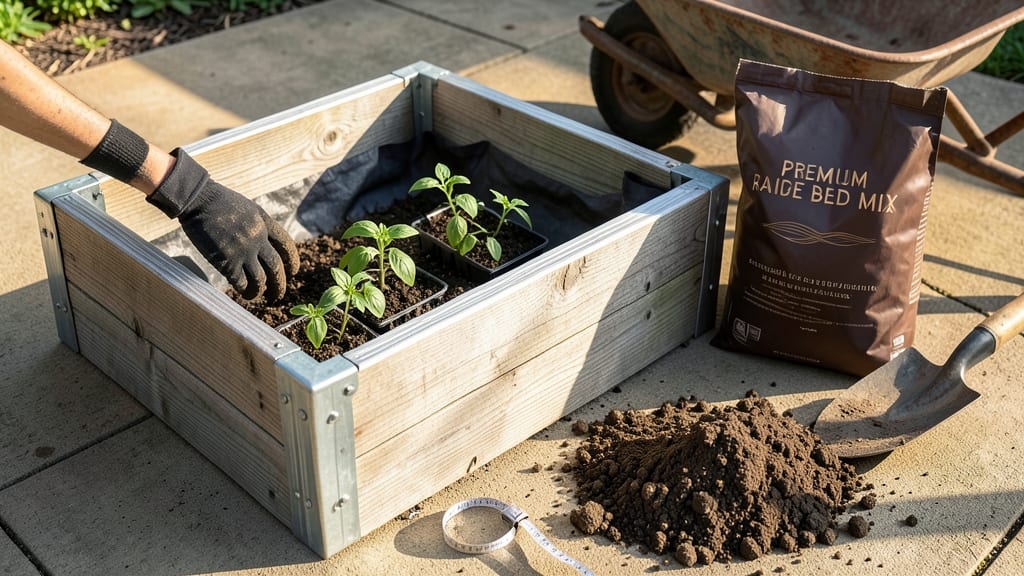
A 4 x 8 raised garden bed needs 16 cubic feet of soil for a standard 10-inch depth or 24 cubic feet for a 12-inch planting bed. Plan for extra soil to account for settling and topsoil replenishment over time.
Calculating soil volume for a raised bed is simple once you know the formula: length × width × depth (in feet). For a 4 x 8 bed, that's 32 square feet of surface area.
At 10 inches (0.83 feet) deep, you multiply 32 × 0.83 to get 26.56 cubic feet—why the standard recommendation rounds up to 16 cubic feet for practicality. 🌱 Deeper beds like 12 inches (1 foot) require even more volume (32 × 1 = 32 cubic feet), which is why gardeners often opt for 24 cubic feet to ensure proper root space.
The extra soil also helps compensate for compaction and organic matter breakdown over seasons.
Don't forget that soil settles over time, especially when watered or worked. I always recommend buying 10-20% more soil than your calculations suggest. For example, if you need 16 cubic feet, consider purchasing 18-20 cubic feet to avoid running short mid-project.
This extra buffer ensures your plants have optimal growing conditions from day one.
💡 In This Article
- Calculating Soil Volume for Different Raised Bed Heights
- Best Soil Mixes and Bulk Buying Tips for Raised Beds
Calculating soil volume for different raised bed heights
The soil volume for your raised bed is determined by multiplying its length, width, and depth—measured in feet. For a 4 x 8 bed, the surface area is 32 square feet.
When you choose a 10-inch depth (which is 0.83 feet), you multiply 32 × 0.83 to get 26.56 cubic feet.
However, standard recommendations round down to 16 cubic feet because soil compresses slightly when watered and worked, and gardeners often use a mix of topsoil and compost that settles differently. 🌱
Depth directly impacts root growth and plant health. A 6-inch bed (0.5 feet) would require only 16 cubic feet, but this depth is too shallow for most vegetables and perennials, which need at least 10-12 inches of soil for strong root systems.
For example, tomatoes and peppers thrive with 12 inches of soil, while shallow-rooted herbs like basil can manage in 6-8 inches. The extra depth also prevents overheating in summer and better retains moisture.
Adjusting for non-standard dimensions is straightforward. A 3 x 6 raised bed at 10 inches would need 18 × 0.83 = 14.94 cubic feet, rounded up to 15 cubic feet. Always measure your bed’s interior dimensions—not the outer frame—to avoid overestimating.
For circular or irregularly shaped beds, divide the area into rectangles, calculate each section separately, then sum the volumes. This precision ensures you buy the right amount without waste.
Soil settling isn’t just about compression—it’s also about organic matter breaking down. Compost and peat moss lose volume over time as microbes decompose them. For this reason, I recommend adding 20% more soil than your calculations suggest.
For instance, if your bed needs 16 cubic feet, purchase 20 cubic feet to account for settling and future topsoil replenishment. This extra buffer keeps your garden thriving year after year without replanting.
Another critical factor is soil type. Pure topsoil compacts more than a mix of topsoil, compost, and perlite. A balanced blend (like 60% topsoil, 30% compost, 10% perlite) retains structure better, reducing settling.
For example, a 12-inch bed filled with this mix might only settle 1-2 inches over a season, whereas pure topsoil could settle 3-4 inches. Always check the soil’s moisture retention and drainage before filling your bed to avoid future issues.
Pro tip: Use a soil calculator (available online) to input your bed’s dimensions and desired depth. These tools account for settling and even suggest soil mixes based on your plants.
For a 4 x 8 bed at 12 inches, the calculator might recommend 24 cubic feet of pre-mixed soil to ensure optimal growing conditions from the start. 💫