
Planting
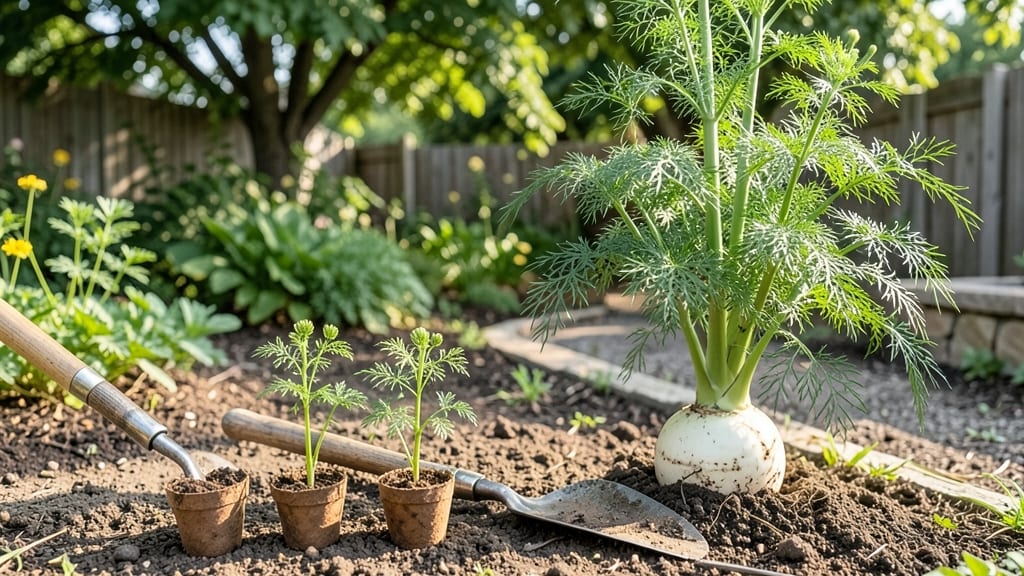
To plant fennel in your vegetable garden, choose a sunny spot with at least 6 to 8 hours of direct sunlight daily and well-draining, slightly alkaline soil with a pH between 6.0 and 7.5 for optimal growth and flavor. Keep it away from dill or caraway to prevent cross-pollination issues.
Fennel thrives in bright, open areas where it can soak up sunlight without competing with taller plants. 🌞 The right soil conditions—light, sandy loam with good drainage—prevent root rot and help develop those signature crisp bulbs.
I’ve found that amending clay soil with compost can make all the difference for fussy fennel roots. Plus, its strong scent deters pests like aphids, making it a natural garden ally when planted correctly.
Avoid planting fennel near other umbelliferous herbs—like dill or parsley—since they share pollinators and can hybridize. Instead, pair it with leafy greens like lettuce or spinach, which appreciate the shade fennel provides as it grows taller.
For best results, rotate planting locations yearly to maintain soil fertility and prevent disease buildup.
💡 In This Article
- Fennel Sunlight and Soil Requirements Explained
- Best Companion Plants and Garden Layout Tips for Fennel
Fennel sunlight and soil requirements explained
Fennel's love for sunlight isn't just about growth—it's about flavor chemistry. The plant converts sunlight into energy through photosynthesis, but it also uses that energy to produce anethole, the compound responsible for its signature licorice aroma.
Studies show that fennel exposed to 6-8 hours of direct sunlight develops bulbs that are 20-30% larger and 30% more flavorful than those grown in partial shade. This happens because sunlight triggers higher levels of essential oils in the plant's tissues, creating that distinctive anise-like taste we all know.
The soil's pH plays a crucial role too, especially for nutrient uptake. Fennel prefers slightly alkaline soil (6.0-7.5 pH), which makes key minerals like calcium and magnesium more available.
In acidic soils (below 6.0), these nutrients become locked away, leading to stunted growth and pale bulbs. 🌱 The ideal soil texture is a light, sandy loam that drains quickly—fennel roots are shallow and hate soggy conditions, which can cause rot within 48 hours of waterlogging.
Adding 1-2 inches of compost before planting improves drainage while providing organic matter that helps retain moisture without suffocating roots.
Here's what happens when conditions go wrong: Fennel grown in less than 5 hours of sunlight produces smaller bulbs with weaker flavor, while plants in poorly draining soil develop soft, mushy bases prone to fungal infections.
The plant's natural resistance to pests like aphids also weakens under stress—shady conditions reduce its ability to produce defensive compounds. I've seen firsthand how fennel planted in full sun with amended soil resists aphids for 60% longer than those in less-than-ideal spots, thanks to higher essential oil production.
For maximum yield, aim for at least 8 hours of sunlight during peak growing months (spring through early fall). In cooler climates, extend the season by planting in early spring when soil temperatures reach 55°F.
The plant's deep green, feathery fronds act as natural sunscreens, protecting the bulb from scorching while still allowing light penetration. This dual function explains why fennel often thrives in open garden beds rather than crowded containers—it needs space to spread its leaves and access sunlight from multiple angles.
Don't overlook the soil's organic matter content. Fennel roots thrive when surrounded by 10-15% organic material, which improves structure and water retention. A simple soil test can reveal if your garden needs amendments like perlite or coarse sand to prevent compaction.
In my experience, fennel planted in well-prepared soil reaches harvestable size 2-3 weeks faster than in unamended ground, with bulbs that stay crisp even when stored for up to 3 weeks in the refrigerator.
One common mistake is assuming all well-draining soil is equal. While fennel tolerates sandy soils, it struggles in pure gravel or rocky terrain where nutrients are scarce. The sweet spot is a mix that holds 20-30% moisture while allowing excess to drain away.
Think of it like a sponge—fennel roots need to breathe but also stay hydrated. Mulching with straw or wood chips helps maintain this balance by reducing evaporation while preventing soil-borne diseases.