
Watering
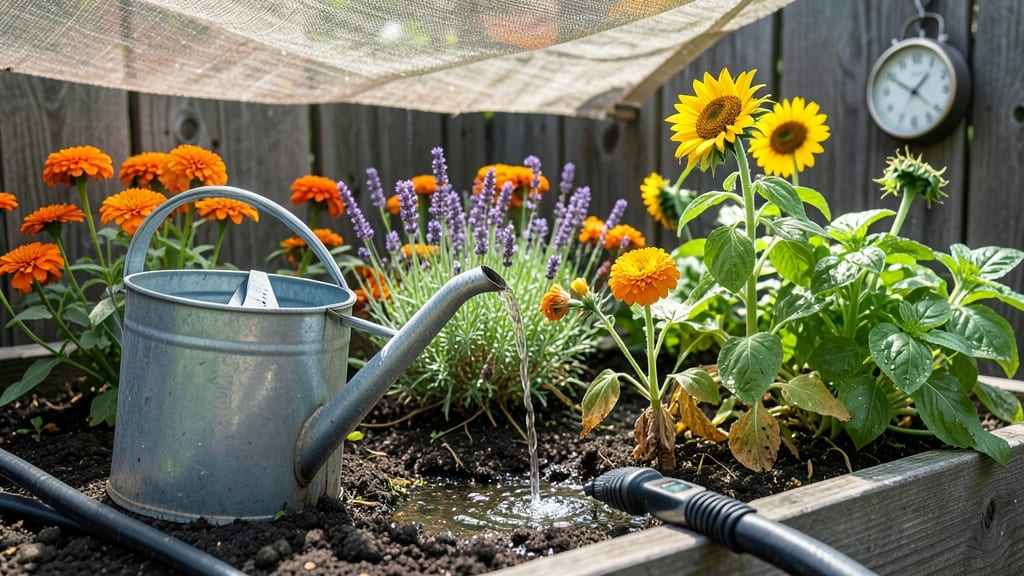
Watering your garden in summer at the right time is the difference between thriving 🌱 plants and a sad, crispy mess—especially when temperatures soar past 90°F.
Picture this: You’ve just spent hours tending to your summer crops, only to watch them wilt by afternoon because you watered at the wrong hour. Or worse, you drowned your roots by sticking to a rigid schedule without checking the soil.
The truth? Timing isn’t just about when you water—it’s about how the sun, humidity, and even your plants’ types dictate the perfect moment.
Morning watering keeps roots cool and evaporation low, while evening sessions can invite fungal nightmares. But what if your garden’s in full sun all day? Or you’re dealing with drought conditions? I’ll break down the science-backed windows that save water, prevent stress, and keep your General Garden lush—no guesswork required.
From the best hours to avoid waste to signs your plants are thirsty (or drowning), here’s how to water like a pro this summer—without overdoing it.


Morning watering vs. evening watering: which wins for summer plant health?
Summer’s brutal sun and heat turn watering into a delicate science. One wrong move—like watering at the wrong time—and you’ll either waste gallons of water or invite fungal nightmares. The debate between morning watering and evening watering rages among gardeners, but the truth depends on your plants’ needs.
Let’s break down the science to help you decide what’s best for your garden’s specific conditions and plant types.
Morning watering (before 10 AM) is often hailed as the gold standard because it allows water to soak deep into the soil before the day’s heat evaporates it. This method also gives foliage time to dry, reducing the risk of fungal diseases like powdery mildew.
However, evening watering (after 6 PM) can be a lifesaver in desert climates where daytime evaporation is extreme. The key? Understanding how your local climate and plant varieties interact with these timing choices.
Evaporation rates are the first battleground. A study by the University of California found that up to 30% more water evaporates when applied in the afternoon compared to morning. That means your tomatoes or peppers might need twice the evening water to achieve the same hydration as morning watering. For drought-prone areas, this inefficiency can mean the difference between thriving plants and parched soil.
But here’s the catch: Evening watering can drown roots if nighttime humidity lingers, especially for succulents or cacti, which despise soggy conditions. Meanwhile, morning watering might not be enough for deep-rooted perennials like asparagus or artichokes, which need moisture to reach their 2-3 foot roots.
The solution? Tailor your approach to your garden’s unique mix of plants and microclimate.
| Factor | Morning Watering (Before 10 AM) | Evening Watering (After 6 PM) |
|---|---|---|
| Evaporation Loss | Low (10-20%) | High (30-50%) in heat |
| Fungal Risk | Low (foliage dries) | High (moisture lingers) |
| Root Hydration | Deep penetration | Surface-level (unless heavy) |
| Best For | Leafy greens, herbs, tomatoes | Succulents, desert plants, extreme heat zones |
| Avoid If | High humidity (risk of mildew) | Poor drainage (root rot risk) |
| Water Waste | Minimal | Significant in heat |
Let’s look at real-world examples. My heirloom tomatoes thrive with morning watering because their delicate leaves dry quickly, preventing blight. But my jade plants in the desert heat beg for evening watering—just enough to satisfy their roots without inviting rot.
The lesson? Group plants by needs. Cluster water-loving veggies together and water them in the morning, while grouping drought-tolerant plants for evening hydration.
Don’t overlook the role of mulch. A 2-3 inch layer of organic mulch (like straw or wood chips) can reduce evaporation by up to 40%, making either morning or evening watering more effective.
For my peppers, I combine morning watering with mulch to lock in moisture, while my lavender gets a light evening drink to prevent leaf burn. Mulch acts as a buffer, giving you flexibility to adjust timing based on weather forecasts.
Watch for signs of stress to fine-tune your schedule. Wilting by midday? You’re likely underwatering—try morning watering with deeper soaks. Yellowing leaves with dark spots? Evening watering might be promoting fungal growth. And if your soil feels dry just below the surface, your current method isn’t reaching the roots.
Adjust accordingly, and don’t hesitate to split your watering into two sessions if needed (e.g., light morning water + evening top-up for container plants).
Ultimately, the “best” time depends on your local climate, plant types, and even your water source. In humid climates, morning wins. In arid regions, evening might be better. But here’s my top tip: Start with morning watering as your baseline, then tweak based on your plants’ responses.
And always water deeply and infrequently—shallow puddles won’t cut it in summer’s heat.
Pro tip: Use a soil moisture meter to check hydration levels. If the top 2 inches are dry but 4 inches down are moist, you’re watering too lightly—regardless of timing.
Pair this with a rain gauge to track how much water your garden actually needs, and you’ll outsmart summer’s challenges every time. 🌱☀️💧
The 3 critical times to water your garden No Matter What (And When to Skip)
Summer isn’t just about sticking to a morning or evening routine—it’s about strategic timing that saves your plants from heat stress or fungal nightmares. While most gardeners focus on sunrise or sunset, the real game-changers happen at unexpected moments.
Think: post-harvest hydration or pre-heatwave deep soaks. These three times are non-negotiable for summer survival, and skipping them could mean wilting tomatoes or blighted basil before you know it.
I’ve learned the hard way that one-size-fits-all watering fails when temps hit 90°F+. The key is reading your garden’s hidden cues—like drooping leaves at noon or crispy mulch edges—and adjusting on the fly.
Even the hardiest drought-tolerant plants (like lavender or rosemary) need special care when summer hits peak intensity. Let’s dive into the three critical windows you can’t afford to miss, plus the red flags that scream “adjust your routine NOW!”
- 🌅 Early Morning (4-7 AM) – Water before 7 AM to let soil absorb moisture before evaporation spikes. This is your golden hour for deep hydration without fungal risks.
- 🌡️ Pre-Heatwave (24-48 Hours Before Forecasted 100°F+ Days) – Give roots a deep soak to build resilience. Shallow watering here = root burn when temps surge.
- ☀️ Post-Harvest (Immediately After Picking) – Replenish moisture lost during harvest. Skipping this step stresses plants and slows regrowth in veggies like zucchini or peppers.
⚠️ Skip these times: Never water at peak sun (10 AM–4 PM)—it burns leaves—or at night (after 8 PM), which breeds disease.
Let’s talk about plant stress signals that reveal your watering routine is off. Yellowing leaves? That’s often overwatering in summer—roots suffocate when soil stays soggy. But crispy edges? Underwatering or evaporative stress from poor timing.
Pro tip: Check soil 2 inches down—if it’s dry, you’re watering too lightly. If it’s muddy, you’re drowning your plants.
For container gardens, the rules shift slightly. Pots dry out 3x faster than in-ground soil, so water every 2–3 days in summer—always in the morning. Group containers together to create a microclimate that retains moisture longer.
And if you’re using self-watering pots, check the reservoir weekly—algae grows fast in stagnant water.
Don’t forget about mulch, your secret weapon against summer watering chaos. A 2–3 inch layer of straw or wood chips locks in moisture, cutting evaporation by 50%+. But here’s the catch: Keep mulch 2 inches away from stems to prevent rot.
Pair this with drip irrigation (set to run for 20–30 minutes in the morning), and you’ll save thousands of gallons of water annually.
Your garden’s survival in summer hinges on these three non-negotiable times—plus your ability to read the signs. Start with the early morning rule, then adjust for heatwaves and post-harvest stress.
And if your plants start screaming for help (literally—wilting or yellowing), act fast. The difference between a thriving summer garden and a sad, brown patch? Timing, every time. 🌱