
Planting
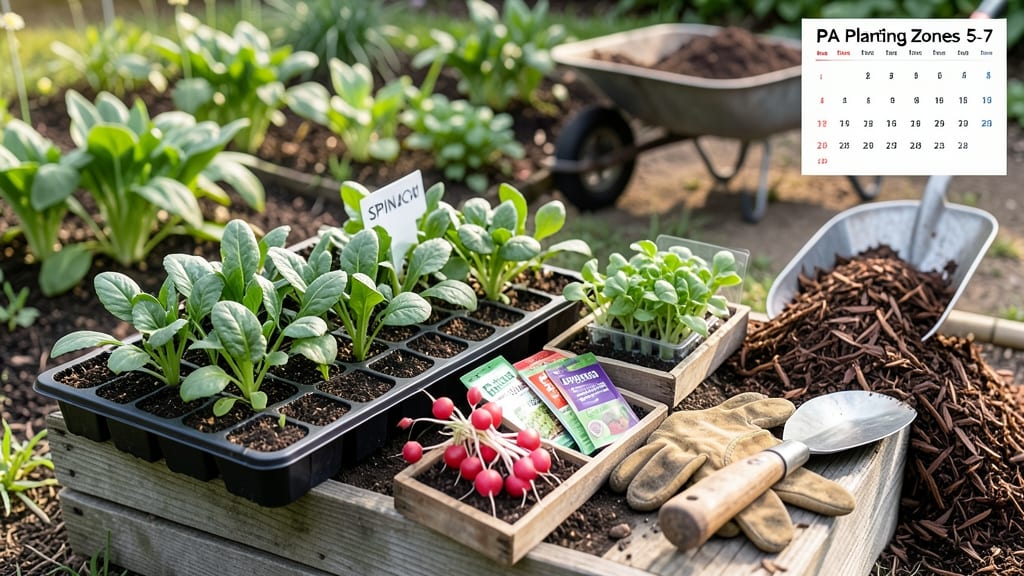
Planting your garden in Pennsylvania at the right time means the difference between a bountiful harvest and a wasted season—and the clock starts ticking as soon as the snow melts.
Pennsylvania’s diverse climate—from the humid summers of Philadelphia to the cooler mountains of the Poconos—means your garden’s success hinges on planting at the perfect time. Miss the window for your hardiness zone, and you could end up with bolting lettuce or stunted tomatoes.
For fast-growing crops like radishes or green onions, timing is everything: sow them too early, and frost will kill them; too late, and they bolt before you can harvest. Meanwhile, warm-season plants like tomatoes need the soil to be at least 50°F before they’ll thrive.
Here’s your zone-by-zone planting calendar, including when to start seeds indoors, when to direct-sow outdoors, and how to stretch your growing season with simple tricks—so you can grow more in less time.
Pennsylvania planting zones: when to start seeds indoors vs. direct-sow outdoors
Pennsylvania spans USDA hardiness zones 5b through 7a, meaning your planting timeline should shift depending on whether you're in Pittsburgh (6a), Philadelphia (7a), or the Poconos (5b).
These zones dictate when to start seeds indoors and when to direct-sow outdoors to avoid frost damage or bolting plants. Let's break it down by region and crop type.
Cool-season crops like lettuce, spinach, and kale thrive when soil temps hover around 40-50°F, while warm-season crops such as tomatoes and peppers need 60°F+ soil to germinate.
Timing these correctly ensures you don’t waste seeds or miss harvests. For example, starting basil indoors too early in zone 7a can lead to leggy, weak seedlings by transplant time.
The last average frost date varies dramatically across PA:
- Zone 5b (Poconos): May 15
- Zone 6a (Central PA): April 25
- Zone 7a (Philadelphia): April 10
These dates are your garden’s deadline for cool-season crops and the minimum safe time to transplant warm-season seedlings outdoors.
| Zone | Last Frost Date | Start Cool-Season Indoors | Direct-Sow Cool-Seeds | Start Warm-Season Indoors |
|---|---|---|---|---|
| 5b (Poconos) | May 15 | March 1-15 | April 15-May 1 | April 1-15 |
| 6a (Central PA) | April 25 | February 15-March 1 | March 20-April 10 | March 15-April 1 |
| 7a (Philadelphia) | April 10 | January 30-February 15 | March 1-March 15 | February 20-March 15 |
For cool-season crops, I recommend starting seeds indoors 4-6 weeks before your last frost date. For example, in zone 6a, that means February 15-March 1 for spinach or broccoli.
These seedlings will be ready to transplant just as the soil warms enough to prevent stunted growth. Pro tip: Use grow lights if your indoor space lacks adequate sunlight.
Warm-season crops like tomatoes and peppers need a longer head start. In zone 5b, begin seeds indoors by April 1 to transplant after your May 15 last frost date. In zone 7a, you can start as early as February 20 for a June harvest.
Remember, these plants hate cold soil, so always check soil temperature with a thermometer.
Direct-sowing outdoors is ideal for fast-growing crops like radishes or green onions, which tolerate cooler temps. In zone 6a, sow these March 20-April 10 for a spring harvest.
For slow-to-mature crops like carrots or onions, direct-sow 2-3 weeks before your last frost date to ensure they mature before summer heat sets in.
Urban gardeners in Philadelphia (zone 7a) have a slight advantage with an earlier last frost date. Take advantage by starting warm-season seeds indoors by February 20 and direct-sowing cool crops by March 1.
However, be cautious of late spring frosts, which can still occur in April. Use row covers as a safeguard for early plantings.
In rural or mountainous zones (5b), extend your season with cold frames or hoop houses to protect tender seedlings. For instance, you can direct-sow lettuce as early as April 15 under protection, then remove covers once soil temps stabilize.
This trick adds 2-3 weeks to your growing season in cooler areas.
Always monitor local weather forecasts for unexpected frost warnings, especially in zone 6a where late frosts can occur. Use frost cloth or mulch to protect young plants during these events.
With precise timing, you can maximize your harvest and avoid common pitfalls like bolting lettuce or blossom-end rot in tomatoes.
Experiment with succession planting to keep your garden productive. For example, after harvesting early
Fast-growing crops to plant early in Pennsylvania (and when to avoid them)
If you're eager to harvest fresh produce but don't want to wait months, Pennsylvania's early spring offers perfect conditions for fast-growing crops. These varieties thrive in cool soil and deliver quick rewards—ideal for impatient gardeners!
The key is planting at the right time to avoid common pitfalls like bolting spinach or pest-attracting zucchini that grows too fast for its own good.
For Pennsylvania's USDA zones 5b–7a, timing is everything. Most gardeners start seeds indoors by mid-March, while direct-sowing outdoors begins 2–4 weeks before the last frost (typically April 15 in most regions).
Cool-season crops like radishes and spinach can even handle light frosts, while bush beans and zucchini need warmer soil to prevent stunted growth.
- Radishes – Plant March 15–April 15 (harvest in 3–4 weeks). Avoid planting after May 1—they bolt quickly in heat!
- Spinach – Sow March 1–April 30 (harvest in 4–6 weeks). Late plantings (after June 1) risk bitter leaves.
- Green Onions – Direct-sow April 1–May 15 (harvest in 4–6 weeks). Overcrowding after June 1 leads to leggy, weak growth.
- Bush Beans – Wait until soil hits 60°F+ (after May 15). Plant too early, and roots rot. Harvest in 50–60 days.
- Zucchini – Start seeds indoors March 1–April 15, transplant after last frost. Avoid late plantings (after June 15)—they attract squash bugs and grow too fast for quality.
One of the biggest mistakes I see in PA gardens is planting cool-season crops too late. For example, spinach sown after June 1 will bolt (send up flower stalks) within weeks, turning bitter and inedible.
Watch for yellowing leaves or tall, skinny stems—these are your plant’s way of saying, "It’s too hot!" Similarly, zucchini planted after June 15 often attracts squash vine borers, leading to wilted vines before you get a single harvest.
For bush beans, timing is critical too. If you plant them before the soil warms to 60°F, their roots will rot, and they’ll fail to produce pods. In cooler zones like Poconos (5b–6a), wait until May 20 or later.
Conversely, in southern PA (7a), you can start as early as April 20, but always check soil temperature with a probe—it’s the most reliable gauge.
Pro tip: Use row covers to extend your planting window for spinach and radishes by 2–3 weeks in early spring or late fall. This trick works wonders in Zone 6a, where frost can linger into May.
Just remove covers when plants flower to prevent heat stress. For zucchini, if you’re desperate for an early harvest, try starting seeds in biodegradable pots indoors under grow lights 4–6 weeks before your last frost date.
Remember, fast-growing doesn’t always mean easy-growing. Stay vigilant for pests like flea beetles (common on radishes) or aphids (which love tender spinach leaves). A quick spray of neem oil or introducing ladybugs can save your crop before it’s lost.
And if your green onions start to flower, snip the blooms immediately—they’ll redirect energy away from your edible scapes.