
Picking
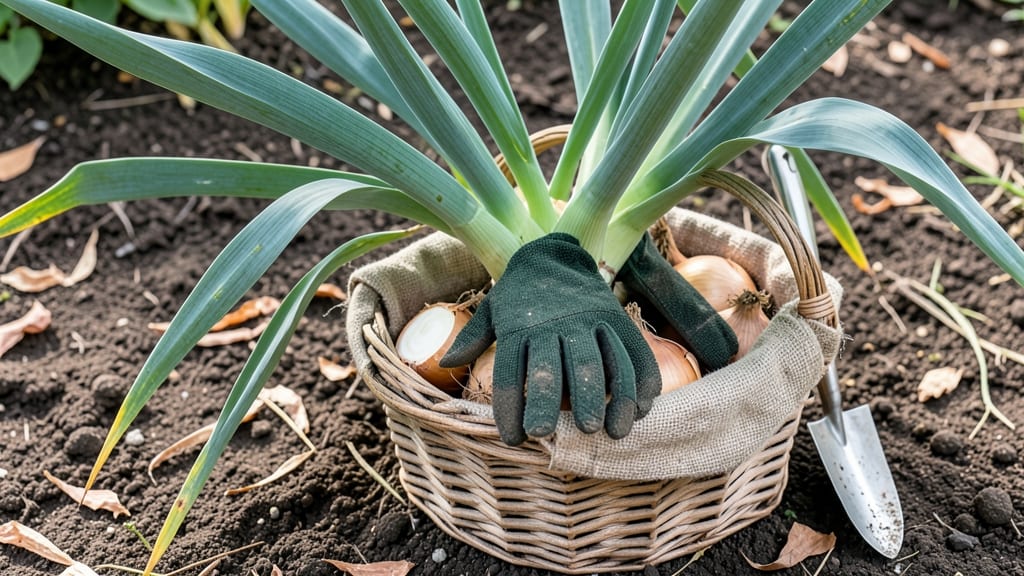
To pick onions from your garden at the perfect moment means capturing peak flavor and storage potential before the bulbs spoil or split.
Here’s the truth: One wrong move—like harvesting too early or too late—can turn your hard work into a pile of shriveled scraps. I’ve seen it happen, and trust me, you don’t want that.
You’ll need to watch for three key signals: when the tops yellow and flop over, when the neck tightens, and when the bulbs feel firm to the touch. These clues tell you exactly when to dig, whether you’re growing storage onions or quick green onions.
Below, I’ll walk you through the exact timing, how to tell if they’re ready (or not), and how to cure them for long-term storage—no guesswork, just results.
3 Clear signs your onions are ready for harvest (with photos)
Knowing when to pick onions from your garden can feel like guessing—until you spot these three foolproof signs. Storage onions and green onions mature differently, so I’ll walk you through the visual and tactile cues that mean your harvest is ready.
Miss these signals, and you risk small bulbs, poor flavor, or even rot. Let’s dig in!
First, leaf color changes are your biggest clue. Healthy green tops signal growth, but when they start turning straw-colored or yellow and flop over, it’s time to act. This happens naturally as the bulb diverts energy downward.
For green onions, you’ll harvest the whole plant before this stage—usually when the stalks reach 6-12 inches tall and the bulbs are pencil-sized.
Here’s where it gets hands-on: bulb size and firmness are non-negotiable. Gently squeeze a bulb—if it feels firm and dry (not soft or squishy), it’s ready. Storage onions should be 1-2 inches wide at the base, while green onions can be harvested thinner.
Pro tip: If the skin resists gentle pressure like a light squeeze, it’s prime.
Now, let’s talk neck slimming, the third key sign. As onions mature, the stem above the bulb dries and shrinks (this is called "neck-down"). For storage onions, this neck should be about 1 inch thick when you harvest.
If it’s still thick or green, wait a few days. Green onions, however, don’t need this step—they’re ready when the bulbs form but before the tops yellow.
🌱 3 Signs Your Onions Are Ready to Harvest
- 🟡 1. Yellowing Tops
Storage onions: Tops turn straw-colored and flop over. Green onions: Harvest before tops yellow. - 🧅 2. Bulb Size & Firmness
Storage: 1-2" wide, firm, dry skin. Green: Pencil-thick, tender bulbs. - ⚖️ 3. Neck Shrinking
Storage: Stem above bulb dries to ~1" thick. Green: Ignore this—harvest by leaf size.
💡 Troubleshooting: If tops yellow but bulbs stay small, your onions are underfed. If necks rot before drying, you’re in a humid climate—harvest sooner.
Timing matters, especially for storage onions. In USDA Zone 6a, spring-planted onions are ready by late June to August, while fall-planted varieties hit their prime in September or October.
Green onions, however, can be harvested every 2-3 weeks once they’re established—just snip the outer stalks to keep regrowth going.
What if you wait too long? Overripe onions develop soft necks, sprouting tops, or even rot. Their flavor becomes bitter and pungent, and they won’t store well. To avoid this, set a reminder to check your onions weekly as they near maturity.
A quick tug-test—gently pull a bulb—can confirm readiness: if it slides out easily, it’s time!
For green onions, the process is simpler. Harvest when the bulb is ½-inch wide and the leaves are 4-6 inches tall. Cut them 1 inch above the soil to encourage regrowth.
You’ll get 3-4 harvests per season this way! Just avoid harvesting more than ⅓ of the plant at once to keep it productive.
Once you’ve confirmed your onions are ready, harvest on a dry, sunny day. Use a fork to loosen the soil around the bulb, then gently lift—never pull by the tops, or you’ll damage the neck.
Let harvested onions cure in the sun for 1-2 hours to toughen the skin before storing. For storage onions, braid the tops or lay them in a well-ventilated, dark place to dry completely.
Don’t let these harvest mistakes ruin your hard work. If your onions start to sprout or mold before you’re ready, they’re past their prime. And if you pick them too early, you’ll end up with small, watery bulbs that won’t store.
Trust the signs, and you’ll enjoy flavorful, long-lasting onions all season long.
Now that you know the exact moment to harvest, your next challenge is storing them properly. But that’s a story for another post—happy digging! 🧅
Onion harvest timing by type: green vs. storage onions (critical differences)
Not all onions are created equal when it comes to harvest timing. Green onions (scallions) and storage onions (yellow, red, purple) have completely different cues for peak harvest.
Missing these windows means either tiny, pungent greens or soft, sprouting bulbs that won't store. Let's break down the critical differences so you never guess again.
Climate plays a huge role too. In cooler zones (USDA 3-5), storage onions need 100-120 days to mature, while in warmer zones (6-10), they're ready in just 80-90 days.
Green onions, however, mature in 45-60 days regardless of zone. Understanding these timelines prevents wasted effort and ensures you harvest at the perfect moment.
| Onion Type | Harvest Timeframe | Key Visual Cues | Best For | Climate Impact |
|---|---|---|---|---|
| Green Onions (Scallions) | 45-60 days after planting | 4-6" tall, white base visible | Fresh cooking, salads | Fast growth in all zones |
| Yellow Storage Onions | 100-120 days (cool zones) / 80-90 days (warm zones) | Tops yellow and flop, papery skin | Long-term storage, cooking | Longer in cooler climates |
| Red/Purple Storage Onions | 90-110 days (cool zones) / 75-85 days (warm zones) | Tops brown, bulbs firm and dry | Fresh eating, storage | Sensitive to heat stress |
| All Onion Types | Early summer (greens) / Late summer (bulbs) | Neck shrinks, skin tightens | Immediate use or storage | Drought stress speeds maturity |
For green onions, the secret is harvesting early and often. Once they reach 4-6 inches tall, you can snip just the green tops and let the white base regrow.
This method gives you continuous harvests all season. In my garden, I harvest scallions every 2-3 weeks starting in early summer until the first frost.
Storage onions, however, demand patience and precision. The single best indicator is when 50% of the tops yellow and flop over. This happens naturally in late summer (around August-September in most zones).
If you wait too long, the bulbs will split or sprout, ruining their storage potential. In hot climates, onions may mature faster—sometimes as early as July—so monitor closely.
One pro tip I learned from experienced growers: dig a few test onions when tops start yellowing. If the neck shrivels and the skin feels papery, it's time to harvest. If not, wait 3-5 more days.
This simple check saves entire harvests from going to waste. For long-term storage, cure onions in a dry, shaded spot for 2-3 weeks before braiding or storing.
Remember, climate dictates timing. In northern regions, fall-planted onions may not mature until next spring. Meanwhile, in southern climates, onions can bolt (go to seed) if summer heat arrives too early. Adjust your planting schedule accordingly to align harvests with cooler seasons.