
Picking
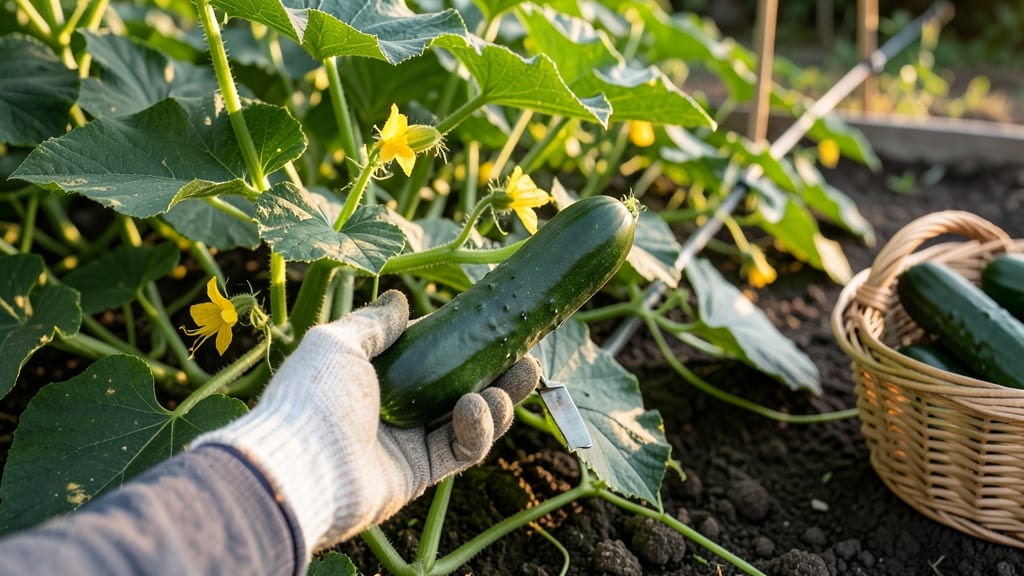
To pick cucumbers from your garden at the perfect moment means crisp, flavorful harvests 🥒 — and skipping that window turns them bitter or seedy.
Picking cucumbers at the right time can mean the difference between crisp, delicious harvests and bitter, seedy disappointments—so how do you know when they're truly ready?
Look for firm skin, deep color, and a stem that snaps cleanly when bent. These visual cues, paired with the knuckle test, reveal exactly when your cucumbers are at their peak.
Below, I’ll walk you through the three ripeness stages, variety-specific tips, and even the best time of day to harvest for maximum freshness.
The knuckle test: how to check cucumber ripeness by touch
If you’ve ever wondered how to tell when a cucumber is truly ready for harvest, the knuckle test is your secret weapon. This simple tactile method lets you determine ripeness without guessing—just by feeling the cucumber’s skin and stem.
Unlike visual cues that can be misleading, the knuckle test gives you an instant answer, even in low light or with variety-specific colors.
I’ve used this trick for years in my garden, and it’s saved me from harvesting cucumbers that were still too hard or letting them overripe on the vine. The test works because it checks for internal firmness and stem separation, two key indicators of peak ripeness.
Whether you’re growing slicing cucumbers, pickling varieties, or long English cucumbers, this method applies to all.
Here’s the catch: timing matters. Cucumbers picked at the wrong stage can be seedy, bitter, or watery, ruining your harvest. The knuckle test helps you avoid these pitfalls by focusing on texture and resistance—two factors that don’t change with color alone.
Plus, it’s a great way to train your hands to recognize the subtle differences between underripe, perfect, and overripe cucumbers.
Before we dive into the test, here’s what you’ll need: just your thumb and index finger, a cucumber from your plant, and a little patience. No tools, no charts—just your sense of touch.
This method is especially useful for heirloom varieties or cucumbers growing in shady spots, where color might not be a reliable indicator.
⚠️ Warning: Overripe Cucumbers Are a Yield Killer
Leaving cucumbers on the vine past their prime doesn’t just reduce flavor—it stresses the plant, leading to fewer fruits and disease susceptibility. Overripe cucumbers also attract pests like cucumber beetles, which can devastate your harvest. Pick regularly to encourage continuous production, and always use the knuckle test to avoid the "too late" zone.
To perform the knuckle test, start by gently grasping the cucumber near its stem end with your thumb and index finger. Apply light pressure—just enough to feel resistance, not enough to bruise the skin.
A ripe cucumber should feel firm but slightly yielding, like a well-inflated balloon. If it gives too easily, it’s overripe; if it feels rock-hard, it’s not ready yet.
The real magic happens at the stem attachment point. Press your thumb firmly against the cucumber’s skin near the stem while using your index finger to gently tug upward. If the stem snaps cleanly (with a slight resistance), that’s your cue to harvest.
This indicates the cucumber has reached its ideal sugar-to-seed ratio. If the stem pulls away without resistance, the cucumber is overripe and past its peak.
Don’t overlook the skin texture—it’s another clue. Run your fingers along the cucumber’s surface. A ripe cucumber has a smooth, slightly waxy feel, while an underripe one feels dull and thin**.
Overripe cucumbers develop a wrinkled or spongy texture, signaling it’s time to pick before pests or disease set in. This tactile check is especially helpful for dark-green or striped varieties, where color alone can be deceiving.
Pro tip: Perform the knuckle test in the morning when cucumbers are coolest and firmest. Heat during the day can make them softer and less reliable for testing. I’ve also found that trellised cucumbers tend to ripen more evenly, making the knuckle test even more accurate.
If you’re growing bush varieties, check cucumbers closer to the ground first—they often ripen slightly faster due to warmer soil temperatures.
For pickling cucumbers, aim for a slightly firmer feel—these varieties are often harvested smaller and crisper than slicing types. Meanwhile, long English cucumbers should feel uniformly firm along their entire length.
The knuckle test helps you distinguish between these subtle differences, ensuring you pick each variety at its personal best.
Remember, consistency is key. The more you practice the knuckle test, the more intuitive it becomes. Soon, you’ll be able to tell ripeness by touch alone, even with your eyes closed. And trust me, once you master this skill, you’ll never second-guess your cucumber harvest again. Happy picking! 🥒
3 Ripeness stages of cucumbers: from baby to overripe
Understanding the three ripeness stages of cucumbers helps you harvest at peak flavor and texture. Each stage offers distinct visual and tactile cues that tell you exactly when to pick.
Baby cucumbers are tender but underdeveloped, while overripe ones become tough and bitter—so recognizing the ideal harvest window is key to garden success.
Start by identifying baby cucumbers, which are typically 2–4 inches long and pale green. These are often harvested for pickling or stir-frying, but their flavor is milder compared to fully mature cucumbers.
The skin is thin and slightly waxy, and the seeds are barely visible. If you miss this stage, don’t worry—most varieties continue developing into their prime harvest phase.
| Stage | Size | Skin Texture | Flavor Profile | Best For |
|---|---|---|---|---|
| Baby | 2–4 inches | Thin, waxy | Mild, slightly sweet | Pickling, stir-fries |
| Ideal | 6–12 inches | Firm, glossy | Crisp, refreshing | Salads, slicing |
| Overripe | 12+ inches | Soft, wrinkled | Bitter, seedy | Avoid (or cook down) |
The ideal harvest stage is when cucumbers reach 6–12 inches long, depending on the variety. At this point, the skin is deep green, firm to the touch, and slightly glossy. Gently press a cucumber—if it yields slightly but doesn’t feel mushy, it’s ready.
The seeds should be visible but not overly large or dark. This is when cucumbers are crispest and least bitter, perfect for salads or fresh eating.
If you wait too long, cucumbers enter the overripe stage, where they become 12+ inches long with soft, sometimes wrinkled skin. The texture turns spongy, and the flavor becomes bitter or even mealy.
Overripe cucumbers are still edible if cooked (like in soups), but they’re far from ideal for fresh consumption. Watch for yellowing or brown spots, which are clear signs of overripeness.
To maximize your harvest, check cucumbers every 2–3 days during peak season. Morning is the best time to pick, as cucumbers are cooler and firmer. Use a sharp knife or pruners to cut the stem, leaving a small portion attached to the vine.
This encourages the plant to produce more cucumbers, keeping your garden productive all season long.
Pro tip: If your cucumbers are growing too quickly or becoming overripe before you can pick them, try harvesting smaller varieties or using shade cloth to slow ripening. Regular picking also reduces the risk of pests and diseases, which thrive in crowded, overripe plants.