
Picking
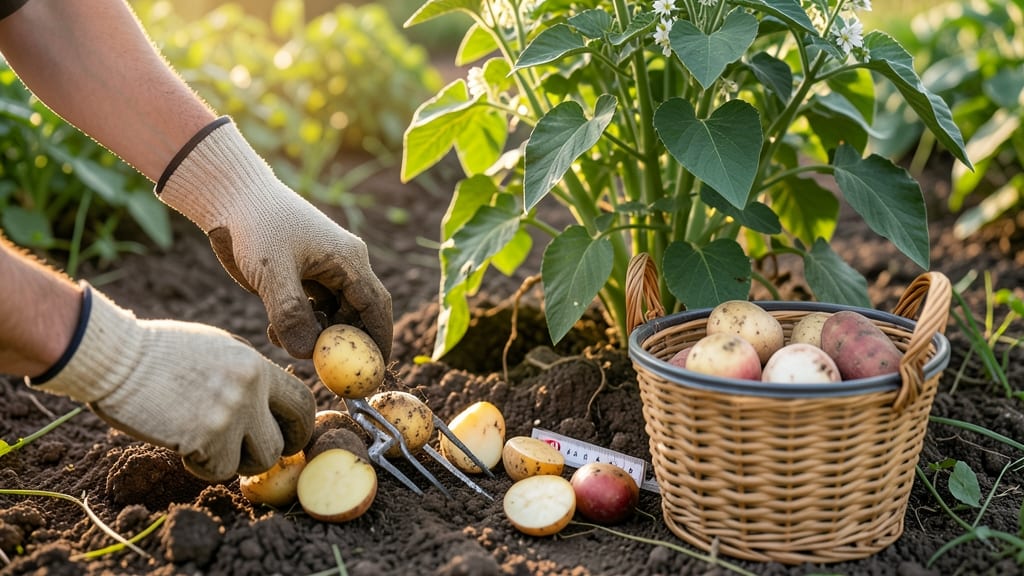
Harvesting potatoes from your garden at the right time ensures you get crisp, flavorful spuds instead of mealy leftovers—here’s how to nail the timing every season.
Picture this: you dig up a potato that’s still green-tipped or shriveled, or worse, one that’s already sprouting in the ground. That’s not just a waste of effort—it’s a missed opportunity for the perfect harvest.
The key is knowing when those 🥔 are ready, whether you’re growing early varieties or waiting for full maturity.
Most gardeners wait until the foliage yellows and dies back, but there’s more to it than just watching the leaves. Soil moisture, tuber size, and even the knuckle test (yes, really!) play a role in determining the ideal digging window.
Skip these cues, and you risk ending up with potatoes that lack flavor or store poorly.
In this guide, I’ll walk you through the exact signs to look for—from the classic yellowing leaves to the less obvious but critical knuckle test—and how to adjust your harvest schedule based on your potato variety and climate zone. Ready to dig up the perfect spuds?
The knuckle test & 4 visual signs your potatoes are ready to harvest
Harvesting potatoes at the right time ensures crisp, flavorful tubers instead of tough or sprouted spuds. The key is understanding your plants' signals—like the knuckle test and foliage changes—that tell you when to dig.
I’ve learned that waiting too long can mean shriveled potatoes, while harvesting too early gives you small, underdeveloped tubers. Let’s break down the foolproof ways to know when your potatoes are ready.
First, recognize that potatoes don’t all mature at once. Early varieties like Red Pontiac can be ready in 60-70 days, while late varieties like Russets take 90-120 days. The good news? Your plants will give you clear visual cues.
Start by checking for yellowing foliage and wilting flowers, then confirm with the knuckle test. These signs work together to give you the perfect harvest window.
🌱 5 Key Signs Your Potatoes Are Ready to Harvest
- 1. The Knuckle Test: Press your thumbnail into a tuber—if it resists, it’s ready! For new potatoes, a slight give is fine, but mature potatoes should feel firm.
- 2. Foliage Yellowing: When 50-70% of leaves turn yellow and die back, it’s time to harvest. This signals the plant is redirecting energy to the tubers.
- 3. Wilting Flowers: If flower stalks have wilted and dried, your potatoes are nearing maturity. This is especially true for late-season varieties.
- 4. Tuber Size: Dig up a few potatoes to check size—2-3 inches in diameter is ideal for most varieties. Smaller tubers mean they need more time in the ground.
- 5. Stem Snap Test: Bend the stems near the soil—if they snap easily, the tubers are fully mature and ready for harvest.
Let’s start with the knuckle test, my favorite trick for checking potato readiness. Gently dig around the base of the plant and uncover a few tubers. Press your thumbnail into the skin—if it doesn’t puncture easily, the potato is ready.
For new potatoes, a slight resistance is fine, but mature potatoes should feel firm and thick-skinned. This test works best in the late afternoon when the soil is slightly warmer.
Next, watch for foliage yellowing, a clear sign that your potatoes are maturing. When about half the leaves turn yellow and start to die back, it’s time to act. This process, called senescence, means the plant is shifting nutrients to the tubers.
If you wait too long, the leaves will turn brown and crispy, but the potatoes may sprout or shrink in the soil.
Don’t ignore the flowers—they’re another key indicator. When the flower stalks wilt and dry out, it’s a strong signal that your potatoes are nearly ready. For early varieties, this might happen around 70 days, while late varieties could take up to 100 days.
If you see green fruit forming (yes, potatoes produce berries!), it’s a sign the plant is stressed and needs to be harvested soon.
Size matters when it comes to potatoes. For most varieties, tubers should be 2-3 inches in diameter when ready. To check, carefully dig up a few potatoes and measure them. If they’re smaller, give them another 1-2 weeks in the ground.
Larger tubers can still be harvested, but they may be mealy or tough if left too long. Fingerling varieties are an exception—they’re ready when they reach 1-2 inches in length.
One mistake I’ve made is harvesting potatoes too early, only to end up with small, underdeveloped tubers. To avoid this, wait until you see at least two of these signs before digging.
For example, if the foliage is yellowing but the tubers are still small, hold off for another week. Conversely, if the flowers have wilted and the knuckle test passes, it’s time to harvest.
Timing is everything, especially if you’re in a cooler climate. If frost is on the horizon, harvest your potatoes 2-3 weeks before the first frost, even if they’re not fully mature. Frost-damaged potatoes turn mushy and inedible.
In warmer climates, you can wait longer, but be mindful of disease pressure—wilting leaves could also signal blight, not just maturity.
Pro tip: If you’re unsure, do a test harvest. Dig up a few potatoes and let them cure in a dark, dry place for a week. If they’re firm and flavorful, harvest the rest.
If they’re still small or green, give them more time. This method saves you from digging too soon or too late.
Finally, remember that storage potatoes (like Russets) need a little extra time in the ground to develop thick skins. Harvest them when the foliage is fully dead and the tubers are large. For immediate cooking, like new potatoes, harvest when the tubers are small but firm.
Either way, the knuckle test and visual signs will guide you to perfectly timed harvests every season!
Harvest timing by potato variety: early, Mid-season, and late varieties explained
Not all potatoes ripen at the same time, which is why understanding variety-specific harvest windows is key to avoiding mealy spuds. Early varieties like Red Norland mature in just 60-70 days, while late varieties such as Kennebec take 100-120 days to reach peak flavor.
Knowing these timelines helps you decide whether to harvest for immediate cooking or long-term storage.
For early varieties, timing is critical—they’re best harvested 2-3 weeks before the plant dies back completely. Mid-season types like Yukon Gold offer flexibility, while late varieties should stay in the ground until frost threatens.
Each category has unique harvest cues and storage needs, so let’s break it down by type.
| Variety Type | Days to Maturity | Harvest Window | Best For |
|---|---|---|---|
| Early (e.g., Red Norland, Early Rose) | 60-70 days | Early summer (June-July) | Immediate cooking |
| Mid-Season (e.g., Yukon Gold, Red Pontiac) | 80-90 days | Late summer (July-August) | Storage or cooking |
| Late (e.g., Kennebec, Russet) | 100-120 days | Fall (September-October) | Long-term storage |
If you’re growing early varieties, prioritize new potato harvests—dig when tubers are 1-2 inches wide and the skin resists your thumbnail.
These are perfect for boiling or roasting right away, as they won’t store well. Mid-season potatoes like Yukon Gold can be harvested early for new potatoes or left until fully mature for storage—look for thick, rough skin and a brown stem end.
For late varieties, wait until the foliage yellows and dies back, even if frost is coming. These potatoes are built for storage, so harvest before the first hard frost to avoid cold damage.
After digging, let them cure in a dark, humid space for 1-2 weeks to develop protective skins. Fingerlings and waxy varieties like Purple Viking also fall into this category—harvest them when the vines start to brown and collapse.
Regional climate matters too: In warmer zones (8-10), late varieties may need shade cloth to prevent greening (toxic solanine buildup). In cooler zones (3-6), focus on early harvests to avoid frost damage.
Always dig in dry weather to prevent soil from sticking to tubers, making them harder to clean and store.
Pro tip: Test a few tubers from each variety at different stages to find your sweet spot for flavor and texture. Some gardeners even harvest in stages—taking a few early potatoes for meals while leaving others to mature.
This way, you get the best of both worlds: fresh and stored potatoes all season long. 🥔