
Container Gardens
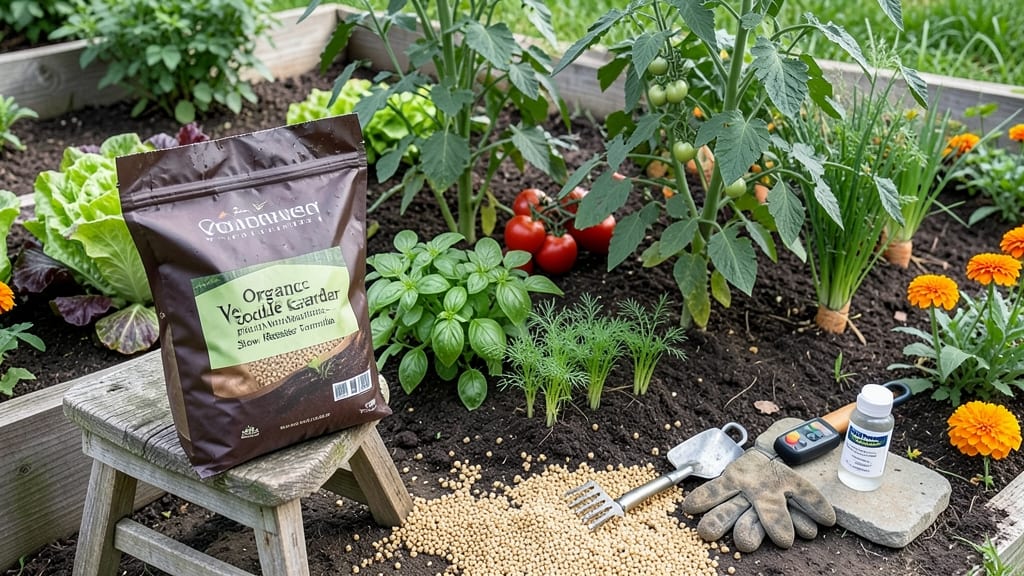
To fertilize your garden effectively, time applications based on soil tests and seasonal needs: feed cool-season crops in early spring before planting, warm-season plants in late spring, and provide mid-summer boosts for continuous growth. Skip winter fertilization and drought periods.
Timing matters because your plants' nutrient needs shift dramatically with the seasons. 🌱 Early spring feeds root development for cool crops like lettuce, while late spring supports leafy growth in tomatoes and peppers.
Mid-summer applications help replenish nutrients after harvests, especially for heavy feeders like corn or squash. I always test soil first—low phosphorus might mean focusing on bloom boosters for flowers rather than general-purpose fertilizers.
Another key factor is fertilizer type: slow-release granules work well for spring planting, while liquid feeds let you adjust mid-season based on plant color (yellowing leaves often signal nitrogen needs). Remember that over-fertilizing in summer can burn roots when plants are already stressed by heat.
For container gardens, I halve the recommended rates since roots have less soil volume to access nutrients.
💡 In This Article
- How Soil Tests Determine Optimal Fertilizer Timing
- Seasonal Fertilizer Schedule for Year-Round Gardens
How soil tests determine optimal fertilizer timing
Soil tests reveal the exact nutrient balance your plants need by measuring three critical elements: nitrogen (N), phosphorus (P), and potassium (K). These macronutrients work together like a team—nitrogen fuels leafy growth, phosphorus supports root development and flowering, while potassium strengthens cell structure and disease resistance.
A typical test also checks pH levels, which must stay between 6.0-7.0 for most vegetables; outside this range, plants struggle to absorb even abundant nutrients. 🌱 For example, tomatoes thrive with a 6.2-6.8 pH, but blueberries demand acidic soil (4.5-5.5), requiring different fertilizer approaches.
The test results translate directly to your schedule. If phosphorus is low (20 ppm or below), focus on bone meal or superphosphate in early spring to jumpstart root growth for cool-season crops like broccoli.
High potassium levels (>strong>400 ppm) might mean you can reduce applications for drought-resistant plants like lavender. I've seen gardeners overlook micronutrients like magnesium (which causes yellowing between leaf veins) until their soil test flags deficiencies—this is why comprehensive testing matters more than guesswork.
Timing becomes especially precise when you consider nutrient availability. Nitrogen from organic matter (like compost) becomes plant-available over 4-6 weeks after application, which is why we recommend working it into soil 4-6 weeks before planting.
Synthetic fertilizers release nutrients immediately, but their salts can burn tender seedlings if applied too close to planting. That's why I always follow the "wait 2-3 weeks" rule after transplanting—giving roots time to establish before hitting them with concentrated nutrients.
Your soil's texture plays a hidden role too. Sandy soils drain nutrients quickly, requiring more frequent applications (every 3-4 weeks) of soluble fertilizers, while clay holds nutrients longer but may need gypsum to improve structure.
The test report often includes these recommendations, but I've learned to double-check: a clay soil with 10% organic matter might need compost every year, whereas sandy soil with 5% organic matter could benefit from monthly worm castings. 💫
One common misconception is that "more fertilizer = better growth." But soil tests show the opposite: excess phosphorus, for instance, can lock out zinc and iron, causing yellowing even when other nutrients appear sufficient. That's why I always adjust my schedule based on test results rather than following generic charts.
For my raised beds, I apply half the recommended rate of slow-release fertilizer in spring, then top-dress with compost mid-summer after harvesting heavy feeders like zucchini.
Remember that soil tests aren't just about numbers—they tell a story about your garden's health. A sudden drop in organic matter might mean you need to increase compost applications annually, while rising pH could signal the need for sulfur amendments.
I keep my most recent test results in a plastic sleeve with my planting calendar, so I never repeat mistakes from previous seasons. The key is testing every 2-3 years or after major soil disturbances (like building raised beds).