
Planting
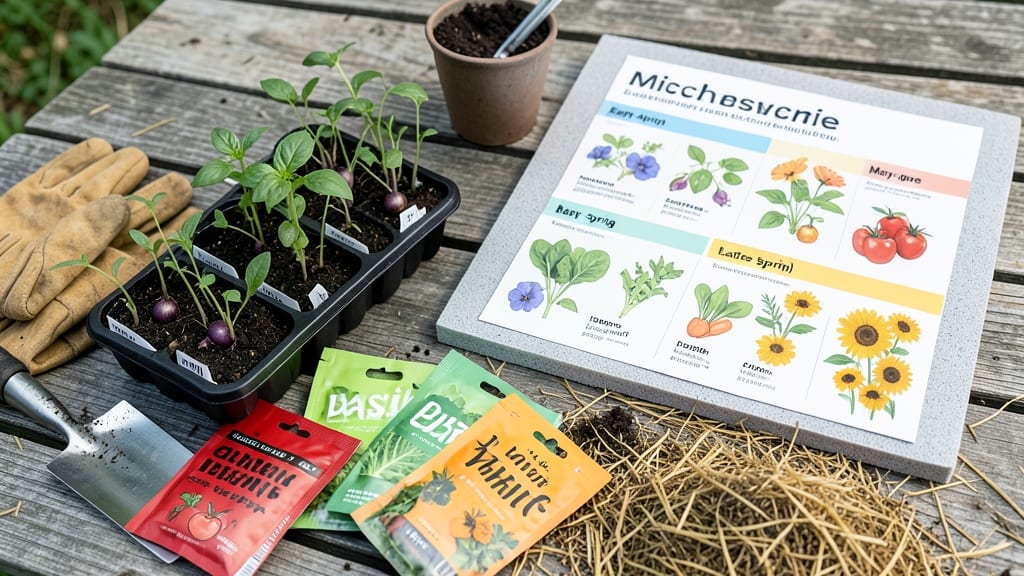
Planting a garden in Michigan at the right time means the difference between frost-killed seedlings and a bountiful harvest of fresh vegetables and flowers.
Michigan’s unpredictable frost dates can turn a promising garden into a frozen disappointment—or a thriving harvest, depending on when you plant. Timing your garden correctly means the difference between bitter disappointment and a bounty of fresh tomatoes, corn, and zucchini.
With USDA Zones 5-6 and frost dates that vary from mid-April to early May, knowing the ideal window for your county is key. Whether you're in Detroit, Traverse City, or the Upper Peninsula, planting too early risks frost damage, while waiting too late cuts your growing season short.
In this guide, you’ll find the exact frost dates by county, plus tips for adjusting planting times, choosing the right crops, and extending your season with row covers and succession planting.
Michigan’s frost dates by county: the critical planting timeline you can’t ignore
Michigan’s frost dates are the backbone of successful gardening, dictating when to plant vegetables, flowers, and herbs for maximum yields. The last spring frost and first fall frost vary dramatically across the state—from Detroit’s milder climate to the Upper Peninsula’s harsh winters.
Getting these dates wrong can mean wilted seedlings or frozen harvests, so let’s break it down by county.
In Southern Michigan, like Wayne County (Detroit area), the average last frost falls around April 25–May 5, while Northern Michigan, such as Marquette in the Upper Peninsula, can experience frost until May 20–June 1.
Similarly, the first fall frost arrives in early October in the south but lingers until mid-October in the north. These variations mean your planting schedule must adapt.
Key takeaway: Plant cool-season crops like spinach and peas as early as March–April (with row covers), while warm-season crops like tomatoes and peppers should wait until after the last frost. Herbs like basil thrive in warmer soil, so timing is everything. Let’s dive into the specifics by region to ensure your garden thrives.
| County | Last Spring Frost | First Fall Frost | Plant Warm-Season Crops | Plant Cool-Season Crops |
|---|---|---|---|---|
| Wayne (Detroit) | April 25–May 5 | October 5–15 | May 10–20 | March 15–April 15 |
| Kalamazoo | May 1–10 | October 10–20 | May 15–25 | March 20–April 20 |
| Grand Rapids (Kent) | May 5–15 | October 15–25 | May 20–June 1 | March 25–April 25 |
| Traverse City (Leelanau) | May 10–20 | September 25–October 5 | May 25–June 5 | April 1–April 15 |
| Marquette (Upper Peninsula) | May 20–June 1 | September 15–25 | June 1–10 | April 10–May 1 |
| Lansing (Ingham) | April 30–May 10 | October 5–15 | May 15–25 | March 20–April 15 |
| Saginaw | May 1–10 | October 10–20 | May 15–25 | March 25–April 20 |
| Battle Creek (Calhoun) | April 25–May 5 | October 5–15 | May 10–20 | March 15–April 15 |
For Detroit and Southern Michigan, the last frost typically arrives by early May, giving you a head start on planting tomatoes, peppers, and cucumbers. In contrast, Northern Michigan, like Traverse City and the Upper Peninsula, faces later frosts, delaying planting until early June.
This means cool-season crops like broccoli and carrots can be sown as early as March–April in the south, while the north waits until April–May.
Herbs like parsley and cilantro are cold-hardy and can handle early spring plantings, even if a late frost hits. Meanwhile, basil and dill need warmer soil, so wait until after the last frost. Use row covers or cold frames to extend your growing
How to adjust planting dates for Michigan’s unpredictable weather patterns
Michigan’s weather can shift faster than a summer thunderstorm, leaving gardeners scrambling to protect tender seedlings from unexpected frosts. The key to success isn’t guessing—it’s using smart strategies to extend your growing season and adjust planting dates based on real-time data.
Whether you’re growing tomatoes in Detroit or peppers in Traverse City, these tactics will help you beat the odds and enjoy a longer harvest.
Start by checking Michigan State University’s frost probability maps, which provide county-specific last frost dates with a 50% and 80% confidence interval. For example, Southern Michigan typically sees its last frost around May 10-15, while the Upper Peninsula can linger until May 25-30.
Use these dates as your baseline, but always be ready to delay planting if forecasts show late frosts.
📌 5 Proven Strategies to Adjust Planting Dates in Michigan
- 1. Use Frost Cloths to plant 2-3 weeks earlier for cold-sensitive crops like tomatoes and peppers. These lightweight covers raise soil temps by 5-8°F and protect seedlings until danger of frost passes.
- 2. Build Cold Frames for early spring and late fall planting. A simple DIY frame with clear plastic or glass can extend your season by 4-6 weeks, letting you grow spinach, kale, and lettuce well into October.
- 3. Master Succession Planting by staggering seed sowing every 2 weeks. For example, plant bush beans in early June, July, and August to ensure a continuous harvest before frost.
- 4. Start Seeds Indoors 6-8 weeks before your last frost date. Use grow lights for warm-season crops like peppers and eggplants, which need a longer growing season (90+ days).
- 5. Monitor Soil Temps with a soil thermometer. Most vegetables need soil temps of 50°F+ to germinate. If temps are too cold, wait or use a black plastic mulch to warm the soil faster.
For risk-averse gardeners, I recommend combining frost cloths with cold frames for early plantings. For example, sow cold-hardy crops like peas and radishes in early April under a cold frame, then add frost cloth when nights dip below 32°F.
This two-layer approach gives you a 30-day head start on the season.
Don’t forget to plan for late-season harvests too! Use row covers to protect broccoli, cabbage, and carrots into November, especially in Southern Michigan.
In the Upper Peninsula, focus on fast-maturing crops like bush beans and zucchini, which can go from seed to harvest in 50-60 days.
Finally, keep an eye on Michigan State University’s weekly crop alerts, which update frost risks and planting recommendations. With these strategies, you’ll turn Michigan’s unpredictable weather into a gardening advantage—not a challenge. 🌱