
Fertilization
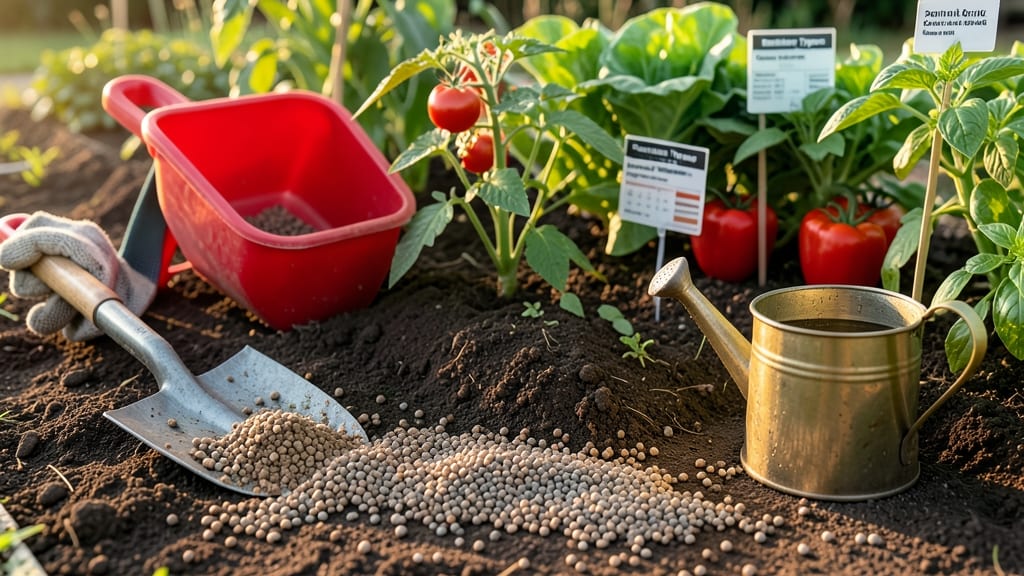
You should fertilize your garden at two key times: right after planting and again when plants start actively growing — timing that turns lackluster soil into a nutrient powerhouse.
Timing your garden fertilizer like a pro isn’t just about throwing nutrients on the soil—it’s the secret weapon behind lush foliage, vibrant blooms, and bumper crops. Miss the window, and you might as well be watering with saltwater.
In Zone 6a, spring is your prime window—apply fertilizer 4–6 weeks after planting to kickstart root growth, then repeat every 4–6 weeks through summer. Fall’s light feed, though, is often overlooked but critical for winter resilience.
Below, I break down the exact months for your garden’s needs, how to spot when it’s hungry (yellowing leaves, stunted growth), and pro tricks like split applications to keep plants thriving without burning them.
Seasonal fertilizing schedule: the exact months for maximum plant growth
Fertilizing your garden at the right time is like giving your plants a perfectly timed energy boost—too early or too late, and you’ll waste nutrients or even harm your greenery. The key lies in understanding your plant’s growth cycle and climate zone.
For example, spring-blooming flowers need nutrients when they’re breaking dormancy, while warm-season vegetables thrive with mid-season feeding. Even lawns have different needs depending on whether they’re cool-season or warm-season grasses.
Most gardeners make the mistake of fertilizing once a season and calling it a day, but plants absorb nutrients differently at each stage. A tomato plant, for instance, needs heavy feeding when it starts fruiting, while a rose bush benefits from a slow-release fertilizer in early spring.
The good news? With a few simple rules, you can sync your fertilizing schedule with nature’s rhythm—no guesswork required.
Below is your season-by-season fertilizing cheat sheet, broken down by plant type and climate zone. Use this as your guide to avoid over- or under-feeding, and watch your garden transform from lackluster to lush.
Let’s break down the science behind these timings. Plants absorb nutrients most efficiently when they’re actively growing, which aligns with temperature cues. For instance, cool-season crops like lettuce and spinach need nutrients in early spring when soil temps are between 45°F and 65°F.
In contrast, warm-season crops like cucumbers and squash won’t thrive until soil temps hit 60°F+, so fertilizing too early can stunt their growth.
Another critical factor is root development. If you fertilize too late in the season, plants may produce tender new growth that won’t survive frost. That’s why early fall feeding for perennials is ideal—it gives roots time to store nutrients for winter.
Think of it like prepping for hibernation: you wouldn’t eat a big meal right before bed, and neither should your plants.
For lawns, the rules shift based on your grass type. Cool-season grasses (like Kentucky bluegrass) peak in spring and fall, while warm-season grasses (like Bermuda grass) need feeding in late spring through summer. Overlapping these
Signs your garden needs fertilizer now (and when to wait)
Your garden speaks to you—if you know what to listen for. Yellowing leaves, especially on younger foliage, scream for nitrogen, while purple stems or slow growth often mean phosphorus or potassium shortages.
These aren't just cosmetic issues; they signal your plants are starving, and without intervention, they'll struggle to produce the vibrant blooms or hearty harvests you planted for.
But here's the catch: not every yellow leaf means it's time to fertilize. Over-fertilizing can burn roots, attract pests, and even kill plants. The key is reading your garden's cues correctly—knowing when to feed and when to wait.
Let's break down the signs and the science behind them to help you make the right call.
Timing matters more than you think! Fertilize in early spring (just as new growth starts) and mid-summer (to support blooming). Wait until after planting—never fertilize stressed plants (like those recovering from transplant shock) or in dormant seasons (fall/winter). Always water before and after applying to prevent root burn.
Start with a soil test—this is your garden's report card. Most home test kits check pH and basic nutrients, but for serious gardeners, a lab test reveals the full picture. Low pH (acidic soil) can lock out nutrients, while high pH (alkaline soil) makes iron and manganese unavailable.
If your test shows deficiencies, choose a fertilizer that targets those specific nutrients—like a high-nitrogen feed for leafy greens or phosphorus-rich fertilizer for flowering plants.
Pay attention to plant life stages. Seedlings need a gentle boost with a low-concentration fertilizer (like half-strength liquid feed) to avoid shocking their delicate roots. Mature plants, on the other hand, can handle a stronger dose every 4–6 weeks during the growing season.
Over-fertilizing at any stage is a common mistake—it leads to salt buildup in the soil, which can dehydrate roots and stunt growth.
Watch for secondary signs like weak stems or small leaves, which often mean your plants aren't getting enough nutrients. Fungal issues, like powdery mildew, can also flare up when plants are nutrient-deficient.
If you notice these, hold off on fertilizing until you've addressed the root cause—like improving drainage or adjusting watering habits—and then feed lightly to rebuild strength.
Remember, organic matter like compost or aged manure is your garden's slow-release nutrient bank. Mixing it into the soil before planting gives roots a steady supply of nutrients without the risk of overfeeding. For established plants, top-dress with compost in early spring to jumpstart growth naturally—no synthetic fertilizer needed.
Trust your instincts, but don't guess. Keep a garden journal to track when you fertilize and how your plants respond. Over time, you'll spot patterns—like which plants thrive on a monthly feed and which only need a boost twice a season.
That's how you turn guesswork into a precision plan for a garden that's always in its prime. 🌱