
Tools
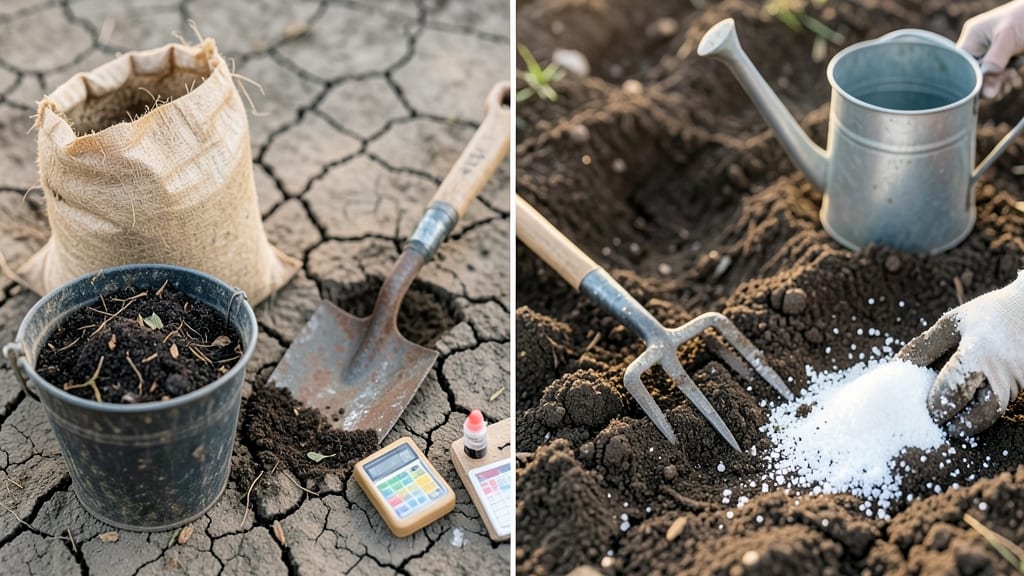
To improve clay garden soil, add organic matter like compost, coarse sand, or peat moss to break up compaction, enhance drainage, and boost nutrient retention for healthier plant roots and growth. Aim for a 2-3 inch layer mixed into the top 6-8 inches of soil.
Clay soil can feel like working with cement—dense, sticky, and slow to drain.
The key to transforming it lies in adding materials that create air pockets and improve structure. 🌱 Organic compost introduces beneficial microbes and breaks up heavy particles, while coarse sand increases porosity without altering the soil's natural fertility.
Peat moss, though controversial in some regions, holds moisture and prevents future compaction when mixed properly. I always recommend testing your soil first to identify which amendment your plants will respond to best.
For vegetables and annuals, a balanced mix of compost and sand works wonders, while shrubs and perennials often thrive with pine bark fines or coconut coir. The goal is to create a loamy texture that mimics nature's ideal growing medium.
Remember, clay soil warms up faster in spring, so timing your amendments in early fall gives them months to integrate before planting season.
💡 In This Article
- How Organic Amendments Transform Heavy Clay Soil
- Best Organic Amendments for Clay Soil by Plant Type
How organic amendments transform heavy clay soil
Clay soil's infamous stickiness comes from its tiny, tightly packed particles that repel water and trap air. When you add organic amendments like compost, you're essentially inviting tiny soil engineers—microbes and earthworms—to the party.
These organisms break down organic matter, producing sticky substances called glomalin that glue soil particles together into larger, stable aggregates. This process creates tiny air pockets that improve aeration, allowing roots to breathe and access nutrients more easily.
Think of it like adding a fluffy pillow to a mattress: suddenly, your plants can sink their roots deeper without struggling.
The magic happens at the molecular level. Compost introduces fibrous materials that physically disrupt clay's dense structure, while its humic acids help neutralize the soil's natural alkalinity. Sand, on the other hand, acts like a skeleton key—its coarse particles wedge between clay platelets, creating permanent channels for water movement.
For example, mixing in 20-30% coarse builder's sand (with particles 0.5-1mm) can improve drainage by up to 40% while maintaining fertility. The key is using sharp, angular sand rather than rounded river sand, as its jagged edges create more surface area for water to flow around.
Peat moss plays a different but equally important role. Its fibrous structure holds up to 20 times its weight in water while preventing compaction, making it ideal for clay soils that dry out too quickly or stay waterlogged.
What's fascinating is how peat moss creates a sponge-like network that holds moisture near roots while allowing excess water to drain away—a perfect balance for clay's extremes.
The best results come from mixing 1-2 inches of peat moss into the top 6-8 inches of soil, then watering thoroughly to help it integrate.
Here's what most gardeners overlook: the microbial wake-up call. When you add organic matter, you're not just changing the physical structure—you're reviving dormant soil life. A single teaspoon of healthy garden soil contains more microbes than there are people on Earth!
These microscopic workers break down organic matter into plant-accessible nutrients while producing enzymes that further loosen clay's grip. The result? Roots grow deeper and stronger, accessing water and nutrients that were previously trapped in clay's dense matrix. 🌱
Timing matters too. For best results, amend clay soil in early fall or late winter when temperatures are cool but not freezing. This gives microbes months to establish themselves before the growing season.
I've seen dramatic improvements in just 3-6 months when using a 50/50 mix of compost and sand—enough to transform a waterlogged mess into a crumbly, fertile garden bed.
The visual difference is striking: what once felt like packing mud becomes light, dark, and inviting, with worms visibly tunneling through the improved structure.
One common mistake? Overdoing it with sand. While it improves drainage, too much can wash away nutrients and create a sterile environment. Aim for no more than 30% sand in your amendment mix.
Instead, focus on building organic matter over time—each year's addition of compost creates a more resilient soil structure that requires fewer amendments down the road. The payoff? Plants that thrive without the constant struggle against heavy clay. 💫