
Tools
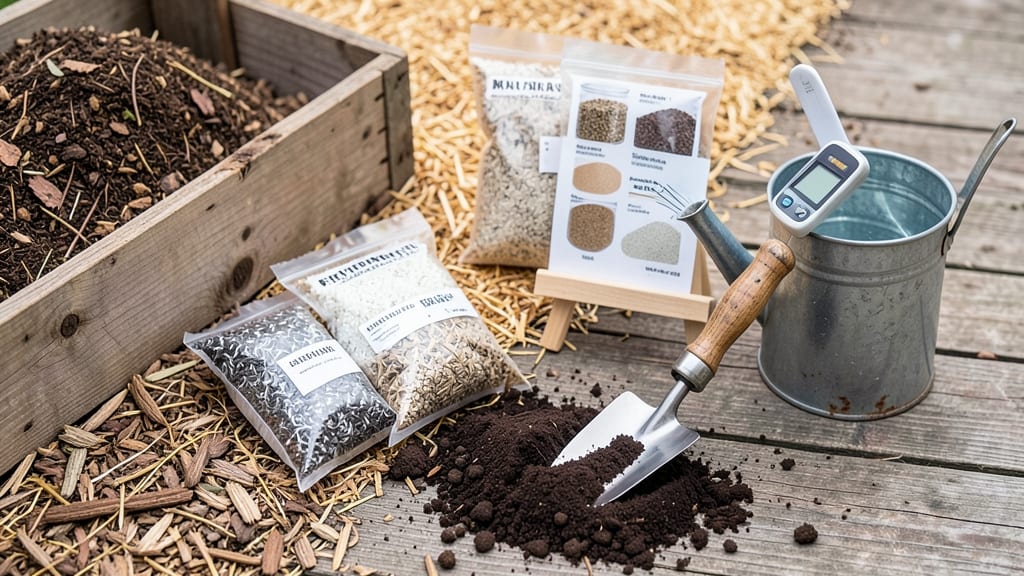
To determine what soil to use for garden beds, the ideal choice is well-draining loam—rich in organic matter, balanced in texture, and retaining moisture without suffocating roots. Mixing sand or compost can improve clay-heavy or rocky soils, while peat moss or coconut coir helps sandy soils hold nutrients longer.
Loam is the gold standard because it combines the best of all soil types: the crumbly structure of silt for moisture retention, the drainage of sand, and the nutrient-holding capacity of clay. 🌱 If your soil leans too heavy or too light, amending it with organic matter like compost or coconut coir creates the perfect growing medium.
For example, clay soils benefit from sand and compost to prevent compaction, while sandy soils need peat moss to retain water and nutrients.
Most garden plants—from vegetables to perennials—thrive in loam, but some, like blueberries, prefer acidic soil, while succulents need fast-draining mixes. The key is testing your soil first (a simple pH kit works) and adjusting based on what your plants need.
Over time, adding compost annually keeps your garden bed's soil structure and fertility in top shape.
💡 In This Article
- How Loam, Sand, and Clay Soil Affect Plant Growth
- DIY Soil Mix Recipes for Different Garden Bed Needs
How loam, sand, and clay soil affect plant growth
The difference between loam, sand, and clay starts with particle size, which directly impacts drainage, aeration, and nutrient availability. Loam—ideal for most plants—contains roughly 40% sand, 40% silt, and 20% clay, creating a balanced structure that holds moisture without waterlogging.
Sand, with its large particles, drains water too quickly, while clay's tiny particles compact easily, suffocating roots and limiting oxygen flow. 🌱
Clay soils, though nutrient-rich, can become waterlogged after rain, cutting off root oxygen and causing rot. Their high mineral content also makes them alkaline (pH 7-9), which locks out essential nutrients like phosphorus and iron.
Sandy soils, on the other hand, drain so fast that nutrients wash away, leaving plants thirsty despite abundant water. The solution? Amendments like compost (for clay) or peat moss (for sand) bridge the gap—compost adds organic matter to break up clay's density, while peat moss boosts sandy soil's water-holding capacity.
Root health depends on this balance. In loam, roots spread easily through the crumbly texture, accessing both water and air. In clay, roots struggle to penetrate, while in sand, they can't anchor properly.
For example, tomatoes thrive in loam but wilt in pure sand, while blueberries—acid-loving plants—need sandy, acidic soil (pH 4.5-5.5) to prevent nutrient deficiencies. 🍅
Moisture retention is another critical factor. Clay soils can hold 40-50% water by volume but release it slowly, risking root suffocation. Sandy soils hold only 5-10% water, requiring frequent irrigation. Loam sits at 30-40% water capacity, ideal for most vegetables and flowers.
Even a 10% compost addition to clay or sand can improve water retention by 20-30%, making a dramatic difference in plant survival.
Consider your plants' native habitats for clues. Succulents, like cacti, evolved in sandy, fast-draining soils, while ferns prefer the moisture-retaining, organic-rich environments of clay. For garden beds, aim for a 50-60% loam base, adjusting with amendments to match your plants' needs.
A simple soil test (available for $10-$20) reveals your garden's pH and texture, guiding your next steps. 🌿
Over time, the organic matter in compost breaks down into humus, improving soil structure and microbial activity. Worm castings, rich in nitrogen and phosphorus, further enhance nutrient availability. For heavy clay, mix in 2-3 inches of coarse sand and 1-2 inches of compost per square foot.
For sandy soil, blend in 3-4 inches of peat moss or coconut coir to boost water retention. These adjustments create a growing medium that mimics nature's balance. ✨