
Pests
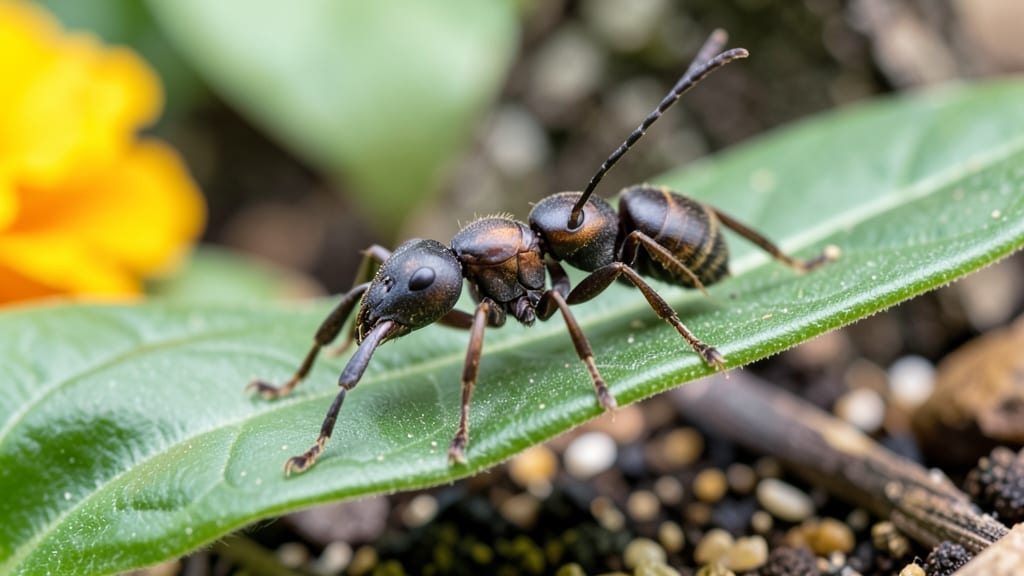
When growing a garden, ants serve as natural pest controllers by hunting down aphids, mites, and other small pests while improving soil quality through their tunneling, which boosts root development and water absorption. Their activities also help spread organic matter and nutrients throughout the soil.
Ants play a dual role in garden ecosystems by acting as both pest regulators and soil engineers. 🌱 Their hunger for sap-sucking insects like aphids keeps plant populations in check, reducing the need for chemical pesticides.
Meanwhile, their tunneling breaks up compacted earth, allowing roots to penetrate deeper and access moisture more efficiently. This underground activity also speeds up the decomposition of fallen leaves and plant debris, enriching the soil with natural nutrients over time.
What's fascinating is how these tiny workers create a self-sustaining cycle: their foraging habits distribute seeds and organic material across the garden, promoting biodiversity. However, not all ants are beneficial—some species like fire ants can damage seedlings or create unsightly mounds.
The key is encouraging the right types of ants while gently managing their populations through organic methods when needed.
💡 In This Article
- How Ants Improve Soil Health Through Tunneling
- Balancing Ant Activity: Benefits vs Potential Garden Risks
How ants improve soil health through tunneling
Ants act as tiny soil engineers by creating intricate tunnel systems that reach depths of 1-3 feet below the surface. These tunnels serve multiple critical functions: they enhance oxygen circulation, which is essential for root respiration, and break up compacted soil, allowing water to penetrate more efficiently.
Studies show that gardens with active ant colonies can see 30-50% better water infiltration compared to compacted soil, reducing runoff and improving moisture retention for plants.
Their tunneling also accelerates the decomposition process. Ants carry organic matter like fallen leaves, dead insects, and plant debris into their nests, where it mixes with soil and microbial activity. This creates a nutrient-rich "compost" that gets redistributed throughout the garden.
For example, a single ant colony can process up to 10,000 leaf fragments per year, breaking them down into simpler compounds that plants can absorb more easily than intact organic material.
What makes this process even more remarkable is how ants influence microbial communities. Their tunnels create microhabitats that support beneficial bacteria and fungi, which further decompose organic matter and make nutrients like nitrogen and phosphorus more available to plants.
This symbiotic relationship explains why gardens with active ant populations often show 20-30% higher microbial diversity in the soil, leading to healthier plant growth over time.
However, not all ant species contribute equally to soil health. Harvester ants, for instance, are particularly effective at breaking down tough plant material, while fire ants can create excessive mounds that disrupt plant roots.
The key difference lies in their tunneling patterns: beneficial ants create shallow, widespread networks that improve soil structure, while aggressive species often focus on deep, vertical burrows that can damage roots.
Consider the case of Lasius niger (black garden ants), which are common in temperate climates. These ants create tunnels that are typically 0.5-1 inch wide and can span several feet in length.
Their foraging paths often follow root systems, creating natural channels that guide water directly to plant roots during dry periods. This behavior is particularly valuable in drought-prone regions where water conservation is critical.
For gardeners looking to maximize these benefits, creating ant-friendly habitats—like leaving some leaf litter and providing small water sources—can encourage beneficial species while naturally deterring pests. The result is a garden ecosystem that works more efficiently, with less need for synthetic fertilizers or irrigation.