
Tools
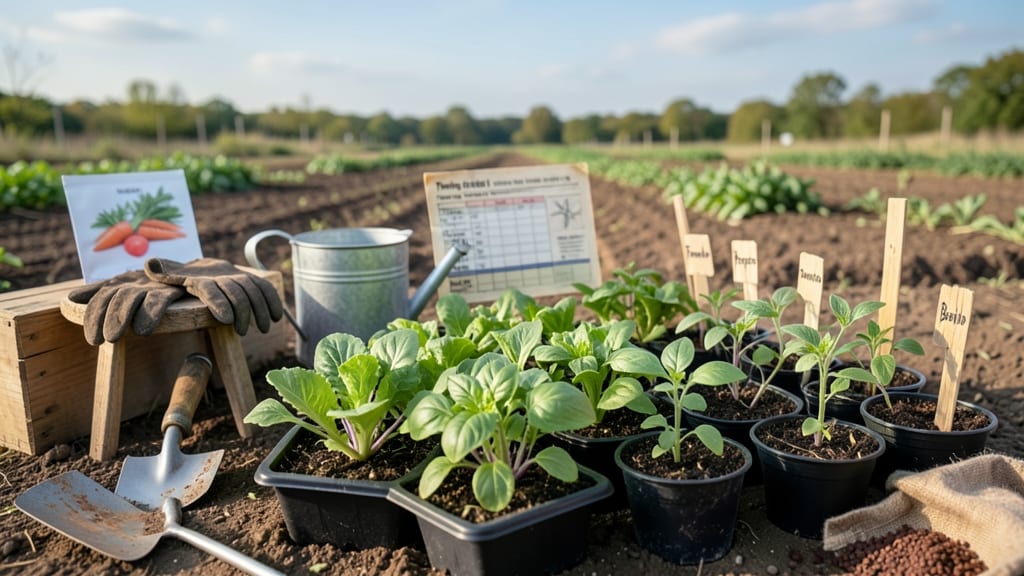
A perfect vegetable garden planting schedule keeps your 🌱 General Vegetable Garden thriving from seed to harvest, no matter where you live.
Timing is everything in gardening—plant too early or late, and you’ll miss peak harvests or risk frost damage. This zone-specific schedule ensures your tomatoes, lettuce, and herbs thrive year-round, whether you’re in USDA Zone 6a or beyond.
With the right deadlines, you’ll avoid common mistakes like planting too close to frost or ignoring microclimates. I’ll break down the best months for spring and fall planting, plus how to adjust for early or late harvests.
Discover how to extend your growing season with succession planting, cold frames, and heat-tolerant varieties—so you can enjoy fresh veggies throughout the year, not just in peak months.
Zone-by-Zone vegetable planting schedule for year-round success
Mastering your vegetable garden planting schedule depends on understanding your USDA zone and local frost dates. Whether you're in Zone 3 with harsh winters or Zone 10 with mild winters, knowing the right planting deadlines ensures your tomatoes, lettuce, and peppers thrive.
Below, I’ve broken down the optimal spring and fall planting windows for 20 common vegetables, so you can plan with confidence.
Your last spring frost and first fall frost are the bookends of your growing season. For example, in Zone 5, the last frost typically occurs around April 15, while Zone 8 might see its first frost as late as November 15.
These dates dictate when to start seeds indoors, transplant seedlings, and sow directly into the garden for maximum success.
Pro Tip: Use a frost-free date calculator for your exact location—even within the same zone, microclimates can shift planting windows by weeks. For instance, a south-facing slope warms up faster than a low-lying area, allowing earlier plantings.
How to adjust your planting schedule for early or late harvests
Even with a perfect vegetable garden planting schedule, Mother Nature sometimes throws curveballs. Whether you're dealing with an unexpected early frost or a heatwave that stalls growth, there are proven strategies to extend your harvest window.
I’ve used these techniques in my own garden to squeeze extra weeks—or even months—out of my tomatoes, lettuce, and peppers, no matter the season.
The key is combining season-extending tools with smart planting strategies. Cold frames, row covers, and heat-tolerant varieties can turn a short growing season into a bountiful one.
For example, in Zone 5, where frost can arrive as early as October, I’ve successfully harvested kale and spinach well into December using simple row covers. Meanwhile, in hotter climates like Zone 9, shade cloth and mulch keep basil and cucumbers producing long after standard deadlines.
- 🌱 Succession Planting: Sow fast-growing crops like radishes or bush beans every 2-3 weeks to ensure a continuous harvest. Example: Plant lettuce in March, again in April, and once more in August for fall harvests.
- ❄️ Cold Frames: Use low-cost Plexiglas frames to trap heat and extend the growing season by 4-6 weeks in spring/fall. Ideal for greens, herbs, and root vegetables like carrots.
- 🛡️ Row Covers: Lightweight frost blankets protect plants from light frosts (down to 25°F) and can delay fall harvests by 3-4 weeks. Perfect for broccoli, cabbage, and peppers.
- ☀️ Heat-Tolerant Varieties: Swap standard tomato or pepper seeds for heat-resistant types like 'Solar Fire' peppers or 'Heatmaster' tomatoes, which thrive in 90°F+ temperatures.
- 🌿 Interplanting: Pair slow-growing crops (like cauliflower) with fast-growing fillers (like radishes) to maximize space and time. Harvest the radishes early, then replant with another round.
One of my favorite tricks is succession planting for leafy greens. Instead of planting a single row of spinach in early spring, I stagger plantings every 10-14 days. This ensures a steady supply of fresh greens from May through July, even if the first batch bolts quickly.
For warm-season crops like zucchini, I plant two rounds: one in early May and another in late June, just as the first plants start to decline.
For gardens in cooler climates, a cold frame is a game-changer. Mine is a simple DIY box with clear plastic walls, and it adds 10-15°F of warmth inside. I start pepper and tomato seeds in the cold frame in late winter, giving them a head start before transplanting outdoors.
In fall, it lets me harvest kale and arugula until hard frosts arrive. If you’re short on space, even a low tunnel with row covers works wonders for protecting delicate seedlings.
Don’t overlook the power of mulch and shade cloth in hot climates. A thick layer of straw mulch keeps soil cool and retains moisture, while 30% shade cloth prevents bolting in lettuce and herbs.
Last summer, I used shade cloth over my basil beds and extended my harvest by 3 weeks without losing flavor or yield. Pair this with drip irrigation to keep roots cool and plants thriving.
Adjusting your planting schedule doesn’t require complex setups—just a few strategic tweaks. Start with succession planting for easy wins, then layer in season extenders like cold frames or row covers based on your climate.
With these methods, you’ll enjoy fresh produce long after your neighbors’ gardens have gone quiet. Happy growing! 🌿