
Planting
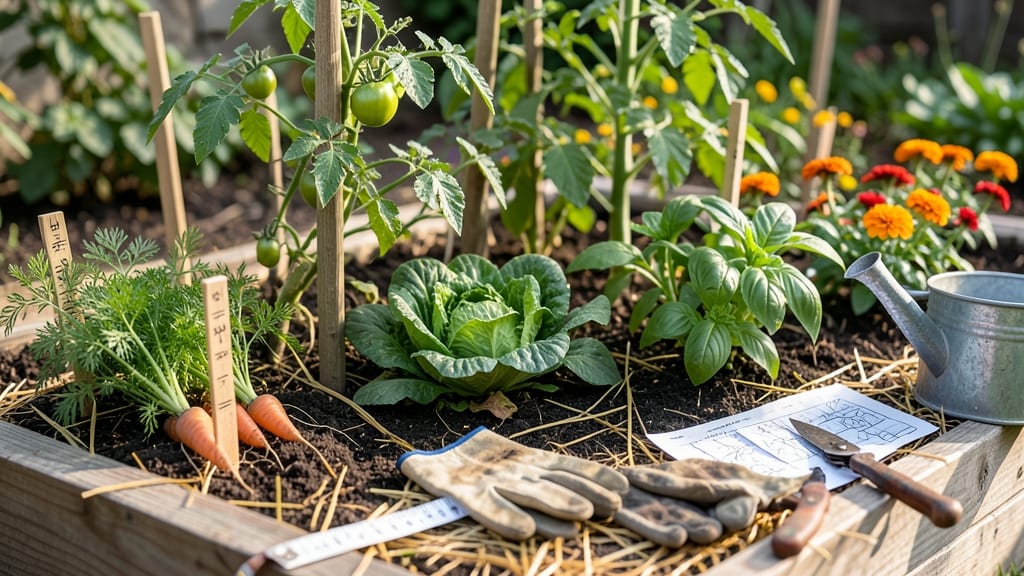
Spacing for garden plants determines how close or far apart you plant them, directly impacting their ability to thrive by controlling competition for nutrients, sunlight exposure, and airflow circulation. Most plants need specific spacing ranges—check seed packets or plant tags for exact measurements.
This isn't just about fitting more plants into a small area—it's about giving each plant the room it needs to grow strong roots and develop healthy foliage. 🌱 Overcrowding forces plants to fight for sunlight and water, which leads to weaker stems and increased susceptibility to diseases like powdery mildew.
For example, tomatoes need at least 18-24 inches between plants to prevent root competition, while herbs like basil can thrive in tighter clusters of 6-12 inches. The key is matching spacing to the plant's mature size, not its early growth stage.
Think of it like a well-organized office—when everything has its own space, productivity soars. In the garden, proper spacing ensures every plant gets the sunlight it craves, reducing the risk of leggy growth or stunted development.
Plus, adequate airflow helps prevent fungal infections that thrive in damp, crowded conditions. I always recommend sketching a rough layout before planting to visualize how everything will fit together.
💡 In This Article
- How Plant Spacing Affects Growth and Disease Prevention
- Calculating Garden Layouts for Different Plant Types
How plant spacing affects growth and disease prevention
Proper spacing creates an invisible ecosystem where each plant gets the resources it needs to thrive. When plants are too close, their roots compete aggressively for water and nutrients in the soil, a phenomenon called root binding.
This competition forces plants to develop shallow, weak root systems that can't support strong growth.
For instance, carrots planted 2 inches apart may produce small, forked roots, while spacing them 3-4 inches apart allows them to grow straight and plump. 🌱 The same principle applies to above-ground growth—crowded plants stretch toward sunlight, creating leggy, weak stems that snap easily in wind or rain.
Airflow is another critical factor where spacing makes all the difference. Plants need space for air to circulate between leaves, which helps prevent fungal diseases like powdery mildew and black spot.
A crowded garden creates a humid microclimate where fungal spores thrive—imagine a damp, enclosed space where moisture lingers instead of evaporating.
For example, roses need 3-4 feet of space between bushes to allow air to flow freely, reducing the risk of fungal infections by up to 70% compared to tightly packed plantings. Even vegetables like lettuce benefit from 10-12 inches of space to prevent moisture buildup on leaves.
Sunlight penetration is the third key element where spacing directly impacts plant health. When plants are too close, the outer leaves block sunlight from reaching the inner ones, a condition called shading. This forces lower leaves to produce less chlorophyll, reducing photosynthesis and stunting growth.
For instance, tomato plants need 18-24 inches of space to ensure sunlight reaches all parts of the plant, while squash vines require 3-5 feet to sprawl without competing for light.
Proper spacing also helps maximize photosynthesis by allowing each leaf to receive direct sunlight for at least 6-8 hours per day, the golden standard for most garden plants.
Overcrowding doesn't just harm individual plants—it creates a domino effect that weakens the entire garden. When plants struggle for resources, they become stressed and more vulnerable to pests and diseases. For example, crowded basil plants attract whiteflies because the stressed foliage emits signals that pests find irresistible.
The solution? Follow the 3:1 rule: give each plant three times the space it needs at maturity compared to its current size. This simple guideline prevents root binding, improves airflow, and ensures every plant gets its fair share of sunlight. 💫
Even well-intentioned gardeners sometimes make spacing mistakes, like planting fast-growing crops too close because they start small.
For example, radishes mature in just 25-30 days and can be planted 1 inch apart, but if you don't thin them to 2-3 inches as they grow, they'll compete for space and produce smaller roots.
Another common error is ignoring the mature size of perennials like asparagus, which can spread 18-24 inches wide and need 12-18 inches between crowns to prevent overcrowding. Always check seed packets or plant tags for mature size measurements—they're your best guide to avoiding these pitfalls.
Think of spacing as the foundation of your garden's health. When you get it right, you'll see stronger stems, larger yields, and fewer problems with pests and diseases.
For example, properly spaced zucchini plants produce 30-50% more fruit than crowded ones because each vine has enough space to develop multiple female flowers. The science is clear: spacing isn't just about aesthetics—it's about creating the ideal conditions for your plants to flourish. 🌿