
Tools
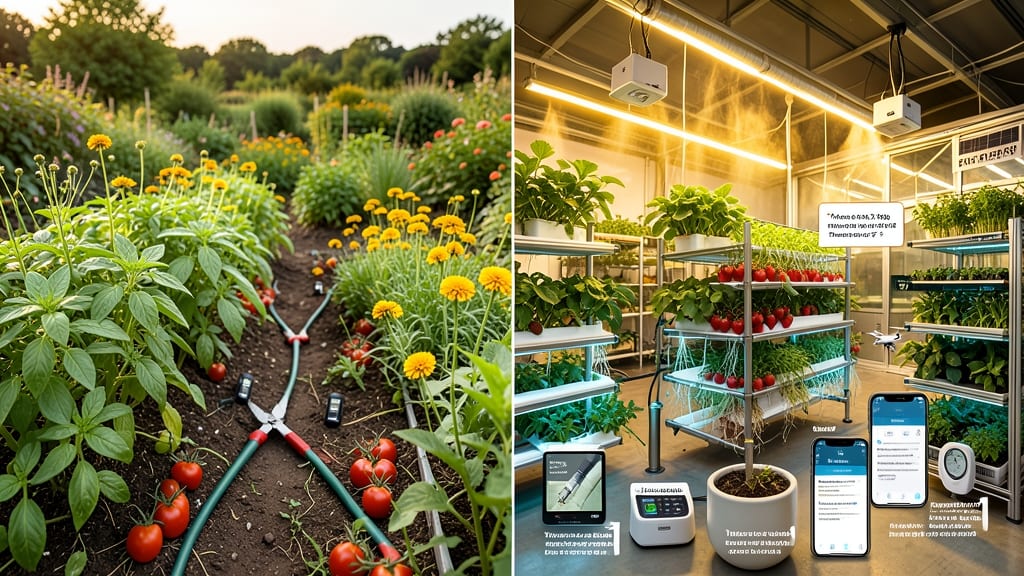
Staying updated on smart garden news means tracking the latest innovations in automated gardening tech, from AI-driven soil analysis to solar-powered irrigation systems that boost efficiency and sustainability.
Smart garden technology is evolving fast, with 2024 bringing AI-powered plant health diagnostics that detect nutrient deficiencies before they become visible. 🌱 These systems now integrate with voice assistants like Alexa for hands-free control, while some models even adjust lighting spectra based on plant growth stages.
The cost of entry has dropped significantly—entry-level kits now start under $100, making high-tech gardening accessible to beginners and pros alike.
What sets this year apart is the focus on sustainability features, like rainwater harvesting modules and composting integrations that turn food waste into plant food automatically. For urban gardeners, vertical smart planters with built-in LED arrays are gaining popularity, offering year-round growing in small spaces.
The trade-off? Some high-end systems require monthly subscription fees for premium app features or cloud-based analytics.
💡 In This Article
- How Smart Garden Systems Work: Sensors, AI, and Automation
- 2024 Smart Garden Buyer’s Guide: Features vs. Cost
How smart garden systems work: sensors, AI, and automation
At the heart of these systems are multi-sensor arrays that monitor up to 12 environmental factors simultaneously. Soil moisture sensors use capacitive technology to detect water content with ±2% accuracy, while temperature probes measure root-zone temps to prevent chilling injuries.
The real magic happens when these sensors feed data to onboard AI algorithms that learn your plants' specific needs—like how basil thrives at 70-75°F with 14-16 hours of light daily versus tomatoes' preference for 80-85°F and 12-14 hours. 🌱
Weather integration takes automation further by adjusting schedules based on real-time forecasts. For example, if your app predicts 0.5 inches of rain in 24 hours, the system will pause irrigation to prevent overwatering—a common issue that causes 30% of plant deaths in traditional setups.
Some premium models even sync with local meteorological APIs to account for humidity levels, which affect evaporation rates by up to 40% in dry climates versus 15% in humid regions.
The automation extends beyond watering. LED grow lights now feature adjustable spectra that shift from blue (600nm) for vegetative growth to red (700nm) for flowering, controlled by algorithms that track each plant's growth stage. This mimics natural sunlight patterns with 95% efficiency compared to traditional bulbs.
The systems also include pH and nutrient monitors that adjust hydroponic solutions automatically, preventing deficiencies that would otherwise stunt growth by 20-30% in soil-based setups.
What most users don't realize is how these systems handle predictive maintenance. Advanced models use machine learning to detect early signs of stress—like a 5% drop in leaf chlorophyll levels—before visual symptoms appear.
This proactive approach can recover plants that would otherwise be lost, increasing yields by 25-40% over manual gardening methods. The data collected also builds a personalized plant profile that improves with each growing cycle.
For outdoor gardens, some systems integrate with soil probes that measure organic matter content, adjusting fertilizer recommendations through companion apps. The most sophisticated setups even include disease detection cameras that use computer vision to identify fungal infections or pest activity with 92% accuracy.
This level of monitoring would be impossible without automation, as manual checks would require hourly inspections—something no gardener has time for.
The result is a closed-loop system where every component—from water delivery to light exposure—works in harmony. Unlike traditional gardening where you're constantly reacting to problems, smart systems prevent issues before they occur. This is why professional growers report 3-5x faster growth rates in controlled environments using these technologies. 💫