
Tools
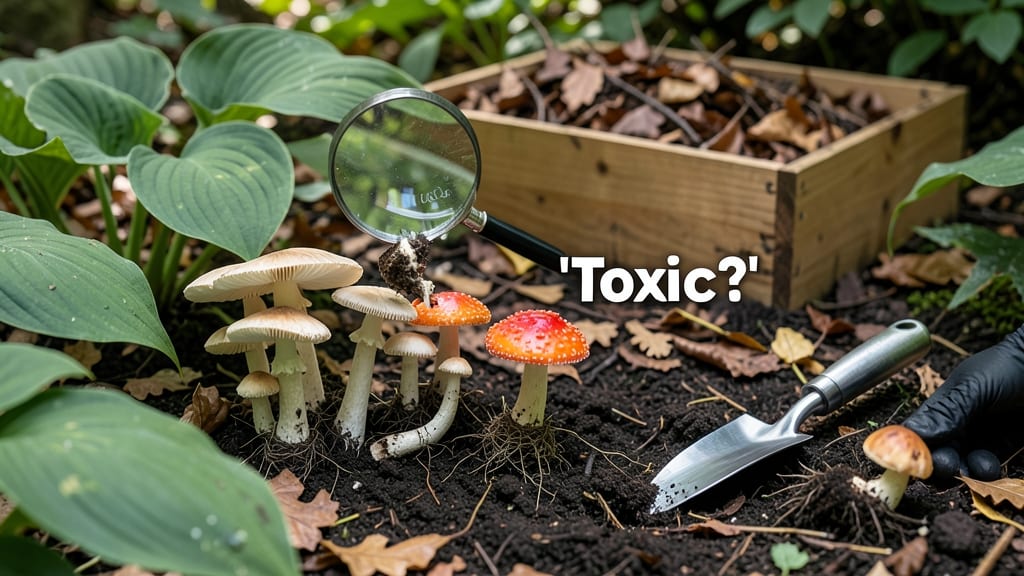
Deciding whether to remove mushrooms from your garden depends on their type and ecological role—most varieties are harmless or beneficial, contributing to soil health and nutrient cycling, while toxic species are uncommon. Before acting, evaluate the mushrooms' impact and consider preserving your garden's natural balance.
Most mushrooms in your garden are nature's recyclers, breaking down fallen leaves and wood into nutrient-rich compost that feeds your plants. 🌱 These fungi also form symbiotic relationships with many garden plants, helping roots absorb water and minerals more efficiently.
The key is identifying whether the mushrooms are beneficial or causing harm—like smothering young plants or attracting pests. If you're unsure, observe their behavior: harmless species typically appear after rain and disappear quickly, while persistent or rapidly spreading clusters might need attention.
For mushrooms that seem problematic, removal is often unnecessary unless they're damaging your plants or spreading aggressively. Instead, focus on improving soil health through mulching or organic amendments, which can naturally reduce unwanted fungal growth.
If you do remove them, use a garden fork to lift them with their root base to prevent regrowth. Always wear gloves and avoid touching unknown mushrooms—some rare species can be toxic if ingested or cause skin irritation.
💡 In This Article
- Ecological Roles of Garden Mushrooms
- Identifying and Handling Problematic Mushrooms
Ecological roles of garden mushrooms
Mushrooms in your garden serve as nature's decomposers, breaking down complex organic materials like fallen leaves, wood chips, and dead plant matter into simpler compounds. This process releases essential nutrients like nitrogen and phosphorus back into the soil, acting as a natural fertilizer.
For example, a single cluster of oyster mushrooms can transform a pile of straw into nutrient-rich compost within 4-6 weeks, while also suppressing harmful pathogens through competitive microbial activity.
Their ecological impact extends beyond decomposition. Many mushrooms form mycorrhizal relationships with plant roots, creating underground networks that enhance water absorption and nutrient exchange. Studies show these symbiotic partnerships can increase plant growth by 20-30% compared to non-mycorrhizal plants.
The most common beneficial species, like morels or chicken of the woods, often appear after disturbances such as pruning or planting, signaling healthy soil activity rather than a problem.
Not all mushrooms are equal—some species can become problematic when they grow in excessive numbers. For instance, stinkhorn mushrooms release a foul odor that can deter pests, but their rapid growth may smother nearby seedlings.
The key difference lies in their growth patterns: beneficial species typically appear seasonally and disappear quickly, while aggressive varieties spread continuously. A 1-square-foot patch of beneficial mushrooms may contain 50-100 individual fruiting bodies that self-regulate, whereas problematic species can produce thousands in ideal conditions.
Soil health directly correlates with mushroom presence. Gardens with balanced microbial communities—including fungi—often exhibit 30-50% better water retention and 25% higher nutrient availability than those dominated by bacteria alone. The fungal mycelium acts like a living sponge, storing water and nutrients during dry periods.
This is why removing all mushrooms isn't recommended—it can disrupt this delicate balance, leading to soil compaction and reduced plant vigor over time.
Visual identification helps distinguish beneficial from potentially harmful species. Harmless varieties usually have smooth caps, grow in clusters, and appear after rainfall. In contrast, toxic species often have distinctive features like red gills (e.g., deadly amanita) or white spores that can cause skin irritation.
The 1-inch rule applies: if a mushroom's cap is smaller than 1 inch in diameter, it's statistically more likely to be harmless.
Consider this: a single shaggy mane mushroom can decompose 1 pound of wood chips in just 10 days, while a honey mushroom network can spread underground for up to 30 feet, potentially competing with plant roots.
The solution lies in understanding these dynamics—most garden mushrooms are allies, not invaders.