
Watering
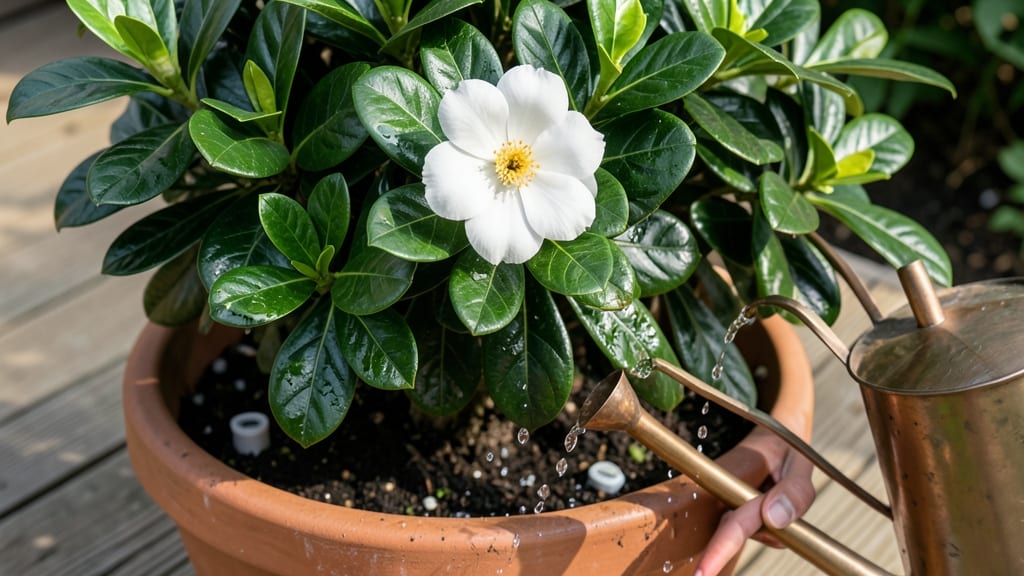
To water gardenia 🌸 properly, focus on keeping the soil consistently moist without letting it turn soggy—this balance is the key to those fragrant blooms you love.
Struggling to keep your gardenia blooming? The secret lies in mastering its watering needs—too much or too little can turn those fragrant flowers into a sad, wilted memory.
Most gardeners overcomplicate it by sticking to a rigid schedule, but the truth is simpler: your plant’s thirst depends on the season, soil type, and even the pot size.
Below, I’ll walk you through the exact techniques—like deep watering in the morning and checking soil moisture with your fingers—to ensure your gardenia stays lush and blooms year after year.


Gardenias watering schedule: how often & when to water for healthy growth
Mastering your gardenia watering schedule is the key to those fragrant blooms you love. These tropical beauties crave consistent moisture but despise soggy roots—balancing both is an art. I’ve learned through trial (and a few wilted gardenias) that seasonal adjustments and soil checks make all the difference.
Let’s dive into the perfect routine to keep your gardenia thriving year-round.
Your gardenia’s water needs shift dramatically with the seasons. In summer’s heat, you’ll water every 2-3 days, while winter’s chill slows growth to just bi-weekly watering. Rainfall also plays a role—if you’ve had 1 inch of rain, skip your scheduled watering.
Always check the soil first to avoid overdoing it. I’ll show you exactly how to test moisture so you never guess again.
Start by testing your soil’s moisture with your finger or a moisture meter. Stick your index finger about 1-2 inches deep—if it feels dry, it’s time to water. For container gardenias, the soil dries faster, so check daily in summer.
Pro tip: Use a terracotta pot to see moisture levels through the sides. If the soil stays damp for more than 48 hours, you’re overwatering.
Watch for yellowing leaves or drooping foliage—these are red flags. Yellow leaves often mean overwatering or poor drainage, while crispy edges signal underwatering. I once killed a gardenia by ignoring these signs until it was too late.
Now, I keep a watering journal to track patterns. If your gardenia drops leaves suddenly, it’s usually a cry for help—adjust your schedule immediately.
Adjust your watering based on your soil type. Sandy soil drains quickly, so you’ll need to water more frequently, while clay soil retains moisture longer. Amend heavy soil with perlite or compost to improve drainage.
I add a 2-inch mulch layer around my gardenias to lock in moisture and keep roots cool. This simple trick cuts my summer watering by 30% while preventing soil crusting.
Rainfall is your best friend in summer. If you get 1 inch of rain, skip watering for 2-3 days. Use a rain gauge to track accumulation. In drought-prone areas, I set up a drip irrigation system on a timer to deliver consistent moisture without the guesswork.
For potted gardenias, move them to a shadier spot during heatwaves to reduce evaporation.
Morning watering is non-negotiable. Watering in the evening leaves leaves damp overnight, inviting fungal diseases like powdery mildew. Aim for 6-9 AM when temperatures are cooler. I use a soaker hose to deliver water directly to the roots, avoiding the leaves entirely.
This method also saves 20% more water by reducing runoff. If you must hand-water, use a watering can with a narrow spout for precision.
Container gardenias need extra attention. Their roots heat up faster, and soil dries out quicker. I water mine every 3-5 days in summer, checking the soil daily. Add a water-absorbing polymer to the potting mix to extend time between water
The right way to water gardenias: techniques to prevent root rot & wilting
Watering your gardenia correctly is the difference between lush, fragrant blooms and a struggling plant. These tropical beauties need consistent moisture but despise soggy roots. The key lies in deep watering techniques that reach the root zone while avoiding surface-level dampness that invites fungal diseases.
Start by understanding your gardenia’s root depth. Most mature plants have roots extending 12-18 inches below soil level. Shallow watering only wets the top inch, leaving deeper roots thirsty.
This creates a stress response that manifests as wilting or leaf drop, even when the soil feels damp at the surface.
⚠️ WARNING: Common Mistake Alert!
⚠️ Avoid these critical watering errors:
- Shallow watering (only wetting top inch) causes root dehydration at depth.
- Evening watering keeps leaves damp overnight, inviting powdery mildew and bacterial leaf spot.
- Inconsistent schedules stress plants—stick to morning watering for best results.
For container gardenias, the rules change slightly. Pots dry out faster, so check soil moisture every 3-5 days in summer.
Use your finger to test 2 inches deep—if dry, water until it drains freely from the bottom. Never let containers sit in saucers of water; this causes root suffocation and rot.
Morning watering between 6-9 AM gives roots time to absorb moisture before the heat of day. This reduces evaporation by 30-40% compared to afternoon watering.
Plus, wet foliage has hours to dry before evening humidity peaks, cutting fungal risk. Avoid sprinklers—they wet leaves, creating perfect conditions for fungal spores to thrive.
Improve drainage in garden beds by amending soil with perlite or coarse sand (20% mix). For containers, use a blend of 50% peat moss, 30% pine bark fines, and 20% perlite.
This creates air pockets that prevent waterlogging while retaining enough moisture. Mulch with 2-3 inches of pine bark or cypress mulch to slow evaporation and maintain even soil temps.
Watch for these wilting signs: Leaves curling at the edges or drooping by midday signals underwatering. Yellowing leaves with crisp edges mean overwatering or salt buildup (flush soil with rainwater to cleanse).
Adjust your schedule based on seasonal needs—summer may require daily checks, while winter needs bi-weekly watering at most.