
Watering
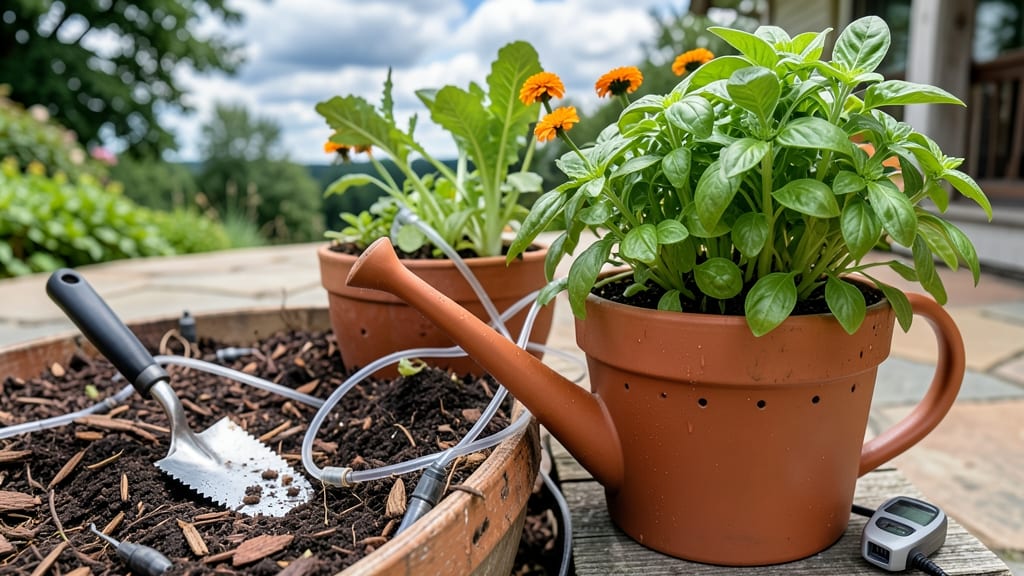
To water your garden when away, you need a system that delivers moisture consistently—without drowning roots or running dry in three days or more.
Picture this: you return home to find your 🌱 thriving tomatoes or wilting herbs, all because you forgot to set up a reliable watering method. The right approach keeps your plants happy while you’re gone, whether you’re off for a weekend or a two-week vacation.
From low-tech hacks like DIY wicking bottles to high-tech solutions like smart irrigation timers, I’ll walk you through the best options—plus how to avoid the common mistakes that turn your garden into a science experiment gone wrong.
By the end, you’ll know exactly which method fits your budget, garden size, and trip length, so your plants stay hydrated without you lifting a finger.


Best self-watering systems for long-term garden care
When you're planning a vacation or even a long weekend away, your garden shouldn’t become a neglected disaster. The key to keeping your plants hydrated and healthy lies in the right self-watering system.
These systems range from simple, low-cost solutions to high-tech setups that require minimal effort. For trips lasting 3 days to 2 weeks, the right choice depends on your garden size, budget, and plant types.
I’ve tested and compared the most effective passive watering methods to help you decide which system will work best for your needs. Whether you’re dealing with vegetables in containers, flower beds, or potted plants, there’s a solution that fits.
Let’s dive into the top options and see which one aligns with your gardening goals.
Drip irrigation kits, wicking beds, oasis soaker hoses, and smart timers each offer unique advantages. Some are perfect for extended trips, while others are better suited for shorter absences. Below, I’ve broken down their effectiveness, cost, and ease of setup to help you make an informed decision.
Drip irrigation kits are my top recommendation for most gardeners. They deliver water directly to the roots, minimizing waste and ensuring even distribution. These kits are ideal for larger gardens or those with multiple plant types, as you can customize the flow rate and placement of emitters. The initial setup might take a bit of time, but the results are worth it.
If you’re working with container gardens or raised beds, wicking beds are a fantastic choice. They use a simple wick system to draw water from a reservoir, keeping the soil consistently moist.
This method is low-cost and easy to set up, making it perfect for herbs and small vegetables. However, it’s best suited for shorter trips, as the water reservoir won’t last as long as a drip system.
For those with small flower beds or ground covers, oasis soaker hoses are a game-changer. These hoses slowly release water along their length, providing a gentle and even watering experience. They’re incredibly easy to set up and are one of the most affordable options.
Just lay them along the base of your plants, connect them to a water source, and let them do their job.
Smart timers take watering to the next level with automation. These devices connect to your existing watering system and can be controlled remotely via an app. They’re perfect for gardeners who want precise control over their watering schedule, even when they’re miles away. While they come with a higher price tag, the convenience and peace of mind they offer are unmatched.
When choosing the best system for your garden, consider the size of your garden, the types of plants you’re growing, and how long you’ll be away.
For extended trips of 2 weeks or more, a combination of a drip irrigation kit and a large water reservoir will give you the best results. For shorter trips or smaller gardens, a wicking bed or soaker hose might be all you need.
No matter which system you choose, always test it before your trip to ensure it’s working properly. Adjust
DIY self-watering hacks for budget-friendly garden protection
When you're heading out of town, your garden doesn't have to suffer from neglect. I've used these no-tech, low-cost solutions to keep my herbs and veggies thriving during short trips.
The best part? You likely already have the supplies at home. These methods work best for containers, raised beds, and small in-ground gardens where you can control moisture levels closely.
For emergency fixes, I recommend starting with the simplest methods like the plastic bottle drip system. It's perfect for 3-5 day trips and costs less than $2 per plant.
If you're planning a longer absence, combine multiple methods for maximum effectiveness. The key is to test your setup before your trip to avoid soggy soil or thirsty plants.
💧 Step-by-Step DIY Self-Watering Solutions
- 1. Plastic Bottle Drip System
- Poke 5-10 small holes in the cap of a 2-liter plastic bottle
- Fill bottle with water + 1 tsp hydrogen peroxide (prevents algae)
- Place bottle upside-down in soil near plant roots
- Adjust hole size for 3-7 day watering (smaller holes = slower release)
- 2. Clay Pot Wick System
- Fill a terracotta pot with water and place in garden
- Cut a wick from old rope or fabric (about 12" long)
- Thread wick through pot drainage holes and into plant's soil
- Works for 1-2 weeks with weekly water top-ups
- 3. Mulch Moisture Trap
- Apply 3-4 inches of mulch (straw, wood chips, or leaves)
- Water soil thoroughly before leaving (1-2 inches deep)
- Mulch reduces evaporation by up to 70% in hot weather
- Best for 2-3 day trips in cooler climates
- 4. Sponge Reservoir Method
- Soak a household sponge in water and place near roots
- Wrap sponge in plastic wrap to retain moisture
- Replace every 3-4 days for maximum effectiveness
- Ideal for small pots and seedlings
🌱 Pro Tip: Combine methods for longer trips - use mulch + bottle system for 2+ weeks of protection.
My go-to solution for container gardens is the combination bottle-wick system. I place a bottle near the base of each plant and weave a wick from the bottle to the farthest roots. This creates a continuous water supply that lasts 10-14 days in my USDA Zone 7a climate.
For larger gardens, I create a DIY drip line using vinyl tubing and a battery-powered water pump from my garage.
Remember to avoid overwatering—this is the #1 mistake I see with DIY systems. Always check soil moisture before your trip by sticking your finger 2 inches deep.
If it's dry, water thoroughly 24 hours before leaving. For sensitive plants like lettuce or basil, reduce watering by 30-50% to prevent root rot during your absence.
These methods have saved my tomato plants during weekend getaways and kept my herb garden alive during 10-day business trips. The best part? You can repurpose household items instead of buying expensive irrigation systems.
Start with one method, test it on a few plants, then expand your system as needed.