
Watering
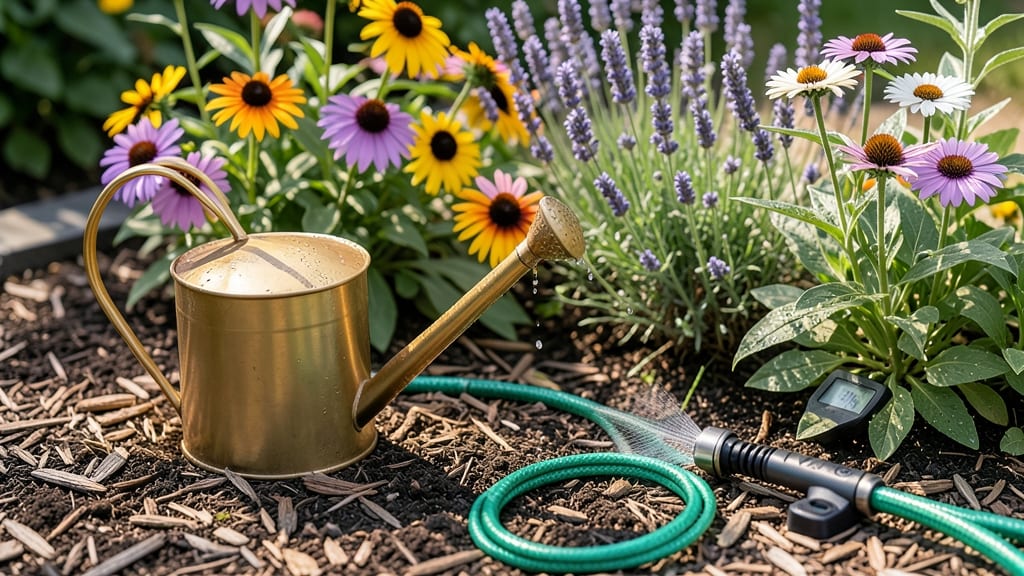
Watering your flower garden the right way means knowing how often to water it without guessing — because too much or too little can ruin even the hardiest blooms.
Overwatering or underwatering your flower garden can mean the difference between vibrant blooms and wilted disappointment—so how do you strike the perfect balance? The answer isn’t one-size-fits-all, but a few simple rules will keep your 🌸 thriving all season long.
Climate, soil type, and plant variety all play a role, but most flower gardens need about 1-2 inches of water per week during the growing season. That said, sandy soil drains fast, while clay holds moisture longer, and drought-resistant flowers like lavender need far less than thirsty annuals.
Below, I’ll break down the best watering schedule by plant type, how to tell if your flowers are thirsty (or drowning), and the one trick that saves water while keeping roots happy.
Watering frequency by flower type: a seasonal guide for healthy blooms
Finding the perfect watering schedule for your flower garden depends on more than just sticking to a weekly routine. Different flower types—like annuals, perennials, and drought-tolerant varieties—have unique needs, and seasons shift those requirements dramatically.
For example, petunias and roses crave consistent moisture, while lavender and succulents thrive with minimal watering. Let’s break down how to tailor your approach for each type and season to keep your blooms vibrant and healthy.
Spring is all about establishing roots, so most flowers need deep but infrequent watering—about 1-1.5 inches per week. In summer, heat and sun demand daily or every-other-day watering, especially for sun-loving annuals.
Fall slows growth, so reduce to weekly watering, and winter often means minimal watering unless your region experiences freezes. The key? Adjust based on soil moisture, not just a calendar.
Here’s your seasonal watering cheat sheet for common flower types, including roses, lavender, petunias, and succulents. Use this as a starting point, then tweak based on your climate zone and soil type.
| Flower Type | Spring | Summer | Fall | Winter | Notes |
|---|---|---|---|---|---|
| Roses | 1-1.5" weekly (deep) | 2-3x/week (early AM) | 1x/week (reduce gradually) | Bi-weekly (light) | Mulch heavily; avoid wetting foliage |
| Lavender | 1" every 10-14 days | 1x/week (drought-tolerant) | Bi-weekly (minimal) | Monthly (if no rain) | Well-draining soil critical; avoid soggy roots |
| Petunias | 1-1.5" every 5-7 days | Daily (light watering) | 1x/week (reduce as temps drop) | None (annuals die back) | Deadhead spent blooms to encourage more flowers |
| Succulents | Every 2-3 weeks (soak) | Every 7-10 days (drought-proof) | Monthly (minimal) | None (store water in leaves) | Use pots with drainage holes |
| Perennials (e.g., Coneflowers) | 1" weekly (establish roots) | 2x/week (deep water) | 1x/week (reduce) | Bi-weekly (light) | Cut back dead foliage in early spring |
| Bulbs (e.g., Tulips, Daffodils) | 1" after planting (spring) | None (foliage dies back) | None (dormant) | None (until spring shoots) | Water only when leaves emerge in spring |
For roses, which are thirsty but sensitive, focus on deep watering at the base of the plant to encourage strong root growth.
In summer, split your watering into morning and evening sessions to combat evaporation and fungal diseases. Lavender, on the other hand, is a drought-tolerant superstar—overwatering is its biggest enemy. Let the soil dry out completely between waterings, and avoid wetting the foliage to prevent mildew.
Petunias are the showstoppers of summer, but they demand attention. These annuals love moisture, so water them daily in extreme heat, but always at the soil level to avoid splashing water on the petals. Succulents and cacti are the opposite—they store water in their leaves, so soak them thoroughly every 1-2 weeks in summer and reduce to monthly in fall and winter. The rule of thumb? When in doubt, check the soil—stick your finger 1-2 inches deep. If it’s dry, water; if it’s damp, wait.
Seasonal transitions
How climate zones affect your flower garden’s water needs
Your USDA Hardiness Zone plays a bigger role in flower garden watering than you might think. While Zone 5 gardeners might water twice weekly in summer, Zone 9 gardeners could need daily watering to prevent wilting.
Even within the same zone, desert climates like Arizona's Zone 10 demand different approaches than humid Zone 7 regions like the Southeast. Understanding these variations helps you avoid both root rot and parched petals—both equally deadly for blooms.
Three key factors determine your watering frequency: temperature extremes, natural rainfall patterns, and soil composition. Sandy soils in Zone 4 drain quickly, requiring more frequent but shallow watering, while clay-heavy soils in Zone 8 hold moisture longer, needing deeper but less frequent watering.
Let's break down how to adjust your schedule for each major climate type to keep your flowers thriving year-round.
In Zone 3-5 regions, where winters bring freezing temperatures, your watering strategy should shift dramatically. During the growing season, aim for deep watering 2-3 times weekly, but reduce to bi-weekly once temperatures drop below 50°F.
The key is to water before sunset to prevent ice formation on plant surfaces. For Zone 6-7 gardeners, humidity becomes your biggest ally—but also your challenge.
These zones often receive ample rainfall, but fungal diseases like powdery mildew thrive in damp conditions, so always water at soil level rather than overhead.
If you're in Zone 8-9, you're likely familiar with the Mediterranean climate paradox: long, dry summers followed by mild, wet winters. Here, drip irrigation becomes your best friend, delivering water directly to roots while minimizing evaporation.
For Zone 10-11 desert climates, the rule is simple: water deeply but infrequently. Most native plants in these zones have adapted to survive on 0.25 inches of water every 3-4 days, but your thirsty annuals may need daily attention during peak heat.
Always check soil moisture by sticking your finger 2 inches deep—if it's dry, water again.
Don't forget that soil type can override zone-based guidelines. In sandy soils, water drains so quickly that you might need to water every other day even in humid zones, while clay soils can hold moisture for weeks, reducing your watering needs by half.
To test your soil's moisture retention, dig a small hole, water it thoroughly, then check how long it takes to dry out. Adjust your schedule based on what you observe—this hands-on approach beats guessing every time.
Pro tip: Pair your watering schedule with mulching. A 2-3 inch layer of organic mulch can reduce water evaporation by up to 30%, giving you more flexibility in your schedule. For Zone 9-11 gardens, consider using gravel mul