
Watering
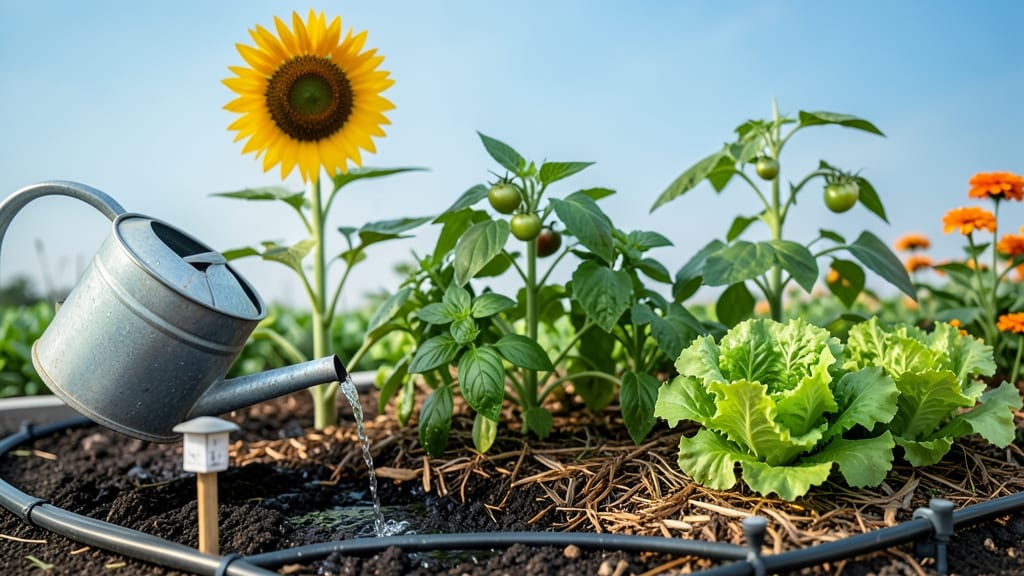
Your garden needs about 1 to 2 inches of water per week—but that number can swing wildly depending on soil type, plant variety, and even the time of day you water.
Overwatering wastes thousands of gallons annually while underwatering stunts growth, yet most gardeners guess instead of measuring. The real game-changer? Your soil type can cut water use by 50% or more without sacrificing plant health.
Clay soils hold moisture like a sponge, while sandy soils drain faster than a sieve. Loamy soil—the gardener’s gold standard—strikes the perfect balance, but even it needs adjustments when summer heat arrives or winter rains slow down.
Below, I break down how to read your soil’s thirst signals, when to water for maximum efficiency, and how to spot the 5 sneaky signs you’re drowning (or starving) your plants.


Water requirements by soil type: the science behind efficient irrigation
Your garden’s soil type is the single biggest factor in determining how much water it truly needs. Sandy soil drains like a sieve, while clay holds moisture like a sponge—yet both extremes demand different irrigation strategies.
The key? Understanding how each soil type behaves helps you water smarter, not harder, saving up to 50% more water without stressing your plants.
I’ve tested these principles in my own USDA Zone 6a garden, where loamy soil (the gardener’s gold standard) holds moisture just right—neither too wet nor too dry. But sandy soil in raised beds dries out in hours, while clay soil in my backyard stays soggy for days.
The science behind these differences isn’t just academic; it’s your roadmap to zero-waste watering.
Here’s how evaporation rates, drainage speed, and root zone saturation vary by soil type—and why loamy soil strikes the perfect balance. Use this as your watering cheat sheet to avoid both drought stress and root rot.
Sandy soil’s fast drainage means water disappears within hours, often requiring daily checks in hot climates. I’ve seen tomatoes in sandy beds wilt by noon if not watered early—yet overwatering here is just as dangerous, as excess runs off instead of nourishing roots.
My trick? Use drip irrigation with emitters placed at the root zone (6-12 inches deep) to deliver water slowly over 30-60 minutes, mimicking natural rain.
Loamy soil, my go-to for vegetables, holds moisture like a well-designed sponge—ideal for deep watering every 3-5 days. The root zone saturation here is perfect for most plants, including peppers and beans, which thrive when the top 6 inches stay consistently moist.
Test it: Stick your finger 2 inches down; if it feels dry, water deeply until moisture reaches 12 inches.
Clay soil’s slow drainage creates a double-edged sword—it holds water for days but can suffocate roots if overwatered. My roses in clay soil needed amended soil (50% compost) to improve aeration.
Here, watering every 7-10 days is often enough, but always check for surface puddling—a red flag for poor drainage. Raised beds filled with loam mix solve this problem elegantly.
Silty soil, often overlooked, sits between loam and clay in moisture retention.
How to calculate your garden’s exact water needs (step-by-step)
Determining your garden’s exact water needs doesn’t require guesswork—just a few simple tools and a methodical approach. By combining the 10-minute sprinkler test with soil moisture checks, you’ll tailor watering to your plants’ specific needs, from drought-tolerant succulents to thirsty leafy greens.
This step-by-step guide ensures you water efficiently, saving hundreds of gallons annually while keeping your garden thriving.
Start by identifying your garden’s unique conditions: soil type, plant varieties, and local climate. For example, clay soil holds moisture longer than sandy soil, while tomatoes need more frequent watering than lavender.
The key is balancing these factors to avoid both overwatering and underwatering, both of which stress plants and waste resources.
- Step 1: Test soil moisture at 2-inch depth. Use a soil moisture meter or dig with a trowel—dry soil needs water, while damp soil doesn’t.
- Step 2: Perform the 10-minute sprinkler test. Place a rain gauge or empty tuna can in your garden. Run your sprinkler for 10 minutes and measure the water collected. Multiply by 6 to estimate hourly water output.
- Step 3: Calculate plant-specific thresholds. Succulents need 1–2 inches of water every 2–3 weeks, while tomatoes require 1–2 inches weekly during peak growth.
- Step 4: Adjust for weather and season. Double watering during summer heat (90°F+) and halve it in cool, rainy months. Mulch retains moisture, reducing needs by 30–50%.
- Step 5: Monitor with a DIY moisture-check guide. Insert a wooden skewer into soil—if it comes out clean, water; if damp, wait. Track patterns for 2 weeks to refine your schedule.
For container gardens, the rules shift slightly. Potted plants dry out faster, often needing water every 5–7 days in summer. Weigh your pots before and after watering—if the difference is 10–20% of the pot’s weight, it’s time to water again.
This method works for herbs in window boxes to tomatoes in hanging baskets.
Don’t overlook the time of day you water. Always water in the early morning (6–9 AM) to minimize evaporation and fungal diseases like powdery mildew. Avoid evening watering, as damp foliage overnight invites pests.
Pro tip: Use a drip irrigation system for precision—it delivers water directly to roots, reducing waste by up to 30%.
Finally, keep a watering journal to track adjustments. Note which plants thrive on your new schedule and which need tweaks. For example, my rosemary bushes flourished after I cut their watering from daily to every 10 days—a change that also slashed my water bill by $20/month.
Small adjustments make a big difference!