
Watering
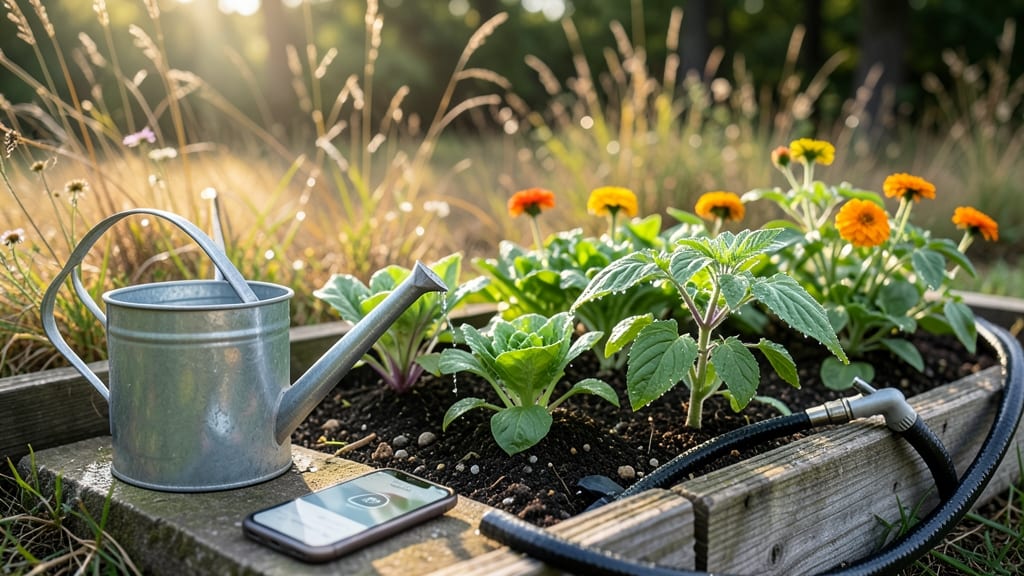
When watering your garden, aim for 5 to 15 minutes per zone, as this range accounts for soil type, plant needs, and weather conditions. Deep watering 2-3 times weekly promotes healthy root development while avoiding runoff or fungal problems. Always adjust based on soil moisture tests and seasonal changes.
Your garden's watering needs aren't one-size-fits-all. 💧 Sandy soils drain quickly, often requiring shorter sessions (closer to 5 minutes), while clay holds moisture longer, needing up to 15 minutes per zone. Drip irrigation delivers water more efficiently than sprinklers, reducing evaporation losses.
I've found that most vegetables and flowering plants thrive with this 2-3 times weekly schedule, but succulents and drought-tolerant plants may only need water every 7-10 days. Always check soil moisture before watering - if the top 1-2 inches are dry, it's time to water.
Seasonal adjustments are crucial too. During summer heat waves, you might need to extend watering sessions by 25-50% compared to spring or fall. 🌞 Young plants with shallow roots need frequent, shorter watering sessions, while established perennials can handle deeper, less frequent watering.
The key is to water deeply enough that moisture reaches at least 6 inches down - this encourages roots to grow deeper, making plants more resilient during dry periods.
💡 In This Article
- Factors Determining Optimal Garden Watering Duration
- Soil Moisture Tests and Adjusting Watering Schedules
Factors determining optimal garden watering duration
Your garden's soil type acts like a water storage system. Sandy soils drain like a sieve—water passes through in minutes, often requiring just 3-5 minutes of watering per zone to reach 6 inches deep.
In contrast, clay soil holds moisture like a sponge, potentially needing 12-15 minutes to saturate the same depth. The key difference lies in particle size: sand's large grains create air pockets that speed drainage, while clay's tiny particles trap water through capillary action.
Plant species play a crucial role too. Drought-resistant succulents like sedum might only need 2-3 minutes every 7-10 days, while thirsty vegetables such as lettuce require 8-12 minutes every 2-3 days.
Root depth matters here: shallow-rooted herbs need frequent light watering, while deep-rooted perennials benefit from 10-15 minutes of deep watering weekly. For example, tomatoes develop roots up to 3 feet deep, so they need consistent moisture at that level to prevent blossom-end rot.
Climate conditions dramatically alter watering needs. In arid regions with 90°F+ temperatures and low humidity, evaporation rates can double, requiring 25-50% longer watering sessions. Humid climates lose less water to evaporation, often allowing 20-30% shorter sessions.
Wind also plays a role—it can increase evaporation by up to 30%, making afternoon watering more efficient than morning sessions when winds are typically stronger.
Your irrigation method affects watering duration too. Drip systems deliver water directly to roots with 90% efficiency, often requiring 30-50% less time than sprinklers that lose water to evaporation and wind drift. Sprinklers may need 10-15 minutes to achieve the same soil saturation as a 5-7 minute drip session.
The placement matters: overhead sprinklers can wet leaves, creating conditions for fungal diseases like powdery mildew, while drip systems keep foliage dry.
Seasonal changes demand adjustments too. Spring and fall typically require 30-40% less watering time than summer, when temperatures and evaporation rates peak.
Young plants need more frequent but shorter sessions (5-8 minutes every 1-2 days), while established plants can handle longer, less frequent watering (10-15 minutes every 5-7 days).
The goal is always to water deeply enough that moisture reaches the plant's root zone—this encourages roots to grow deeper, making plants more drought-resistant over time.
Consider these key factors when planning your watering schedule:
- Soil type: Sandy (3-5 min), loamy (7-10 min), clay (12-15 min)
- Plant needs: Succulents (2-3 min), vegetables (8-12 min), perennials (10-15 min)
- Climate: Arid (+25-50% time), humid (-20-30% time)
- Irrigation: Drip (-30-50% time vs sprinklers)
By understanding these variables, you can create a watering schedule that keeps your garden thriving without waste. 🌱